

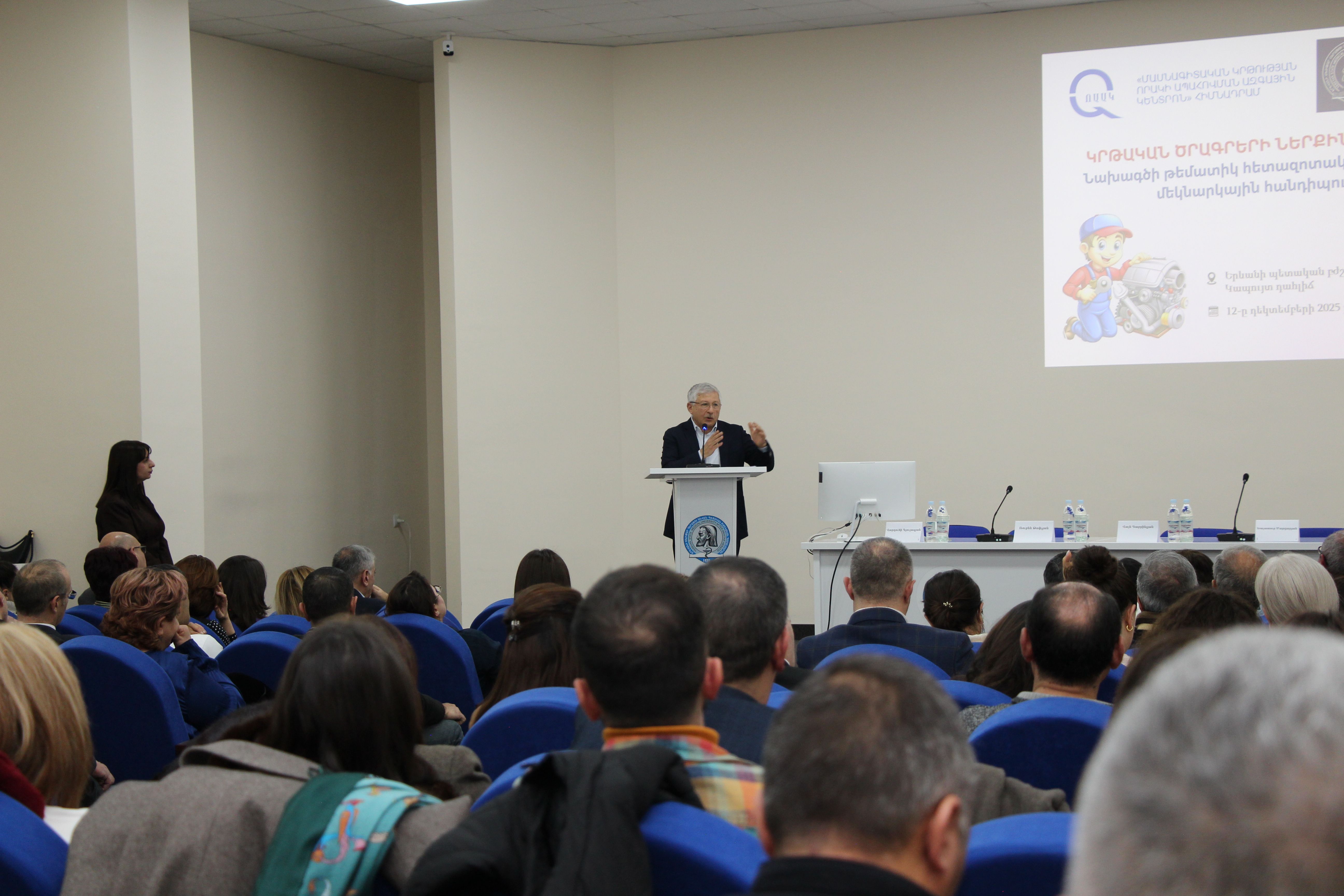
On December 12, the kick-off meeting of the thematic research groups for the "Self-audit of Academic Programmes" project took place. It was a continuation of ANQA-initiated professional discussions, focusing on the development of practical mechanisms for the self-audit of the HEIs’ academic programmes (APs).
The AP self-audit is stipulated in the decisions of ANQA’s Accreditation Committee. For the next institutional accreditation, the HEIs are required to present the outcomes of the self-audit of all APs. In this context, the workshop aimed to put previously discussed approaches into practice and create data-driven tools for the effective verification of the student workload, credit distribution and AP outcomes.
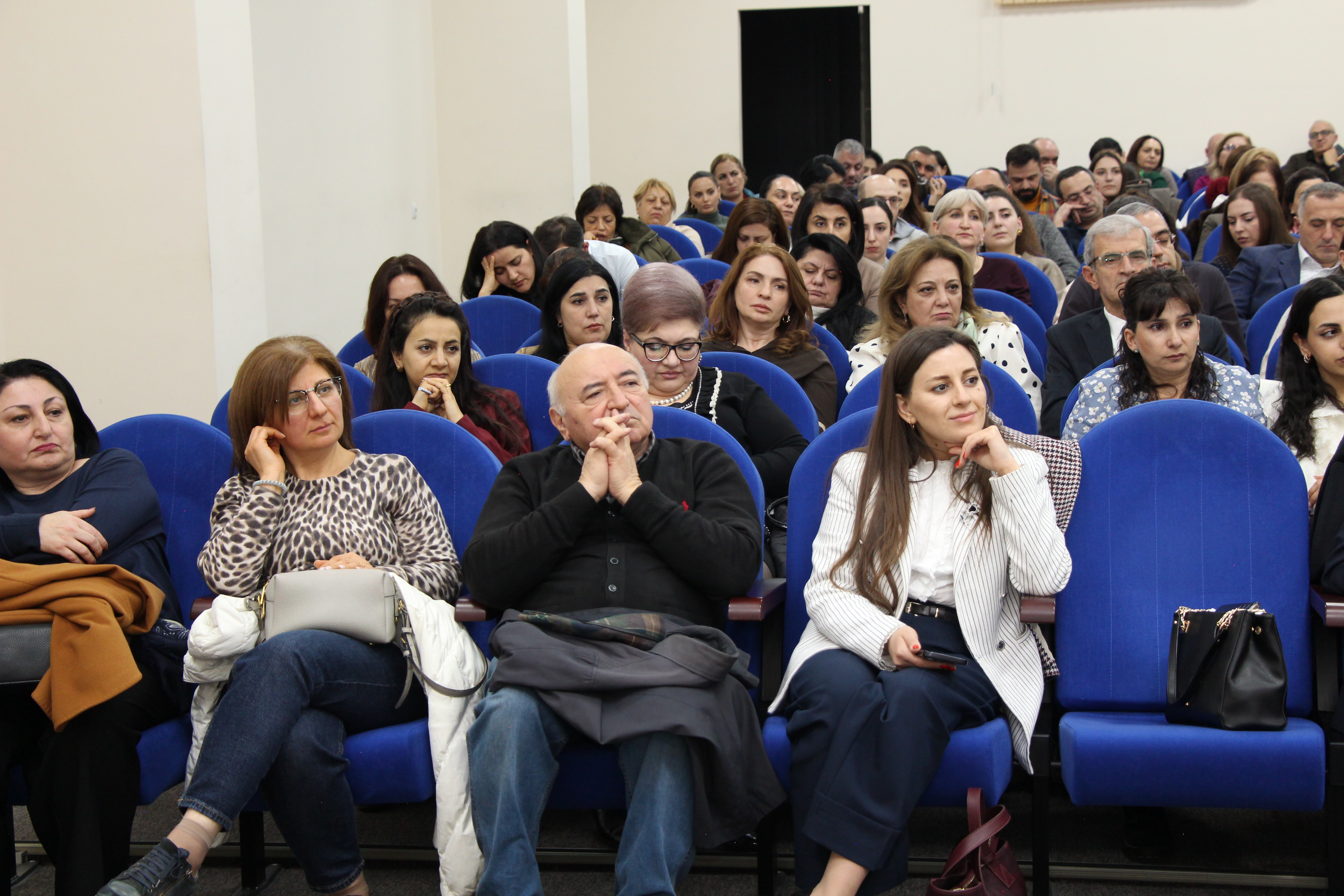
The workshop brought together the HEIs’ rectors, academic programme managers, teachers and QA specialists to discuss the link between the AP outcomes, real student workload, assessment tools and credit distribution.
From documents to practical mechanisms
In his opening speech, Ruben Topchyan, ANQA’s director, addressed the core issue in the HEIs’ APs — the gap between formal documentation and practical application. According to Dr. Topchyan, APs and course descriptors are often carefully designed, yet do not serve as tools actually used and regularly reviewed.
"The document should work. It needs to be studied, analysed and enhanced, rather than merely maintained to meet formal requirements", mentioned Ruben Topchyan.
Dr. Topchyan noted that, over the years, the AP outcomes have often been revised at the individual level, lacking systematic analysis. This has disrupted the link between outcomes, assessment and credits, resulting in an educational process reliant on individual approaches.
Teachers' work time at the core of quality assurance
One of the key highlights was the organisation of the teacher work and remuneration. Ruben Topchyan stressed that it is impossible to provide quality education if teachers are required to perform complex and time-consuming tasks without appropriate conditions. "If teachers are expected to design assignments, align them with outcomes, provide feedback and reliable assessment tools, the principle of their remuneration should be adjusted accordingly. The teacher remuneration should reflect real workload", noted Ruben Topchyan.
Dr. Topchyan explained that credits should be viewed in two ways: first, as a measure of the student real workload, and second, as a basis for the calculation of the teacher work time and responsibilities.
Programme accreditation as an outcome-oriented approach
Vache Gabrielyan, chair of ANQA’s Accreditation Committee, highlighted in his speech that programme accreditation is outcome-oriented, focusing on the competencies students acquire upon the completion of the academic programme.
"This approach enables both the review of the AP quality and the strengthening of the reliability of student knowledge, while also fostering mobility", stressed Vache Gabrielyan, attaching importance to the role of such professional discussions.
Panel discussions: systematic issues and solutions
The workshop featured two panel discussions, with the first addressing the effectiveness of credit distribution and the issue of student workload. The participants pointed out that credits are calculated mechanically, without the consideration of the actual assignments and the time required to complete them.
It was highlighted that the students should earn credits through clearly defined assignments, while the teachers should be given the opportunity to design these assignments carefully and systematically. The HEIs are unable to substantively evaluate the connection between outcomes and credits without clear tools.
The second panel discussion was dedicated to the achievement and validation of outcomes. The participants attached importance to the quality of the assignment design and the connection between courses and teamwork. It was emphasised that learning outcomes cannot be achieved within the scope of a single subject or teacher, but require a systematic structure across the entire academic programme.
Data-driven enhancement as the next step
The workshop ended with the presentation of the project roadmap. Over the next six months, thematic research groups will work to develop unified tools and methodologies for the credit distribution, student workload and outcome assessment. The developed approaches will be piloted at various HEIs, with necessary enhancements implemented based on the collected data.