

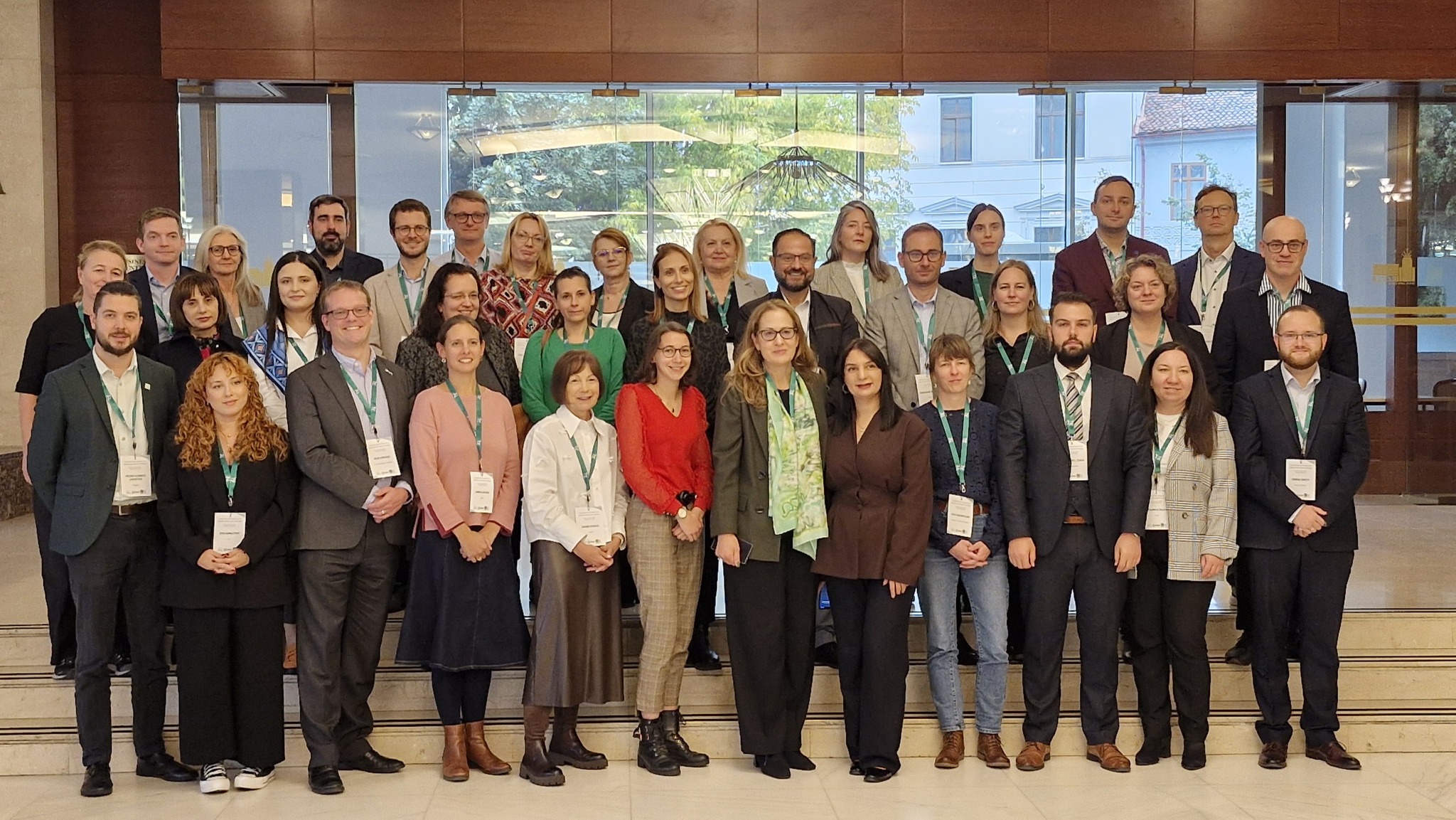
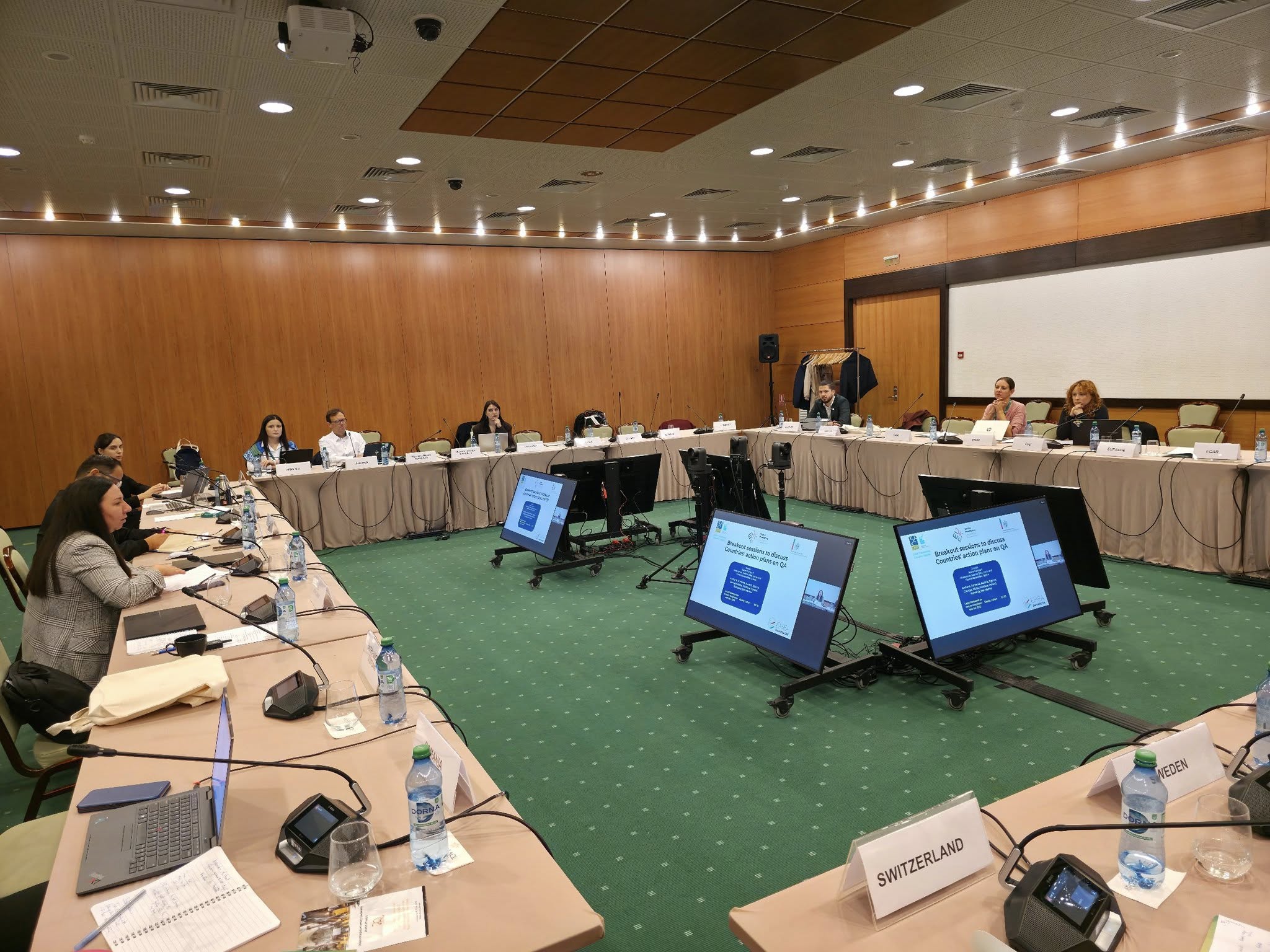
On October 8-9, the third meeting of the BFUG TPG C on Quality Assurance took place in Brașov, Romania, organised by the Romanian Agency for Quality Assurance in Higher Education (ARACIS).
Representatives from more than 20 countries participated in the meeting, sharing national practices, reform directions and new initiatives. Armenia’s delegation included Varduhi Gyulazyan, head of ANQA’s Institutional and Programme Accreditation Division, co-chair of the BFUG TPG C on QA, and Liana Alaverdyan, specialist in the same division.
The meeting aimed to summarise the member states’ progress in quality assurance and to form a common vision for the next phase of the Bologna Process. The discussions revealed that many European countries are now modernising their quality assurance systems through legislative reforms, the introduction of joint approaches to institutional and programme accreditation, as well as new mechanisms for the quality control of micro-credentials and transnational education.
As the co-chair of the TPG C on QA, Armenia introduced its 2024–2027 action plan, highlighting the revision of the national QA framework in line with the updated ESG, the development of procedures for ex-ante programme accreditation, and the establishment of a national KPI system.
The panel discussions in Brașov, led by Varduhi Gyulazyan, brought together participants around a number of key topics:
- the benchmarking of member states’ action plans;
- the revision process of ESG and ECTS guidelines;
- the in-depth study of stakeholder engagement, focusing on the role of students, employers, and state agencies;
- the presentation of innovative projects (SIQA, ROQA-TNE, SPICE, BP4LnT);
- the discussion of challenges in cross-border quality assurance and possible measures to improve the transparency of EQAR data;
- the impact of AI on quality assurance processes.
The meeting ended with a decision that the next in-person session will be held in Yerevan, in the fall of 2026. ANQA will host the TPG C on QA, showcasing Armenia's practice and providing a platform for the exchange of practice with European partners.