
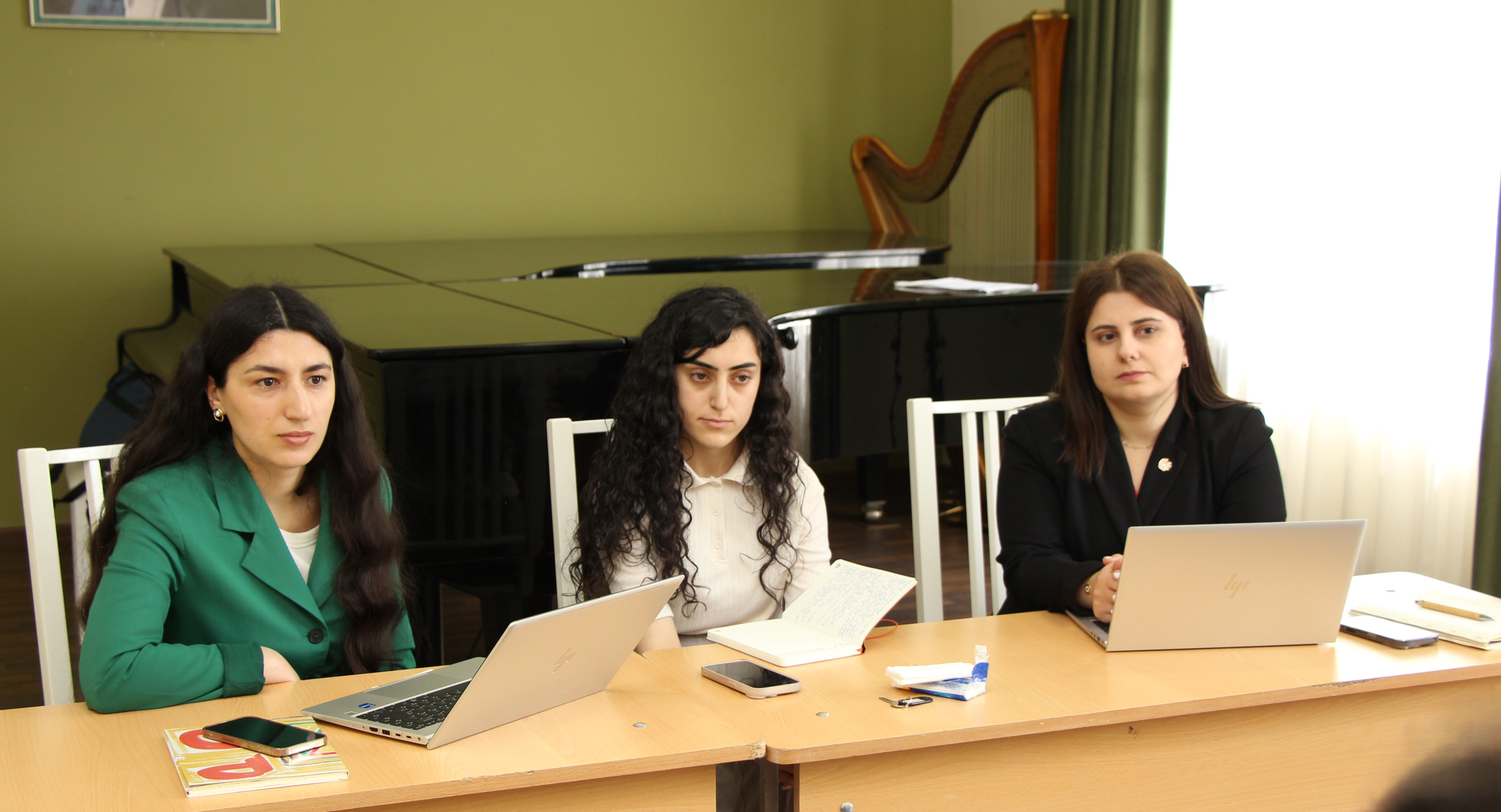
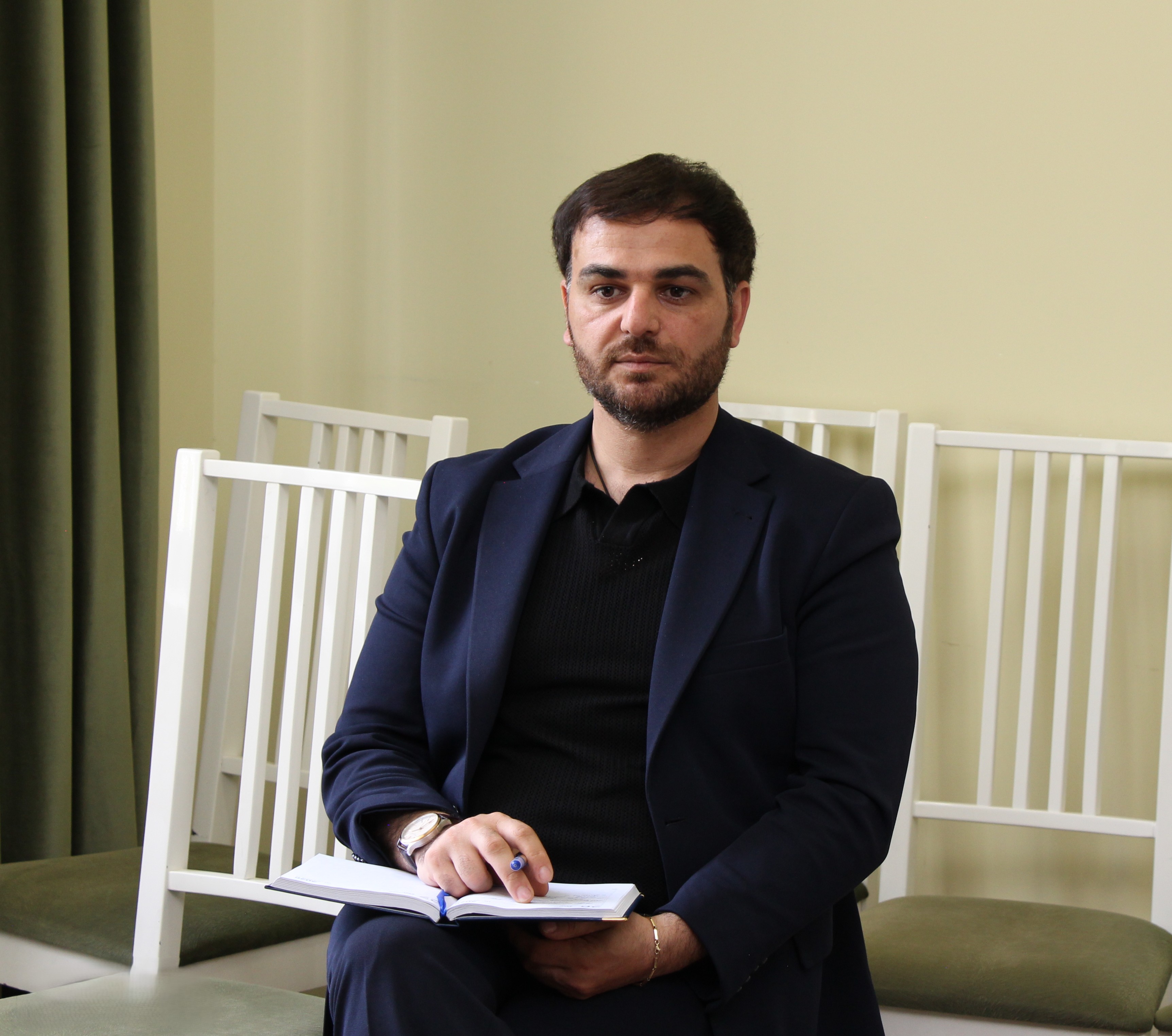
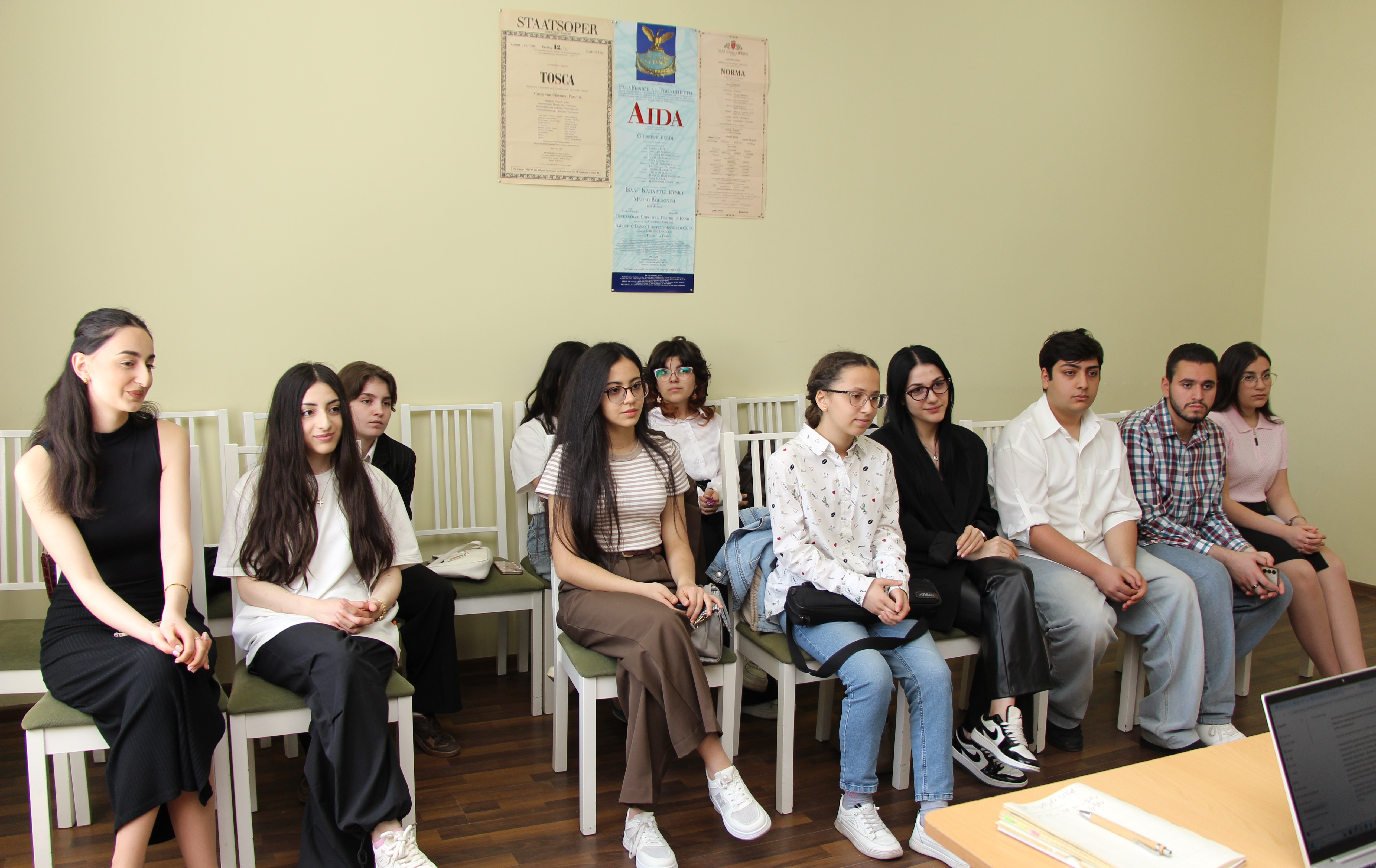
On May 26, ANQA conducted a monitoring at the Yerevan State Musical-pedagogical College named after A. Babajanyan. The aim was to observe the post-accreditation enhancements, the development of academic programmes (AP) and the link between teaching, assessment and students' professional competencies.
As part of the monitoring, meetings were held with the institution's management staff, heads of chairs, teachers, QA managers and students. The discussions addressed the AP implementation, the development of students' performance-related and pedagogical competencies, the organisation of internships, assessment approaches and the effectiveness of the QA mechanisms.
The monitoring explored how the AP outcomes in arts education are reflected in teaching, assignments, stage performance, internships and assessment. It was emphasised that the APs should be viewed not merely as a set of documents, but a practical framework that guides students’ professional growth, performance development and formation of pedagogical competencies.
The monitoring highlighted the need to establish a clearer alignment between the APs, assignments and assessment criteria. It was noted that each educational activity, including performance tasks, creative work, pedagogical experience, concert performance or internships, should contribute to the development of specific competencies envisaged by the APs and supported by well-defined assessment criteria.
Particular emphasis was placed on the clarification of assessment criteria in arts education. It was addressed that the specific nature of music and performance education require assessment approaches that consider students' creative individuality, while ensuring a more transparent assessment of the development of their professional, performance and pedagogical competencies. In this context, it was emphasised that assessment criteria should be based not only on general impressions, but also on clearly defined competencies, progress indicators and AP outcomes.
The monitoring addressed the systematic organisation of students' stage performance. Participation in competitions, concerts, creative projects and public performances was considered an important component of the development of performance skills. Meanwhile, it was highlighted that such experiences should be viewed not only as individual initiatives, but also as a key mechanism for the achievement of the minimum requirements and learning outcomes defined by the APs.
The discussions covered internships and evaluation of their results. Importance was attached to a clearer connection between internships and the AP outcomes, ensuring that experience gained in a practical environment contributes to the development of students' professional and pedagogical competencies and serves as a basis for the evaluation of the AP effectiveness.
The dissemination of best teaching practices was also stressed. It was noted that teachers’ new methods, individual approaches and creative solutions can significantly support the development of the educational process if they become part of regular departmental and inter-departmental discussions, exchange of practices and strengthening of a quality culture.
The monitoring also explored the formation of a data-driven governance culture. It was stressed that data on student progress, assessment results, practice effectiveness, stage performance and stakeholder feedback can provide an important basis for the AP revision, departmental discussions and continuous enhancement.
Importance was attached to the quality assurance of art education through the clarification of assessment criteria, the systematic organisation of stage and practical performance, and the strengthening of outcome-based and data-driven approaches to support the effective implementation of academic programmes and the sustainable development of students' professional competencies.