
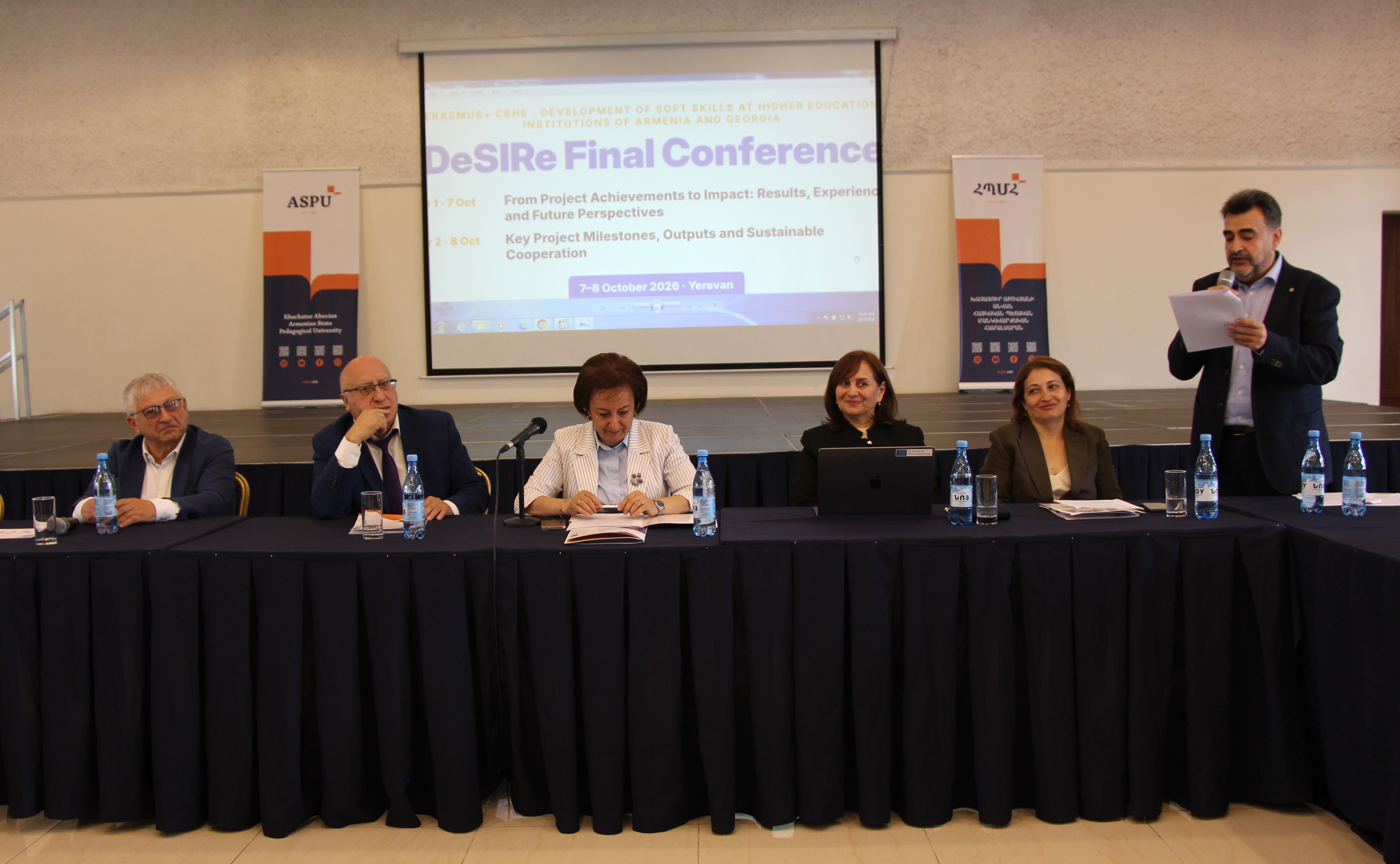
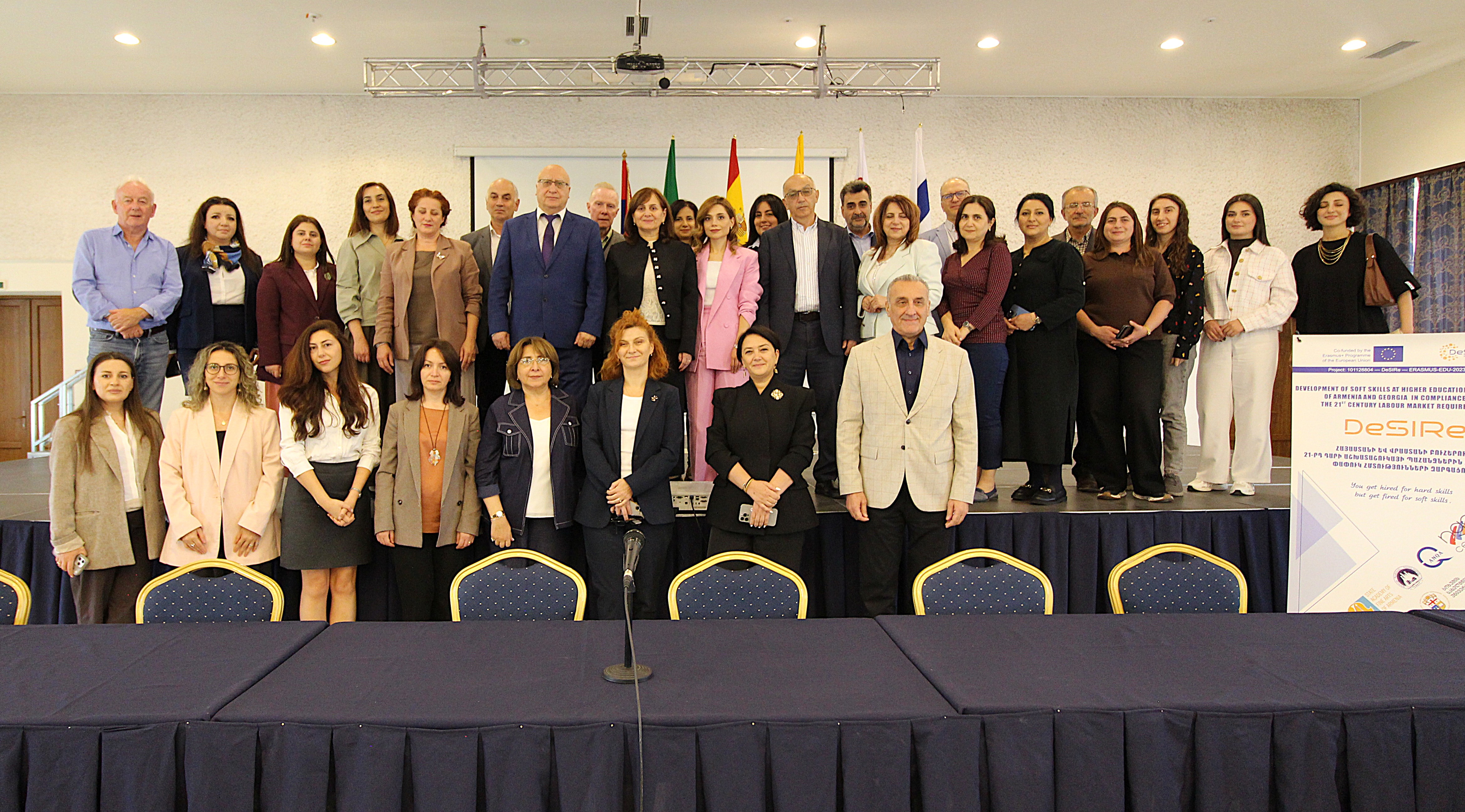
The development of soft skills should not be left until graduates enter the workplace. HEI graduates should already be prepared to work in diverse professional and cultural environments, collaborate effectively, evaluate information and make informed decisions. This key message was highlighted at the final conference of the Erasmus+ DeSIRe project, held on October 7–9 at the Armenian State Pedagogical University.
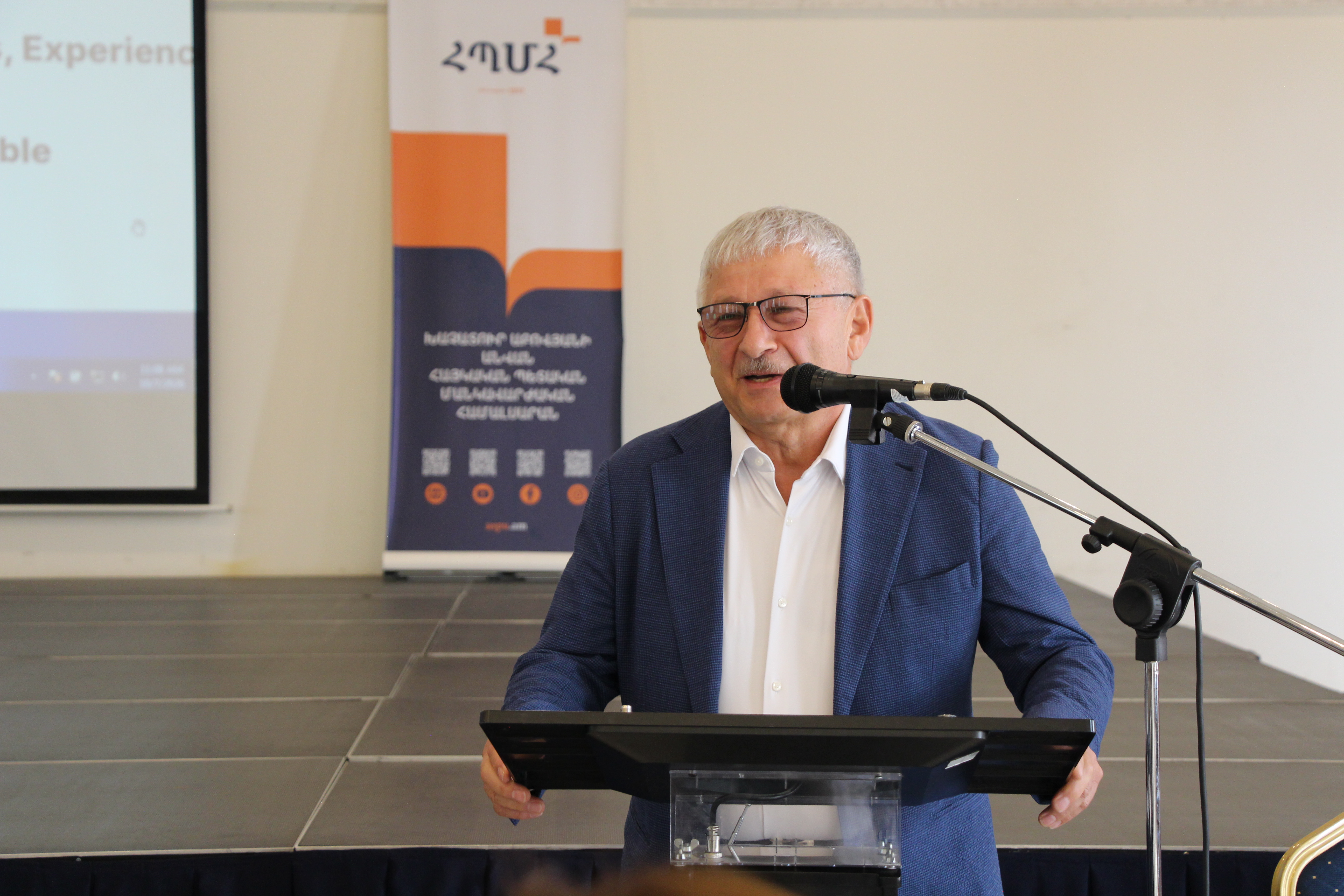
At the opening of the conference, Ruben Topchyan, ANQA's director, emphasised that higher education should not only provide students with professional knowledge but also equip them with the competences needed to adapt to changing environments.
Referring to the concept of global citizenship, Dr. Topchyan stressed the importance of openness and trust towards the world and the ability to collaborate with people from different countries and cultural backgrounds. Cooperation among HEIs from different countries, including through the joint development and delivery of learning modules, was highlighted as an opportunity to foster these competences.
Dr. Topchyan also addressed the use of AI in professional practice, highlighting that while taking advantage of the opportunities offered by these technologies, it is essential to develop the ability to critically evaluate AI-generated information and outputs and make informed decisions based on them.
Another key takeaway from Dr. Topchyan's speech was the continuous nature of QA. Quality assurance should extend beyond the assessment of final outcomes and be embedded in every stage of process, from planning and implementation to the evaluation of outcomes and subsequent enhancements based on the findings. In this context, importance was attached to the continuous application and sustainability of the approaches and solutions developed as part of the project.
From QA to the enhancement of learning solutions
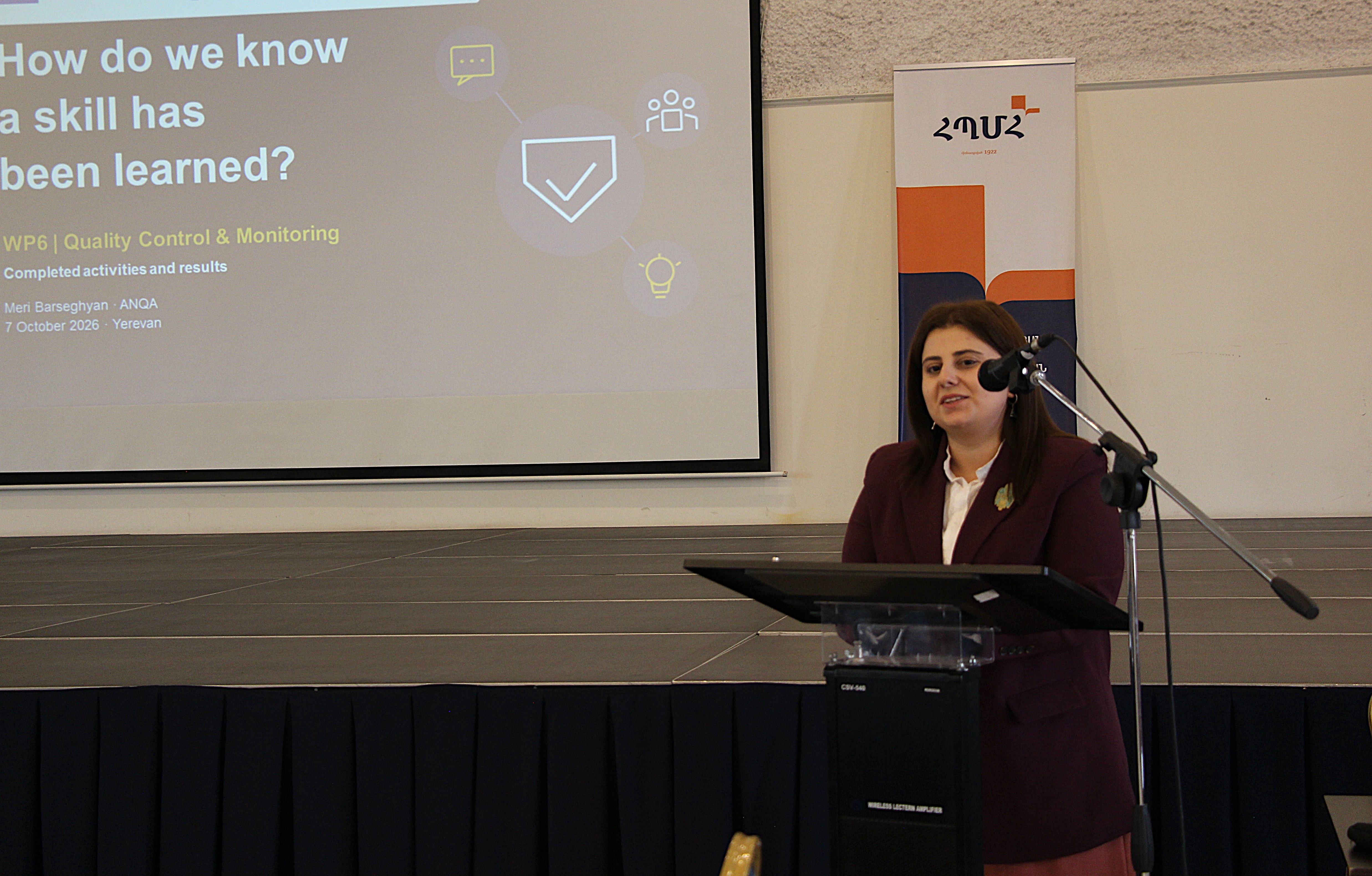
Meri Barseghyan, specialist at ANQA’s Policy Development Division, shared the activities and outcomes achieved as part of the DeSIRe project’s WP6 – Quality Control & Monitoring.
In cooperation with project partners, ANQA developed QA guidelines and evaluation tools, evaluated training activities, analysed participant feedback and proposed enhancement-driven recommendations.
The evaluation focused not only on the alignment between the implemented activities and the project plan but also on their contribution to the achievement of the intended learning outcomes.
In particular, the alignment between the intended learning outcomes, teaching and learning activities and assessment methods was evaluated. This approach helps identify gaps in education design and formulate enhancement recommendations, ensuring that learning activities facilitate the development of the intended competences and assessment methods verify their achievement.
The presentation also highlighted the ongoing external review of five learning modules and five Massive Open Online Courses (MOOCs), conducted in cooperation between ANQA and the National Center for Educational Quality Enhancement (NCEQE), QA agencies of Armenia Georgia, respectively. The process aims to evaluate the compliance of the learning solutions with quality requirements and contribute to their further enhancement.
How verify students' acquisition of soft skills?
Meri Barseghyan also participated in a panel discussion “From Soft Skills Development to Labour Market Impact: Are Armenian and Georgian HEIs Ready for the 21st-Century Workplace?”
One of the key issues discussed was the transformation of soft skills development into a measurable and verifiable learning outcome.
The inclusion of communication, teamwork, critical thinking and problem-solving skills in HEI academic programmes (APs) does not necessarily ensure the acquisition of these skills. It is essential to provide students with opportunities to demonstrate these skills in real-life or simulated situations during their studies, while assessment methods should make it possible to determine the extent to which these skills have been attained.
In this context, the importance of the engagement of employers and other stakeholders was also highlighted to identify the competences required in professional environment and develop relevant teaching, learning and assessment approaches.
Project outcomes for continuous implementation in HEIs
The conference introduced five soft skills development modules and five MOOCs, methodological guidelines for teaching and assessment, as well as approaches to MOOC-based micro-credentials and certification.
The discussions also explored opportunities to further develop the soft skills laboratories established in Armenian and Georgian HEIs, integrate the developed modules into APs, support the professional development of academic staff and strengthen future cooperation among partner institutions.
A key prerequisite for the sustainability of the project outcomes is the continuous evaluation and enhancement of the developed modules and tools following their integration into APs, based on students' attainment of competences and stakeholder feedback.
Development of Soft Skills at Higher Education Institutions of Armenia and Georgia in Compliance with the 21st Century Labour Market Requirements (DeSIRe) is implemented through cooperation among partner institutions from Armenia, Georgia and Europe. The project aims to foster the development of transferable skills in higher education through the development and implementation of new learning modules, online courses and modern teaching and assessment approaches. ANQA is one of the project partners, contributing to quality assurance, monitoring and evaluation activities.