
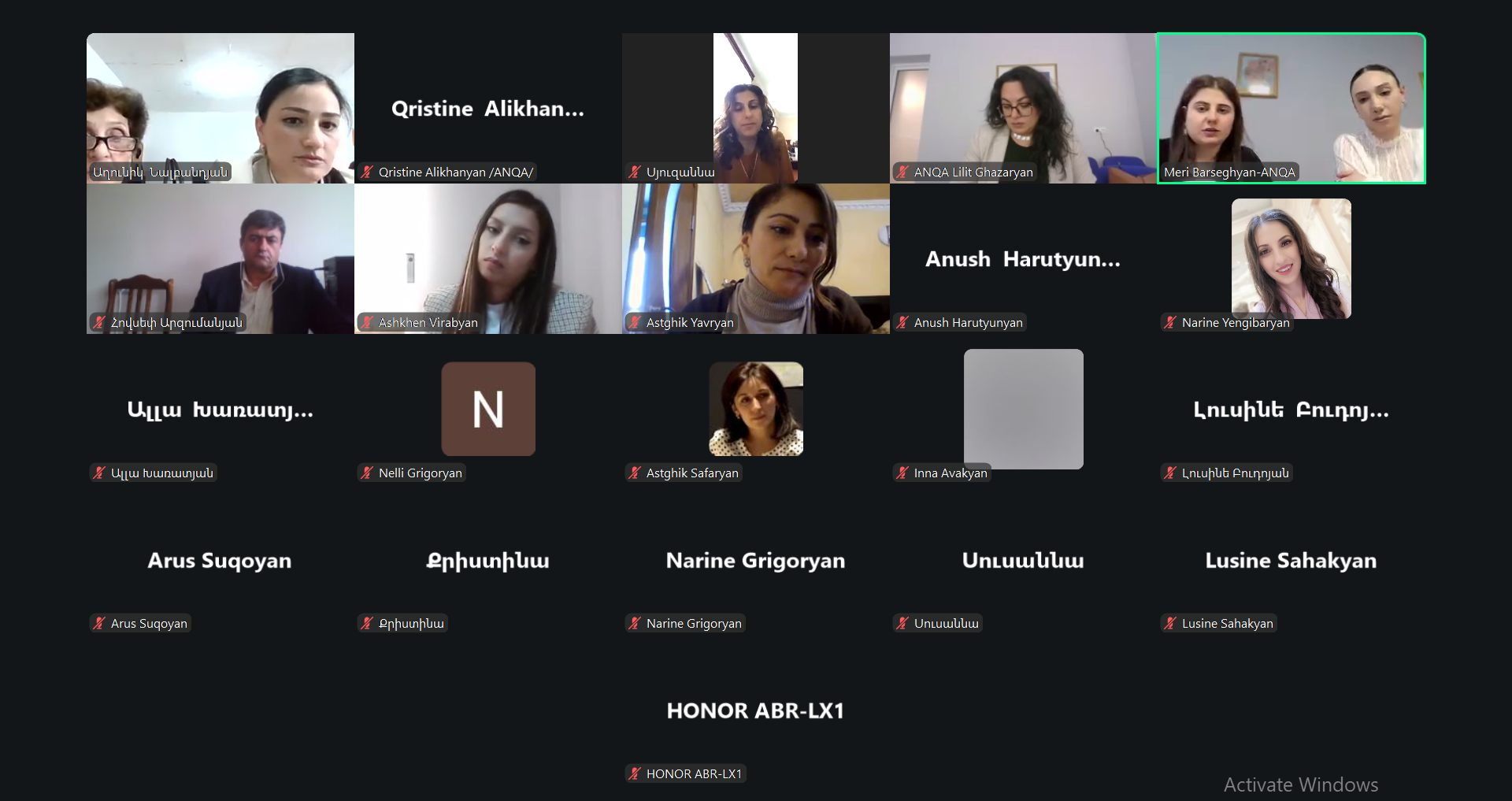
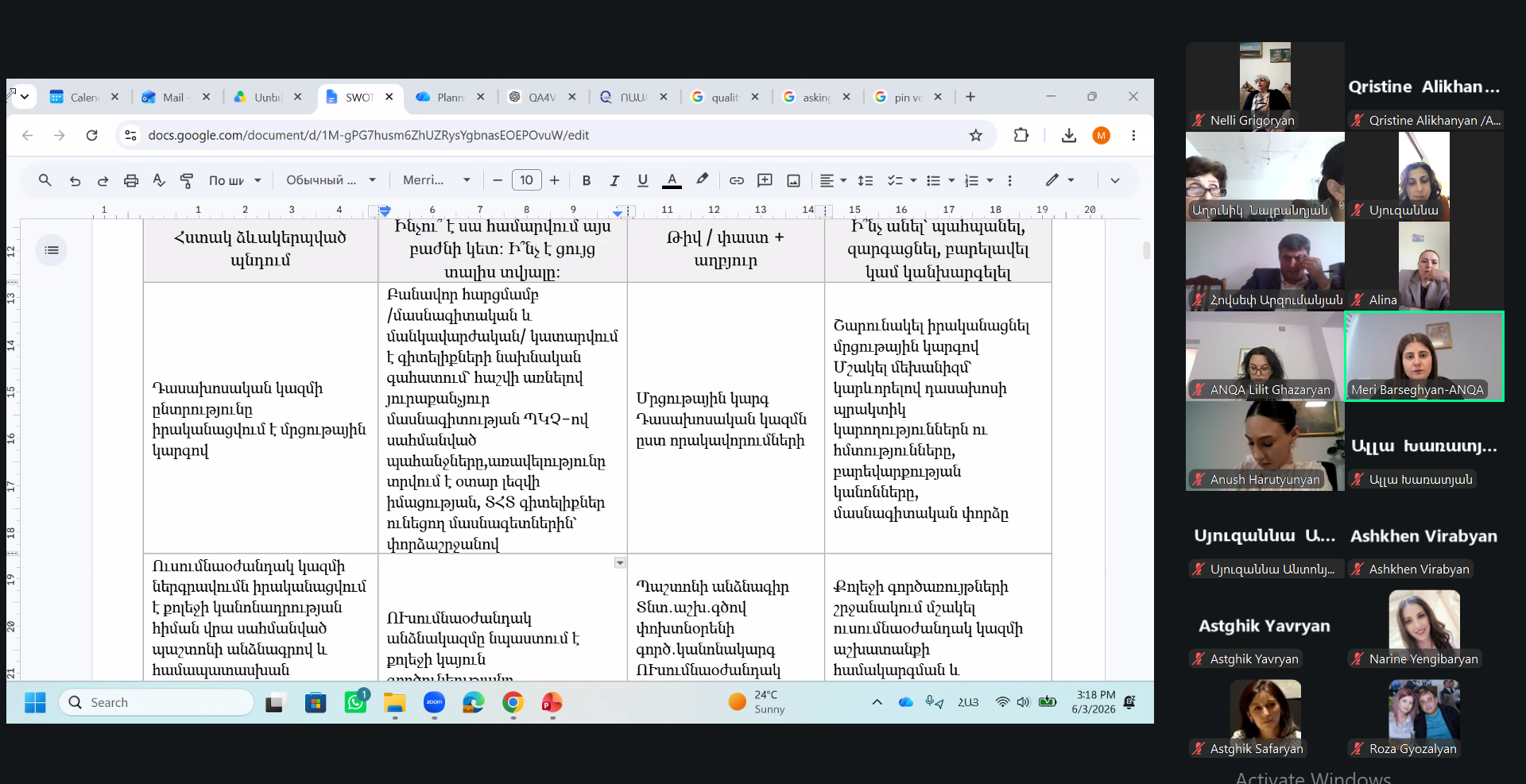
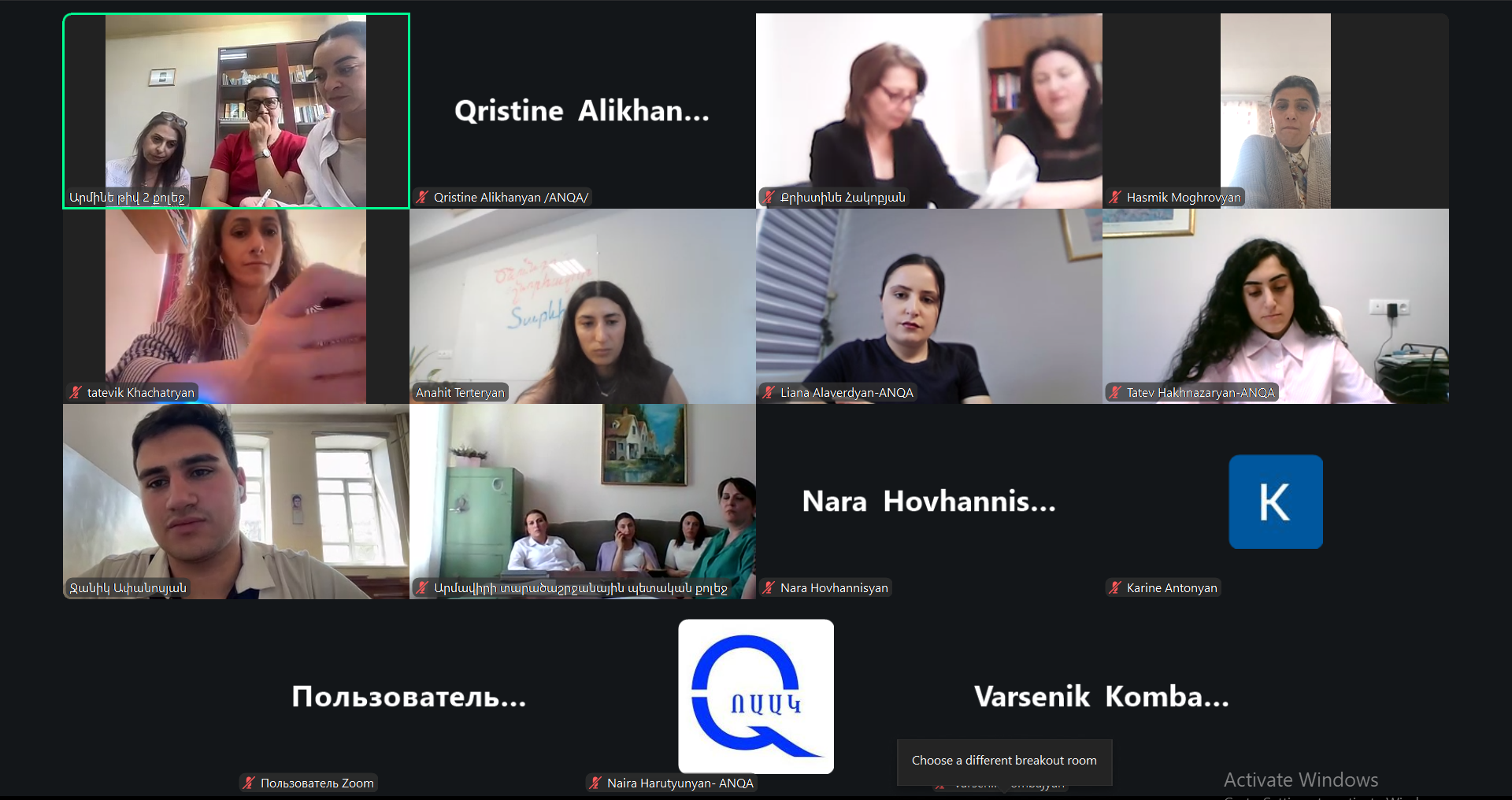
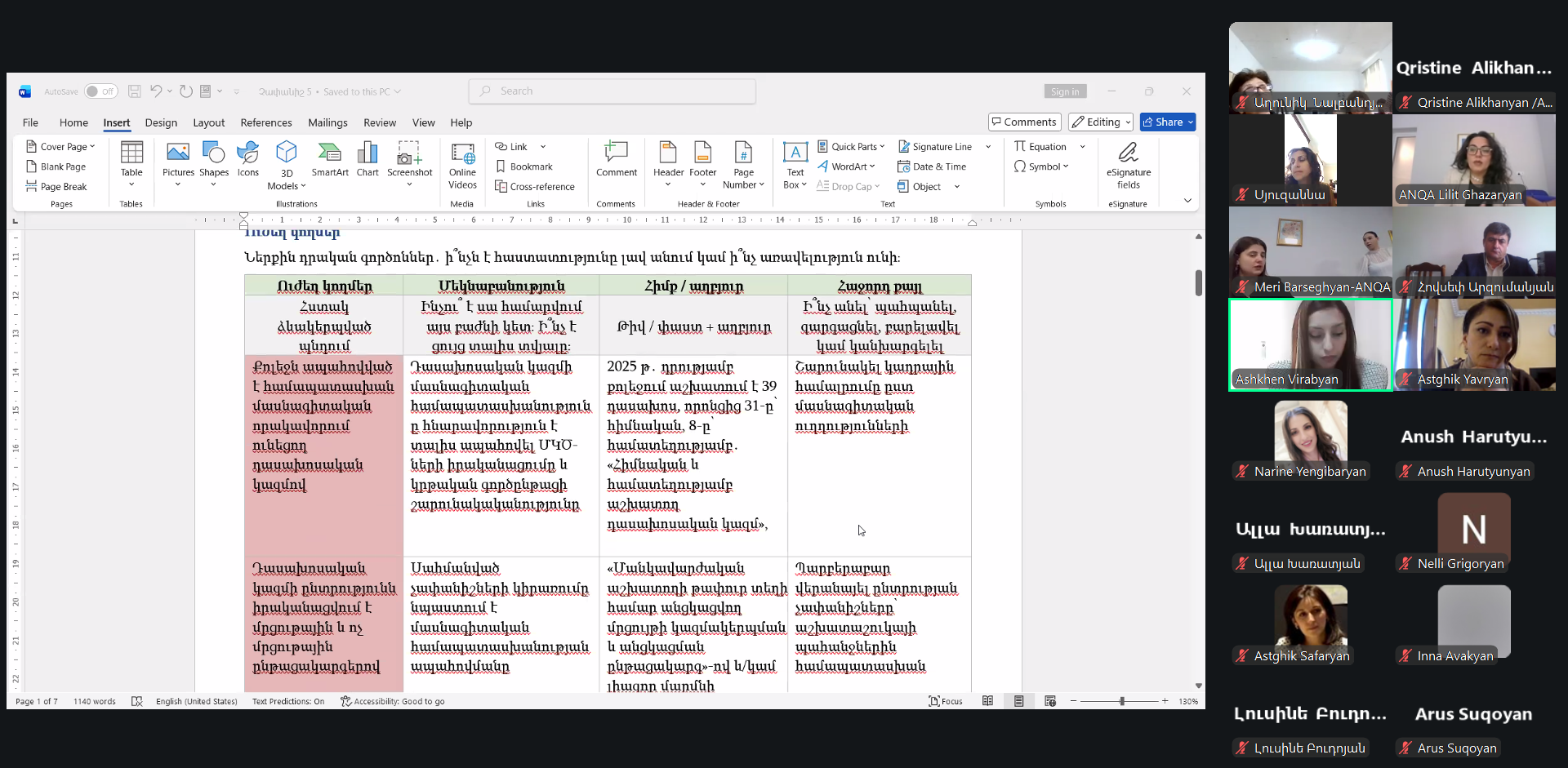
On June 3, ANQA held another online workshop as part of the Erasmus+ QA4VET project, bringing together main and associated project partners. The workshop focused on the discussion of SWOT analyses in relation to institutional accreditation Criterion 5, "Faculty and Staff" and Criterion 7, "Infrastructure and Resources".
The workshop highlighted that institutional-level SWOT analyses should be grounded not in general observations, but in detailed studies conducted at the academic programme (AP) level. This approach enables data-driven conclusions and a more accurate assessment of the institution’s strengths and weaknesses, as well as its development opportunities and threats.
The workshop was conducted in a practical format. The participating VET institutions were divided into two groups, with ANQA’s representatives acting as mentors and supporting the partner institutions in SWOT analyses, data interpretation and formulation of institutional-level conclusions.
As part of Criterion 5, approaches to the evaluation of the capacity of teaching and support staffs were addressed. Particular attention was placed on the opportunities for teachers' professional development, the effectiveness of teaching, staff stability and employer engagement in the AP implementation and enhancement. It was highlighted that these factors should be evaluated at the level of each AP, drawing on factual data and measurable KPIs.
As part of Criterion 7, the discussions focused on the infrastructure and resources required for the AP implementation, including the material and technical base, information systems, library and digital resources. The evaluation of resources was emphasised not only in terms of availability, but also contribution to the APs' goals and learning outcomes.
ANQA's staff noted that the same factor may have different impact on various APs. For instance, any resource, form of employer engagement, or characteristic of teaching staff may represent a strength for one programme, but an enhancement area for another. To this end, SWOT analyses should be grounded in facts, analysed data, research outcomes, stakeholder feedback and other sources of evidence, ensuring a comprehensive and objective evaluation of the institutional activities.
The discussions also highlighted the practical significance of SWOT analyses. It was noted that their purpose is not only to assess the current state,but also enable VET institutions to further evaluate the effectiveness of their activities, monitor development progress and plan data-driven enhancements. In this context, possible steps to address weaknesses and their integration into development programmes were also discussed. During the workshop, partner institutions presented their practices and approaches to resource development, teachers' capacity-building, employer engagement and enhancement of QA processes. As a result, it was reaffirmed that data-informed SWOT analyses provide an important basis for the evaluation of the AP quality, the setting of development priorities, strategic planning and strengthening of institutional capacities.