

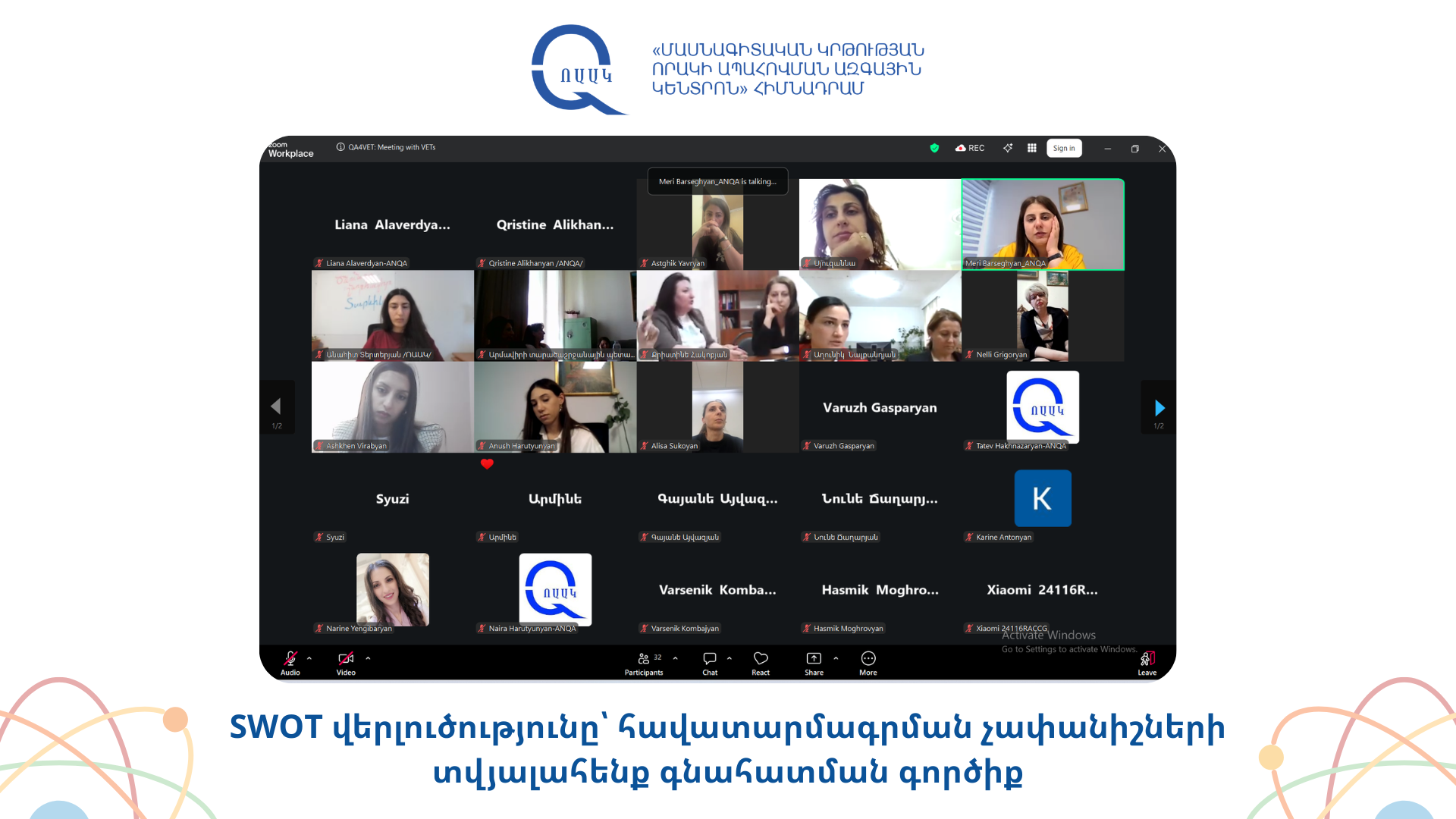
On June 4, ANQA held another online workshop as part of the Erasmus+ QA4VET project, bringing together main and associated project partners.
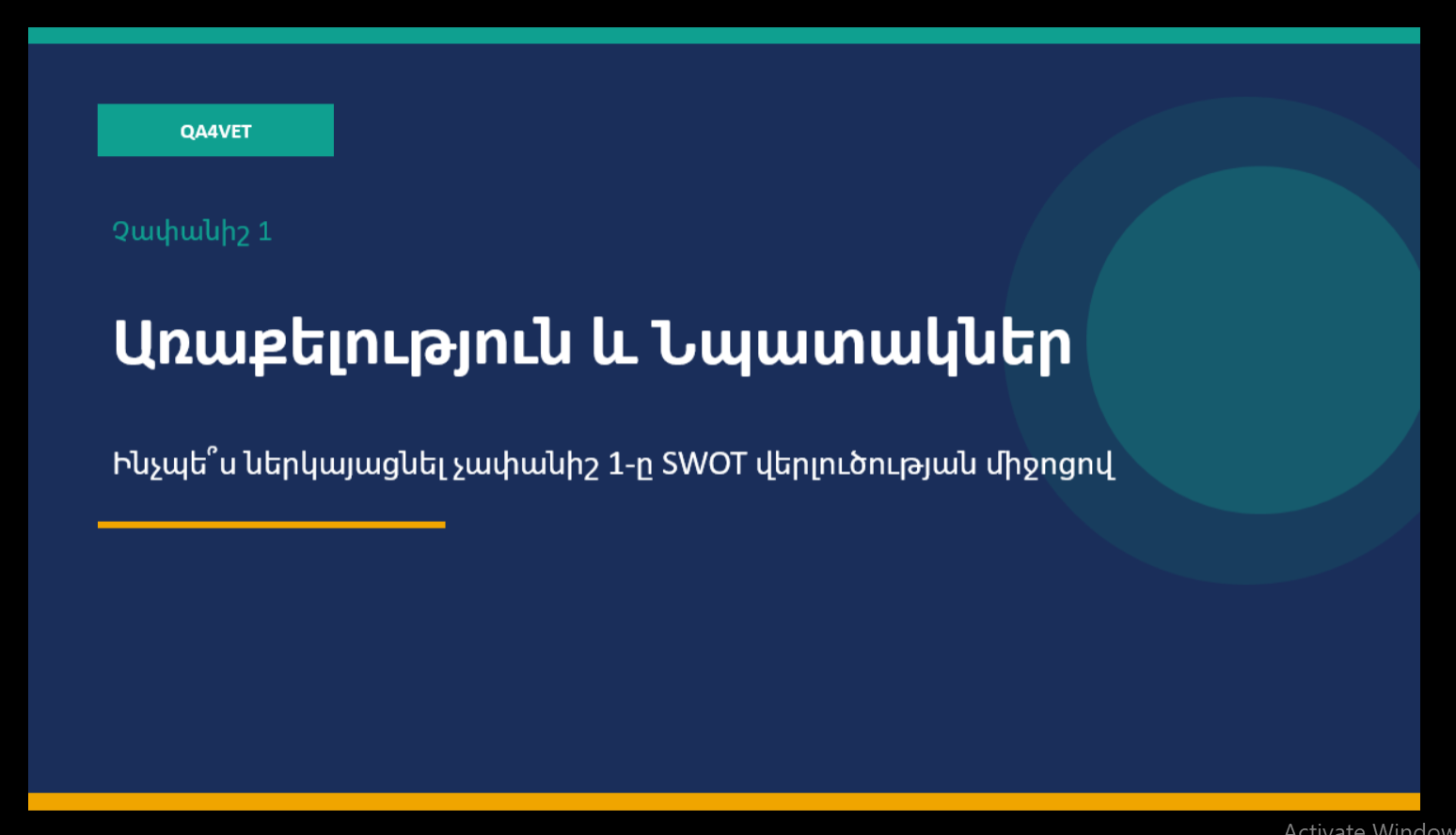
ANQA presented the first, second and tenth accreditation criteria, with discussions focusing respectively on Mission and Purpose, Governance and Administration and the Internal Quality Assurance System. It was highlighted that SWOT analysis should be grounded in data, analysis, and actual results. This approach enables the evaluation of the processes and their impact on the institutional development.
Criterion 1. Mission and Purpose
ANQA introduced approaches through which the VET institutions can use SWOT analysis to evaluate the implementation of the mission and purpose. It was highlighted that the evaluation should be based on measurable results, facts and evidence, rather than on formal processes or documentation alone.
Reference was made to the evaluation of the implementation of the institutions' missions, as well as the analysis of the stakeholder engagement and impact, including employers, students and alumni. Mechanisms for the planning and implementation of enhancements based on the evaluation results were also presented.
The discussions highlighted that SWOT analysis should serve not only to identify strengths and weaknesses, opportunities and threats, but also support informed decision-making for institutional development.
Criterion 2: Governance and Administration
The discussions focused on main approaches to the evaluation of the effectiveness of governance and administration. The participants' attention was drawn to the effectiveness of decision-making processes, the efficiency of the governance structure, the targeted use of human, material and financial resources, as well as transparency and accountability.
ANQA presented tools and methods for data-driven analysis, enabling the evaluation of stakeholder engagement, the validity of governance decisions, as well as the effectiveness of planning and monitoring development processes. It was stated that the evaluation results should make it possible to identify not only the strengths and weaknesses of the governance system, but also the impact of governance decisions on educational processes and institutional strategic development.
Criterion 10. Internal Quality Assurance System
ANQA introduced the logic of the evaluation of the IQA system, highlighting that Criterion 10 should be considered as a tool for evaluating the effectiveness of the continuous enhancement.
The discussions addressed that the QA system should demonstrate processes of data collection, analysis, decision-making and evaluation of the impact of implemented changes.
Particular attention was paid to the principle of data-driven governance. It was noted that the surveys, lectures and other assessment tools are not sufficient on their own. It is necessary to present the issues identified through them, the enhancements made and the demonstrated results. The evaluation of the effectiveness and impact of QA mechanisms was also emphasised as an important condition for the continuous AP development.
In conclusion, the participants highlighted the role of SWOT analysis in institutional self-evaluation, informed decision-making and continuous enhancement. It was stressed that a data-driven approach makes accreditation not only a tool for evaluation, but also for quality enhancement and more effective governance.