


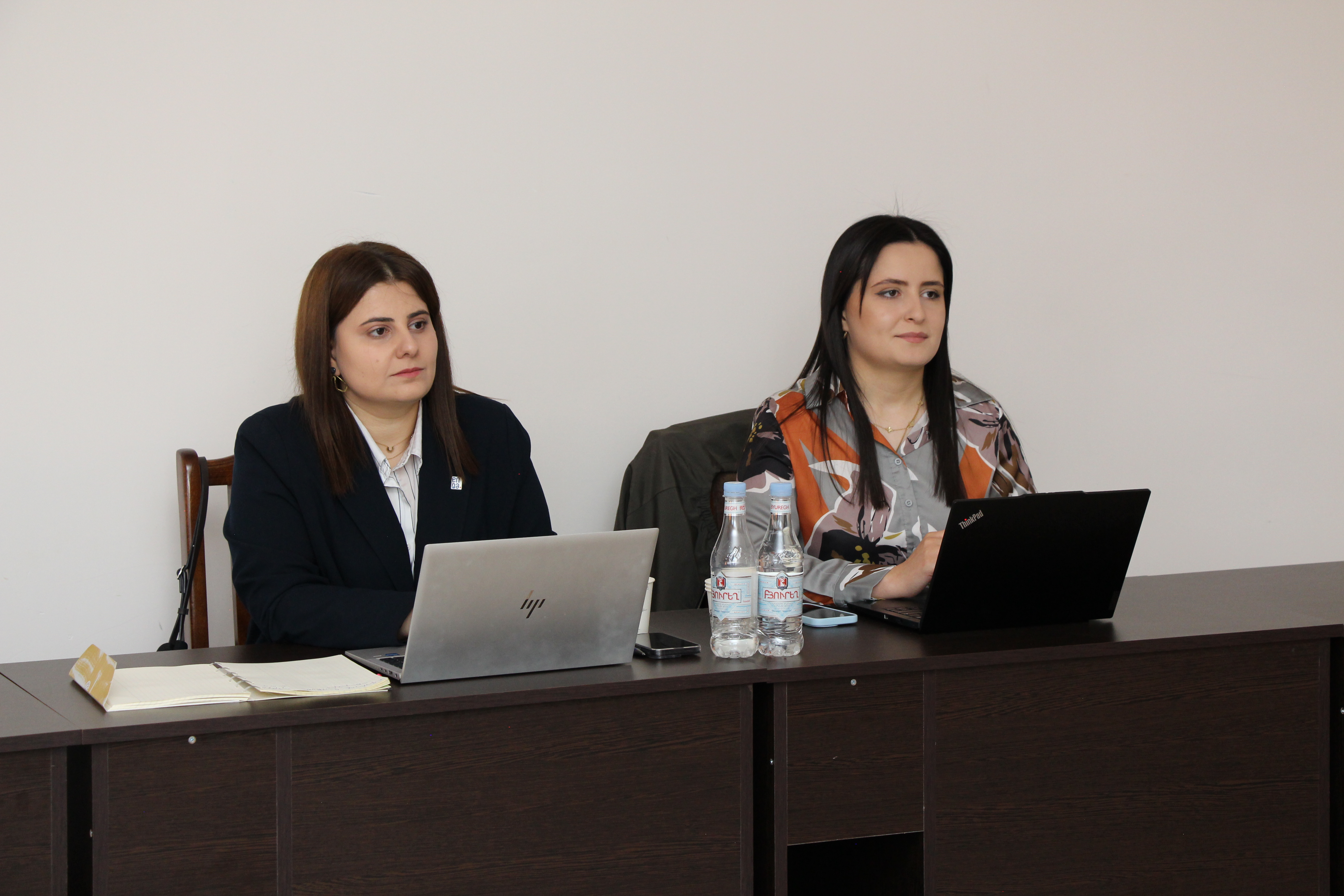

The academic programme (AP) effectiveness is measured by the competences students acquire upon graduation. With this emphasis, on May 20, ANQA conducted a monitoring of the internal quality assurance system at the Yerevan State Humanitarian-Technical College.
The monitoring examined how student assignments, teaching methods and assessment contribute to the achievement of the AP outcomes. Discussions were held with the institution's management staff, QA managers, heads of chairs, teachers and students.
Special emphasis was placed on the mapping of AP outcomes, the revision of assignments and the alignment of assessment formats. It was highlighted that programme enhancement should be reflected not only in documentation, but also in teaching practices, practical assignments, internships and student achievement.
It was noted that each assignment should have a clear goal, specifying the competences it develops, its contribution to outcome achievement and the assessment criteria applied. Through this approach, assessment is viewed not only as a means of assigning grades, but also as a tool for making student progress visible and supporting learning enhancement.
Reference was made to the strengthening of cooperation with employers. It was highlighted that employer feedback should focus on the identification of graduates’ specific competences, indicating their strengths, areas for further development and the competences that can provide them with a competitive advantage in the labour market.
The role of internship as a key component in the achievement and verification of AP outcomes was also addressed. It was noted that internship assignments, employer feedback and student activities should be aligned with the professional competences established by the programme.
The discussions also covered the development of students' professional digital skills, the evaluation of the effectiveness of foreign language teaching, the teacher training and the institutionalisation of support mechanisms for novice teachers.
From the perspective of the internal quality assurance system, importance was attached to the collection and analysis of substantial data as a basis for continuous enhancement of APs, teaching, assessment and internship. It was highlighted that percentage indicators should be complemented by qualitative analyses that will demonstrate the impact of processes on student learning.
At the end of the monitoring, ANQA's specialists summarised the key discussion points and stressed that the institution should use the collected data to support the continuous enhancement of APs, assignments, assessment and internship.