
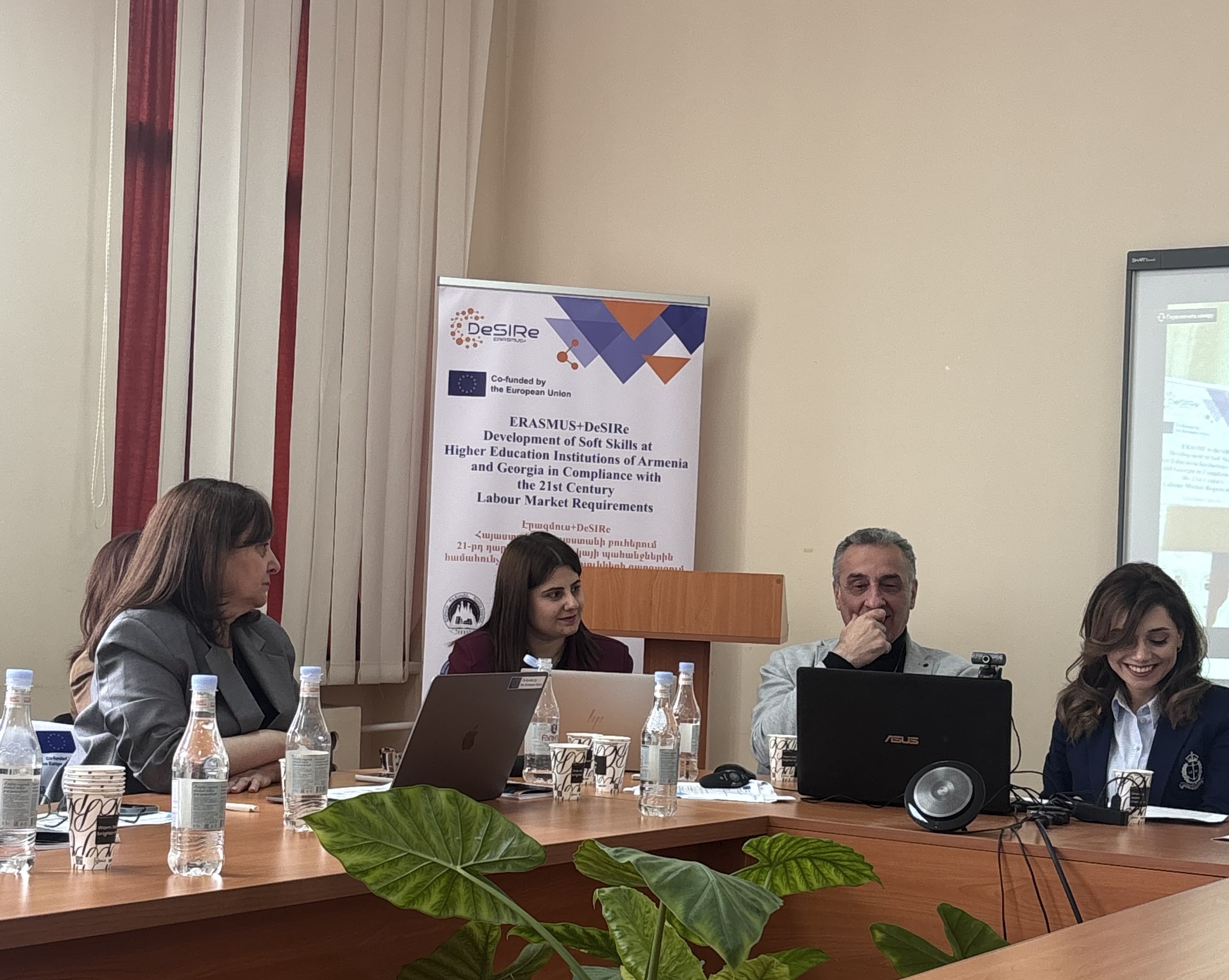
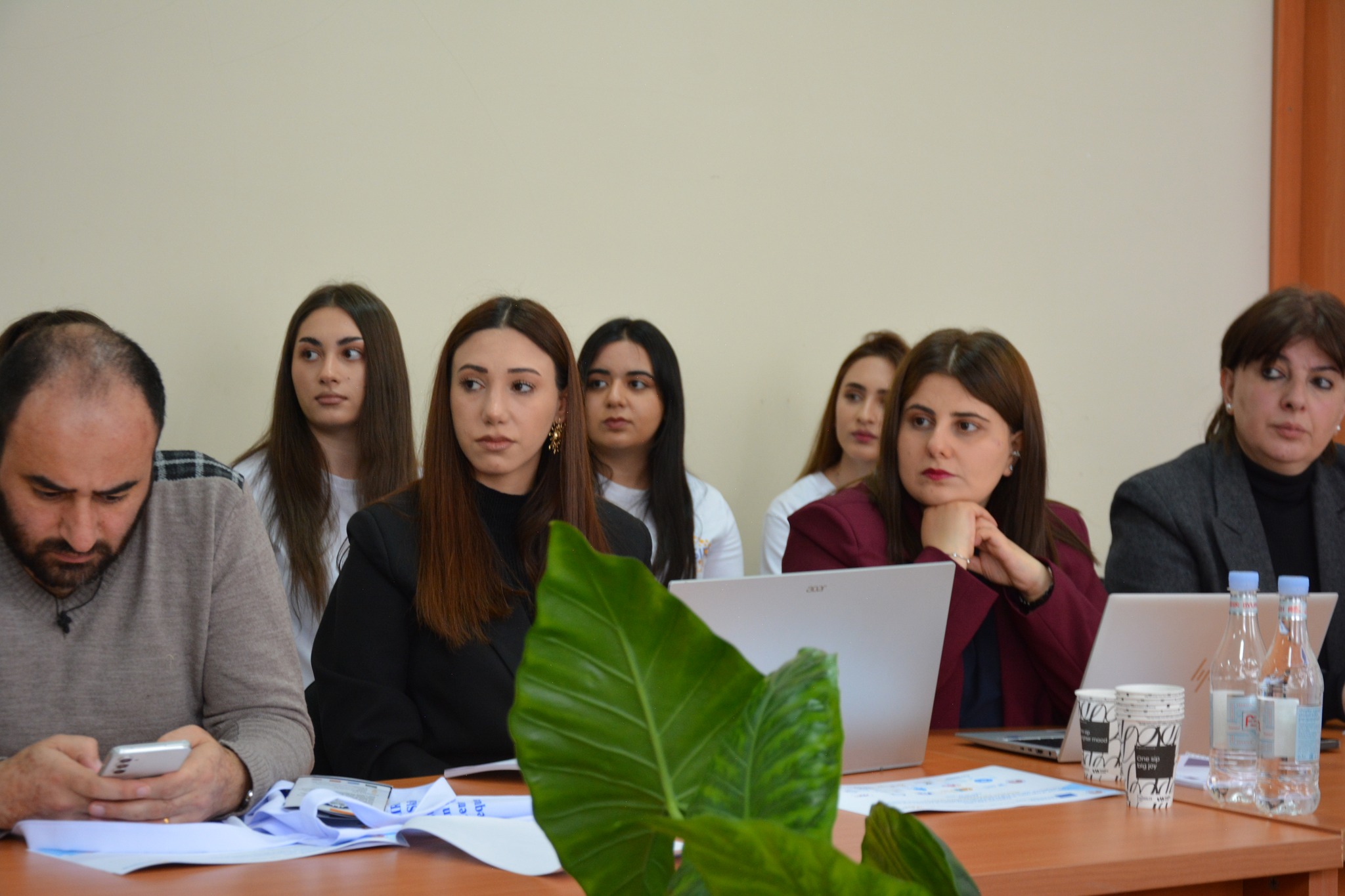
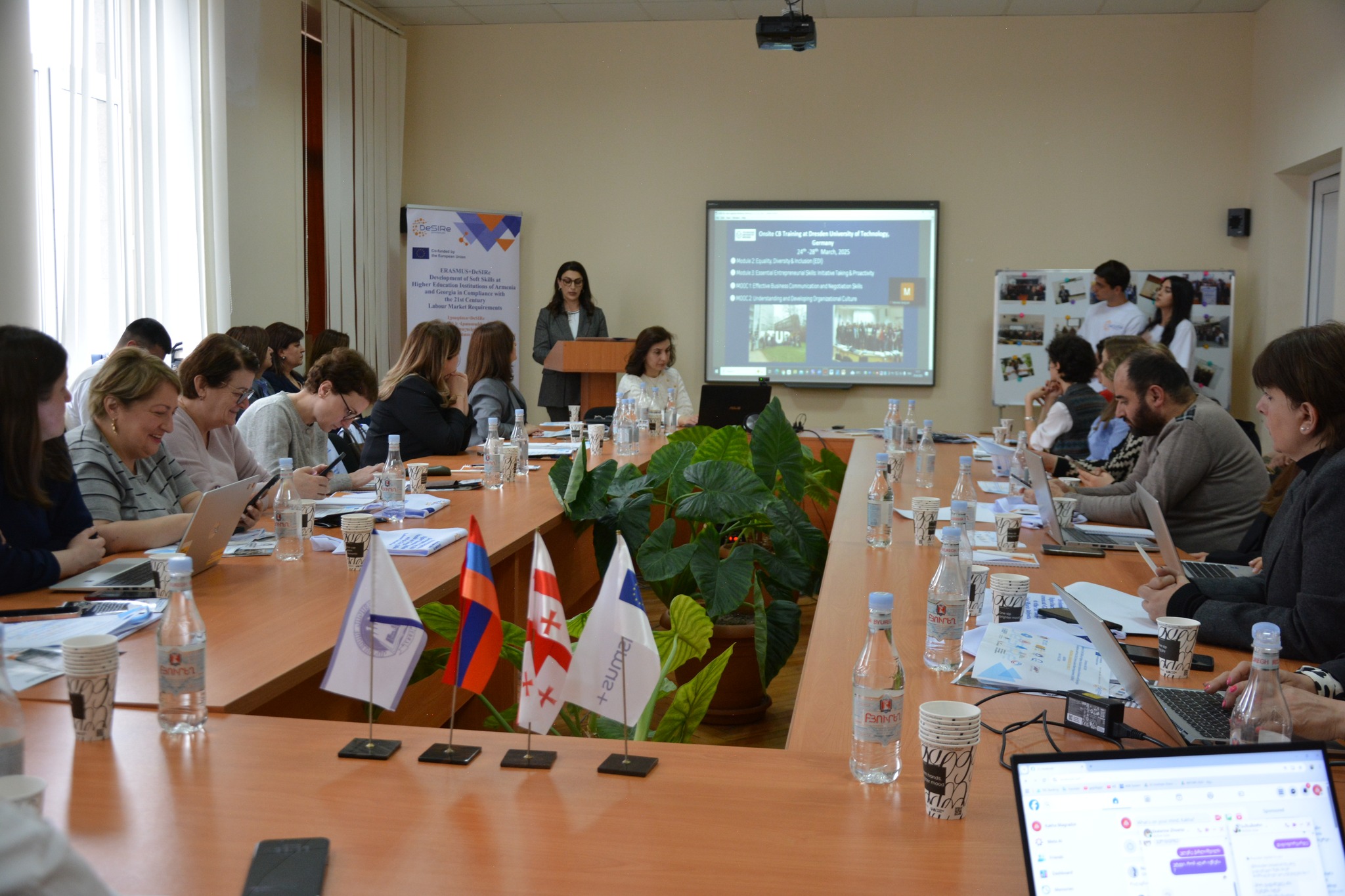
On April 20, Goris State University hosted the first Regional Awareness Day as part of the Erasmus+ Development of Soft Skills in Higher Education Institutions of Armenia and Georgia in line with the requirements of the 21st Century Labour Market (DeSIRe) project. The event brought together representatives from Armenian, Georgian and European partner HEIs, quality assurance agencies and employer organisations. It was conducted in a hybrid format, combining in-person and online participation.
ANQA participated as a project partner, sharing the QA perspective on the development and assessment of transferable skills and their systematic integration into academic programmes (APs).
During the event, the results of the project work packages, the methodological approaches applied and the tools under development were presented, with a focus on the formation of transferable skills and their alignment with labour market requirements.
Particular emphasis was placed QA mechanisms, specifically:
- the integration of transferable skills into APs;
- the creation of criteria and indicators for assessment of their achievement;
- the alignment of teaching and assessment methods with the intended learning outcomes.
During the panel discussion “Do HEIs Equip Students with the Transferable Skills Required by Employers?”, held as part of the event, ANQA’s representative addressed how QA systems can help ensure that the skills developed at HEIs are measurable, verifiable and aligned with labour market expectations.
The discussions highlighted the need for systematic cooperation between HEIs and employers, as well as the introduction of clear mechanisms for the assessment of transferable skills within internal quality assurance processes.
ANQA and Georgia’s National Center for Educational Quality Enhancement (NCEQE) have developed a common assessment framework for modules and Massive Open Online Courses (MOOCs) for the development of transferable skills.
The developed framework includes clearly defined criteria and indicators for the evaluation of the quality of project-developed modules and online courses.
The framework builds on the ESG and international best practices, (including OECD approaches), ensuring the comparability, transparency and reliability of the evaluation process. The evaluation findings will inform a joint report that will provide a basis for the enhancement of the piloting and further introduction of the modules at the HEIs.