
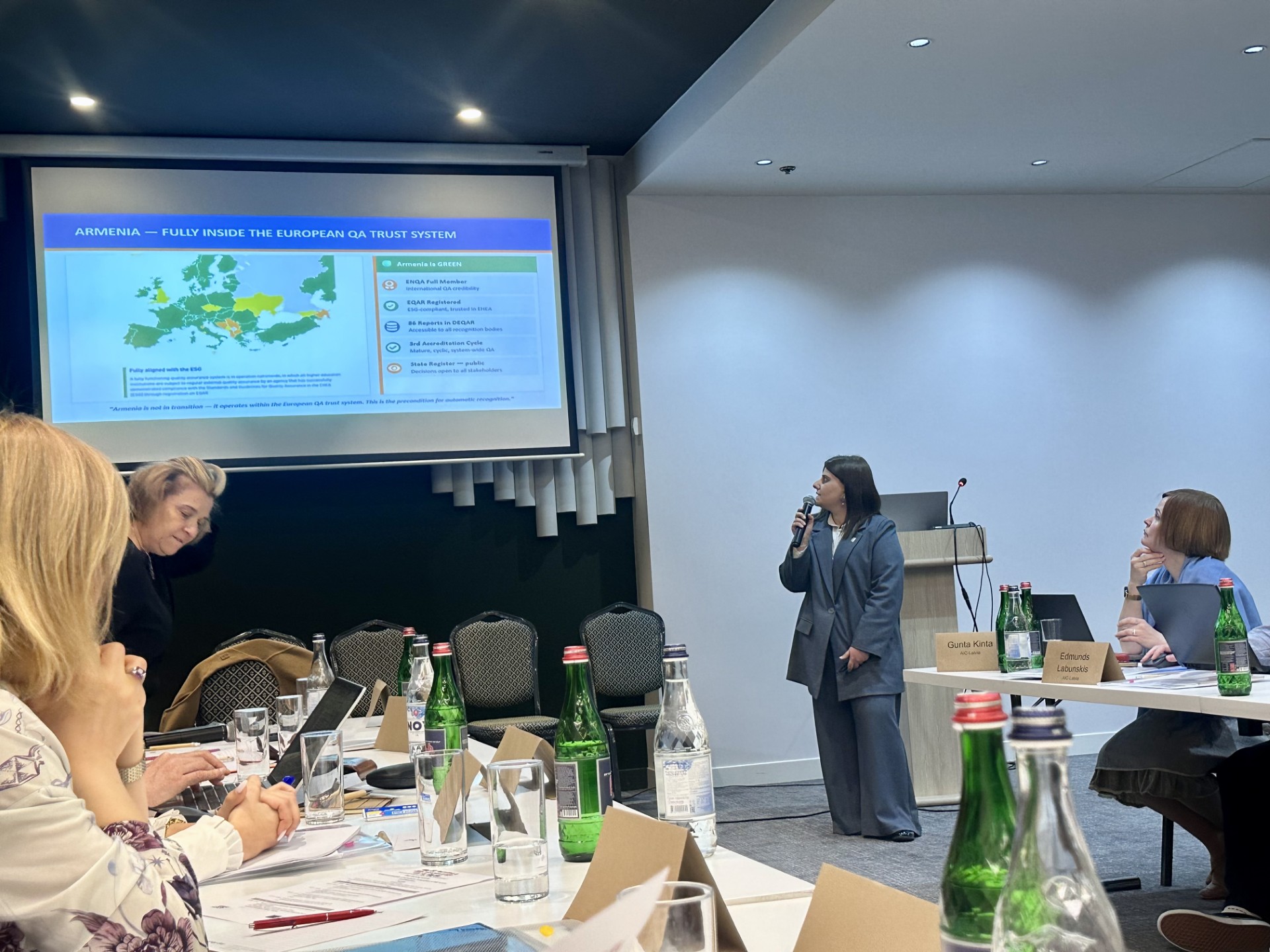
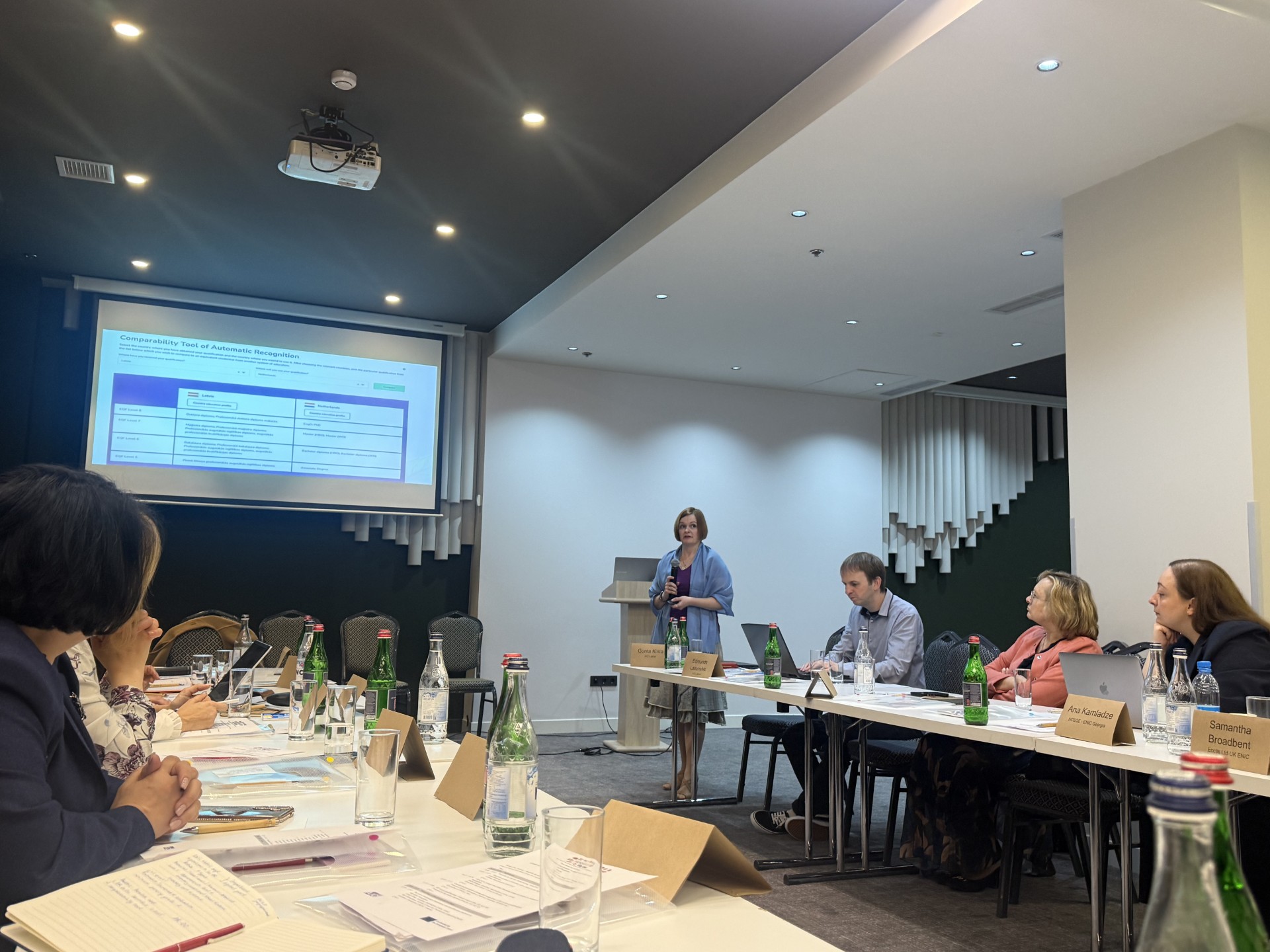
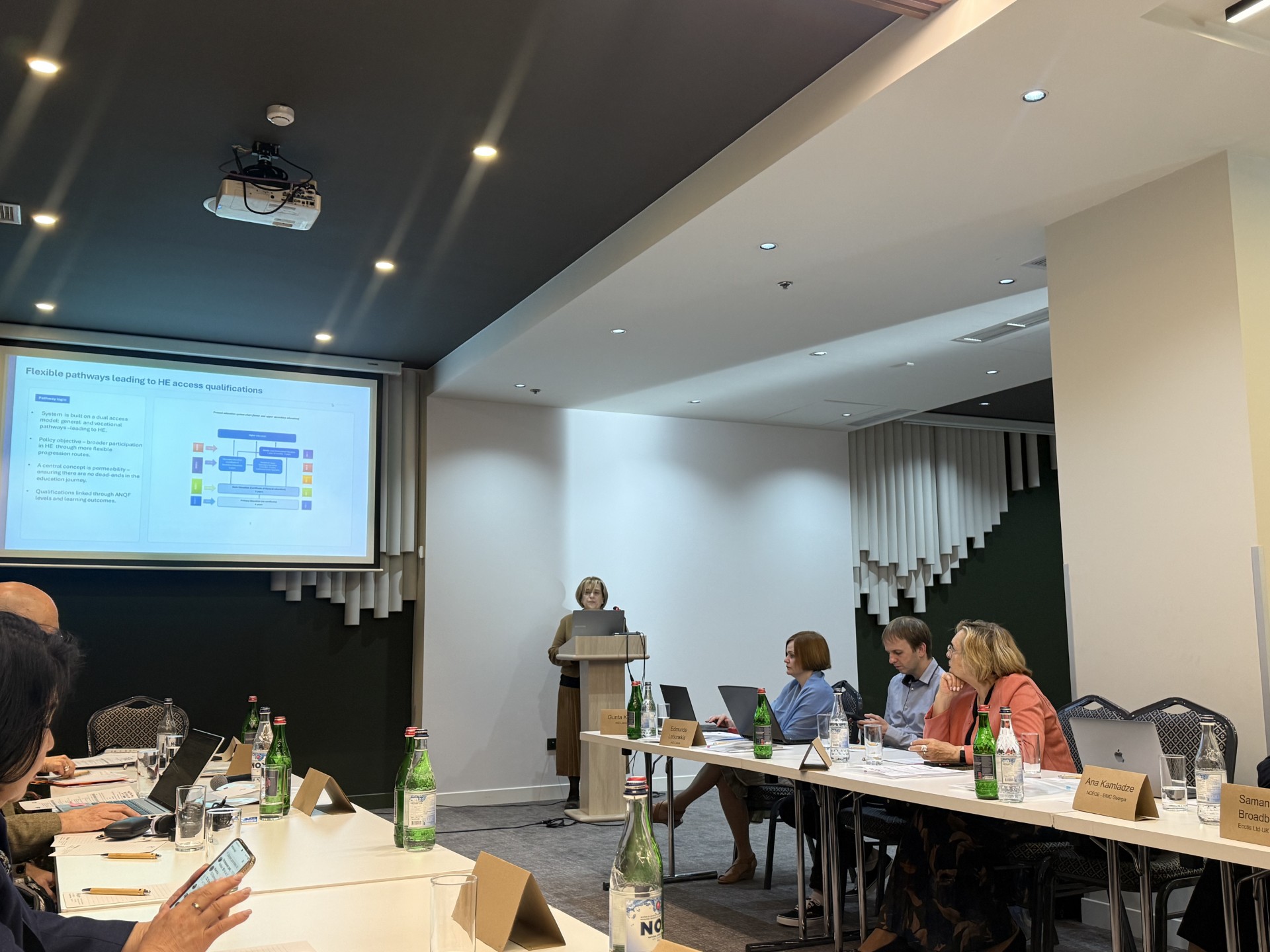
On April 22, a peer learning activity was held as part of the “ARAQUA 2” project to discuss the automatic recognition of qualifications and the factors facilitating its implementation. ANQA also participated in the meeting at the invitation of the National Information Center for Academic Recognition and Mobility (ArmENIC).
During the meeting, Meri Barseghyan, specialist at ANQA’s Policy Development Division, presented Armenia’s practice, focusing on the role of the QA system in the automatic recognition of qualifications. The presentation highlighted that Armenia’s QA system, aligned with the ESG, the independence and transparency of external review, as well as the internal quality assurance mechanisms embedded in HEIs, provide a reliable basis for the recognition of qualifications.
Particular emphasis was placed on the importance of information access and transparency. It was noted that the public availability of QA outcomes, particularly through the State Accreditation Register and the Database of External Quality Assurance Results (DEQAR), enables the use of existing data in the recognition process and helps avoid duplicate evaluations, thereby contributing to mutual trust within the European Higher Education Area (EHEA). All relevant information is available in both Armenian and English.
The State Accreditation Register is linked to DEQAR, ensuring the automatic publication and accessibility of review results at both national and international levels. The publication of ANQA’s external review reports in DEQAR contributes to greater transparency of Armenia’s higher education system and strengthens the international recognition of qualifications awarded by Armenian HEIs within the EHEA.
The presentation also featured the practice of joint accreditation as a practical example of cooperation and mutual trust between QA systems, enabling recognition-related elements to be incorporated into the evaluation process. The discussion also highlighted that Armenia’s QA system has evolved gradually over time. At the initial stage, institutional accreditation contributed to the development of the QA system and the establishment of a quality culture, while academic programmes (APs) have consistently remained a key focus of studies. In particular, each institutional accreditation process includes a review of three APs, examining their content and implementation, as well as the processes for the achievement and validation of the intended learning outcomes. Meanwhile, steps are taken to strengthen the QA of all APs, including through self-audits and an increased focus on the evaluation of the intended learning outcome achievement.
These developments lay the foundation for a more systematic implementation of programme accreditation and support greater reliability in the automatic recognition of qualifications. During the discussion, participants shared their practices and perspectives, exploring the applicability of the presented approaches across different countries and contexts.
It should be noted that the Erasmus+ ARAQUA 2 project aims to support the development of the automatic recognition of qualifications giving access to higher education, by promoting data collection, exchange of practices and cooperation between ENIC/NARIC centres and HEIs. The project is a continuation of the ARAQUA initiative (2022–2024). The project brings together organisations in the field of qualifications recognition from Armenia, Latvia, Bosnia and Herzegovina, Denmark, Georgia, Croatia, Italy, Kazakhstan, Malta, Serbia, and the United Kingdom.