
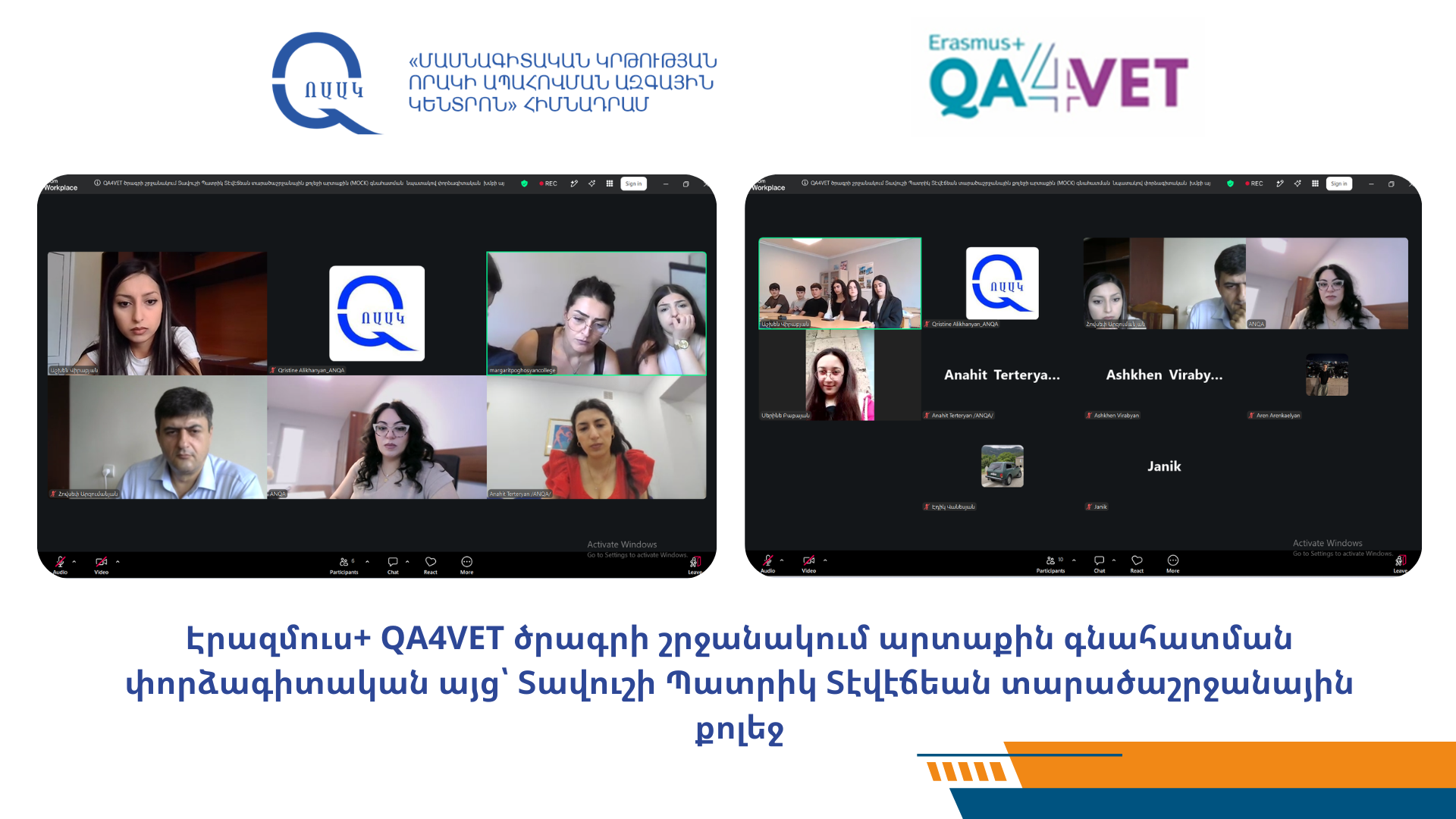
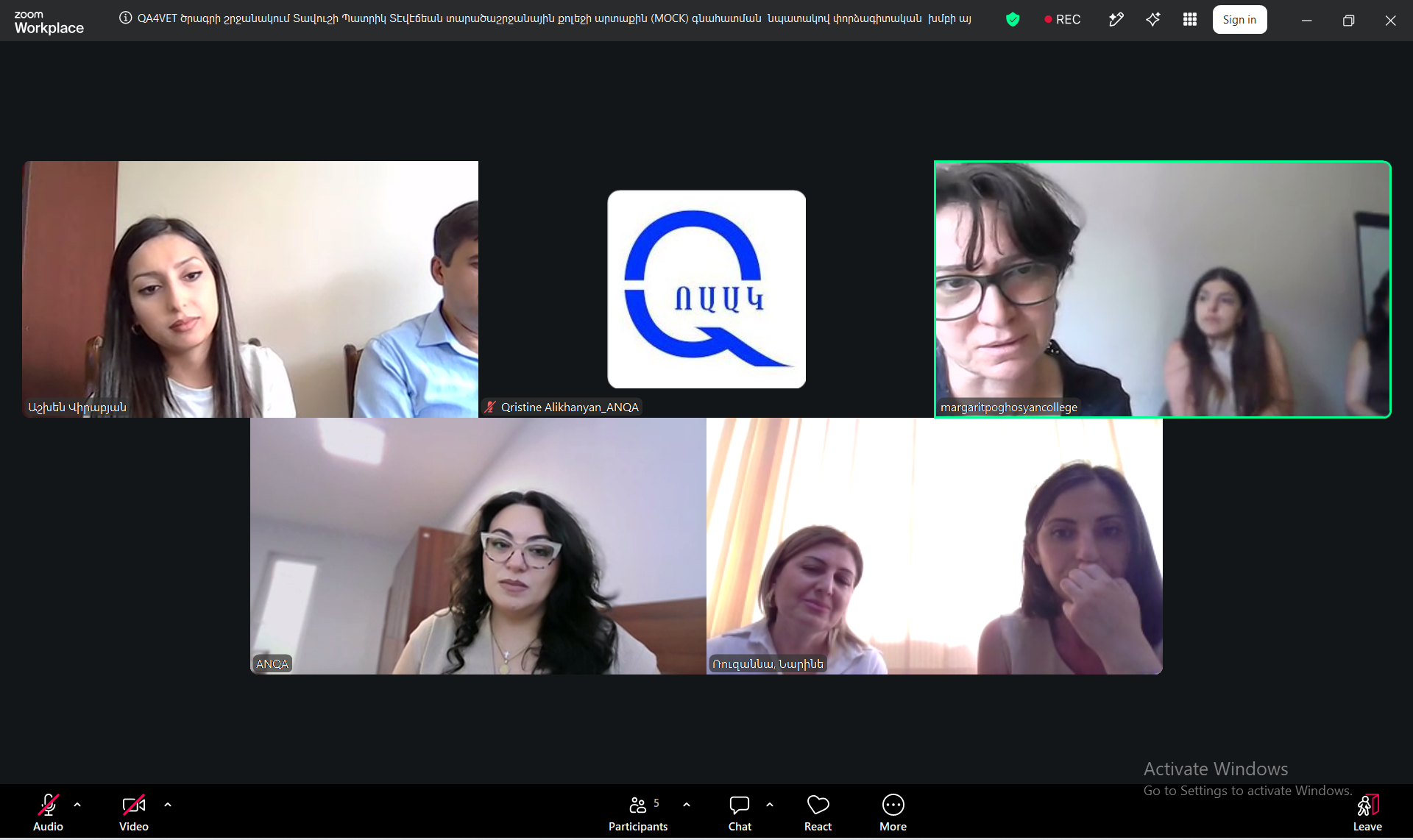
On July 7, ANQA conducted mock visit to the Tavush Regional College named after Patrick Devedjian as part of the Erasmus+ QA4VET project.
Prior to the mock visit, the expert panel studied the institution’s self-evaluation and SWOT analyses, which shaped the key areas of discussion.
As part of the mock visit, meetings were held with the institution's management staff, heads of chairs, teachers, students and employers.
The visit aims to support VET institutions in the development of internal evaluation capacities and pilot new SWOT-based self-evaluation templates. This approach enables a more in-depth observation of the institutions' strengths, development opportunities and areas for continuous enhancement.
Drawing on the institutions’ SWOT analyses addressed during the meetings, the discussions clarified further development opportunities.
Mock visits within the QA4VET project aim not only to review the institution, but to jointly evaluate the extent to which the institution's SWOT analysis reflects its actual developments and to explore further enhancement opportunities. To this end, the visits are advisory in nature and aimed at continuous enhancement.
As part of the QA4VET project, experts selected by VET institutions become involved in the process, enabling the institutions to subsequently conduct independent internal evaluations, identify development areas and support continuous enhancement.
The meetings focused on the following key development areas:
- new strategic development plan;
- training and continuous development of the teaching staff;
- academic programmes;
- cooperation with employers, their active engagement;
- effective utilisation of resources.
The process coming after the mock visit is the preparation of the expert panel report, analysing the institution's activities against institutional accreditation criteria. The expert panel will identify enhancement areas and provide relevant recommendations, based on which the institution will prepare a follow-up plan with a clear schedule.
The mock visits within the project are conducted on an ongoing basis. The resulting considerations and advisory recommendations are intended to foster a quality assurance culture in VET institutions, strengthen internal evaluation mechanisms and establish continuous enhancement processes.