
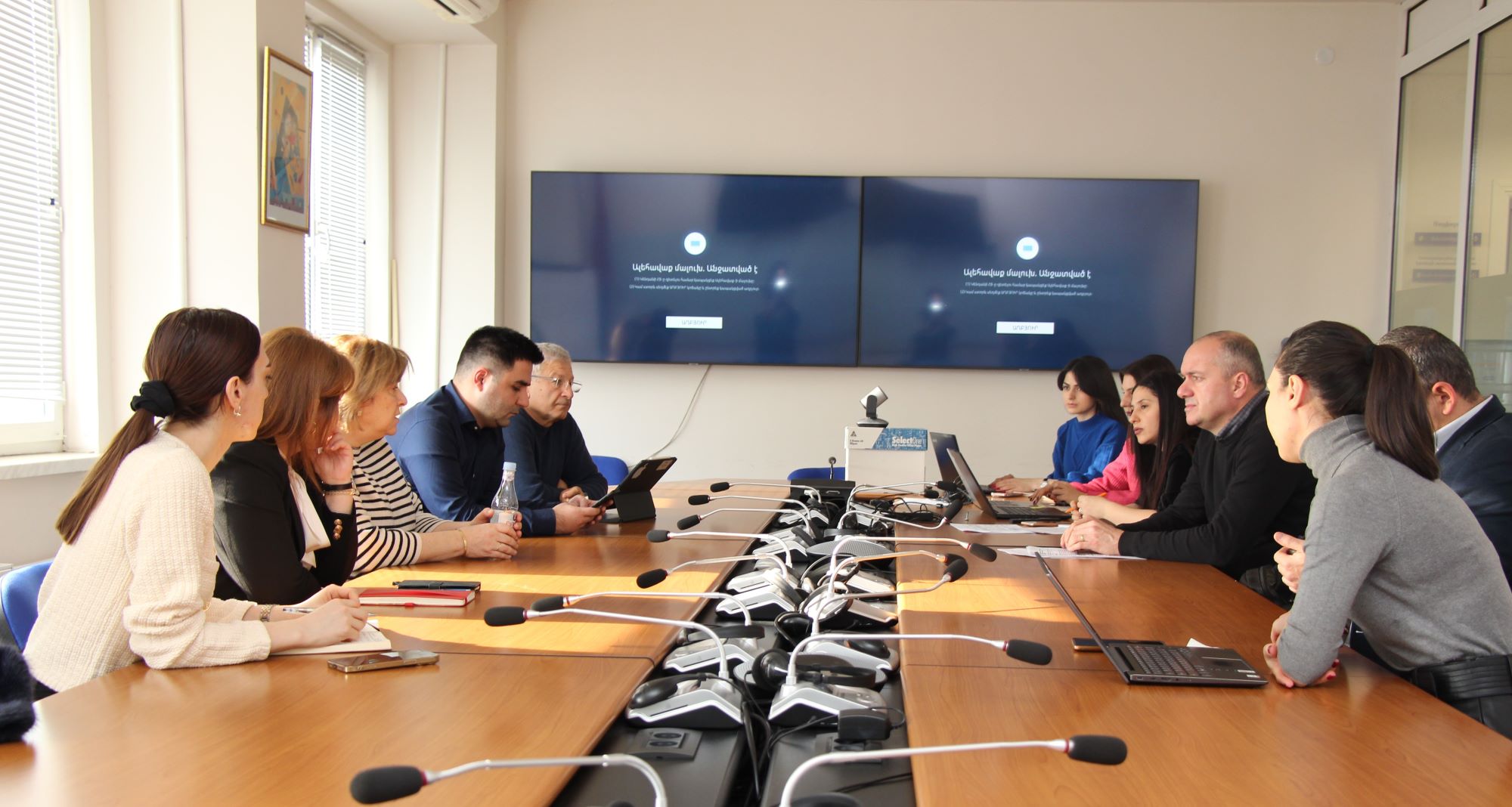
On December 26, as part of the Erasmus+ MicroGear project, ANQA held a meeting with local partners to discuss the roadmap for the development and implementation of microcredentials in Armenia.
During the meeting, the participants discussed the roadmap stages and the current state of micro-credentials in the Armenian higher education system. The discussions focused on the micro-credentials’ potential to promote continuous education, meet the labor market requirements and align with international and European standards.
The local partners decided to refine the roadmap, ensuring its full alignment with Armenia's educational priorities and challenges. It was agreed that the finalised roadmap would be presented to the Higher Education and Science Committee for further discussion.
Micro-GEAR (Micro-credentials for Higher Education Systems of Armenia and Georgia) is a three-year (2024-2027) Erasmus+ project supporting structural reforms in the higher education sector of the South Caucasus region, primarily focusing on Georgia and Armenia, with the aim of introducing and facilitating the broad proliferation of micro-credentials as a tool for improving relevance, quality and flexibility of higher education. In line with the European Council’s Recommendation on a European approach to micro-credentials for lifelong learning and employability, the project will update the National Qualifications Frameworks in both countries, build national consensus over principles of micro-credentialing, stimulate educational activities leading to micro-credentials and facilitate their mutual recognition.
As part of the project, the involved HEIs will develop and pilot micro-credentials with the support of partners.
The project partners are the ministries of education of Armenia and Georgia, national accreditation and academic mutual recognition centres, higher education institutions (Yerevan State University, Eurasia International University, Georgian Technical University and The University of Georgia), research centres. On the European side, the project consortium includes three higher education institutions, the Italian ENIC-NARIC Centre and a Quality Assurance Expert Company.