




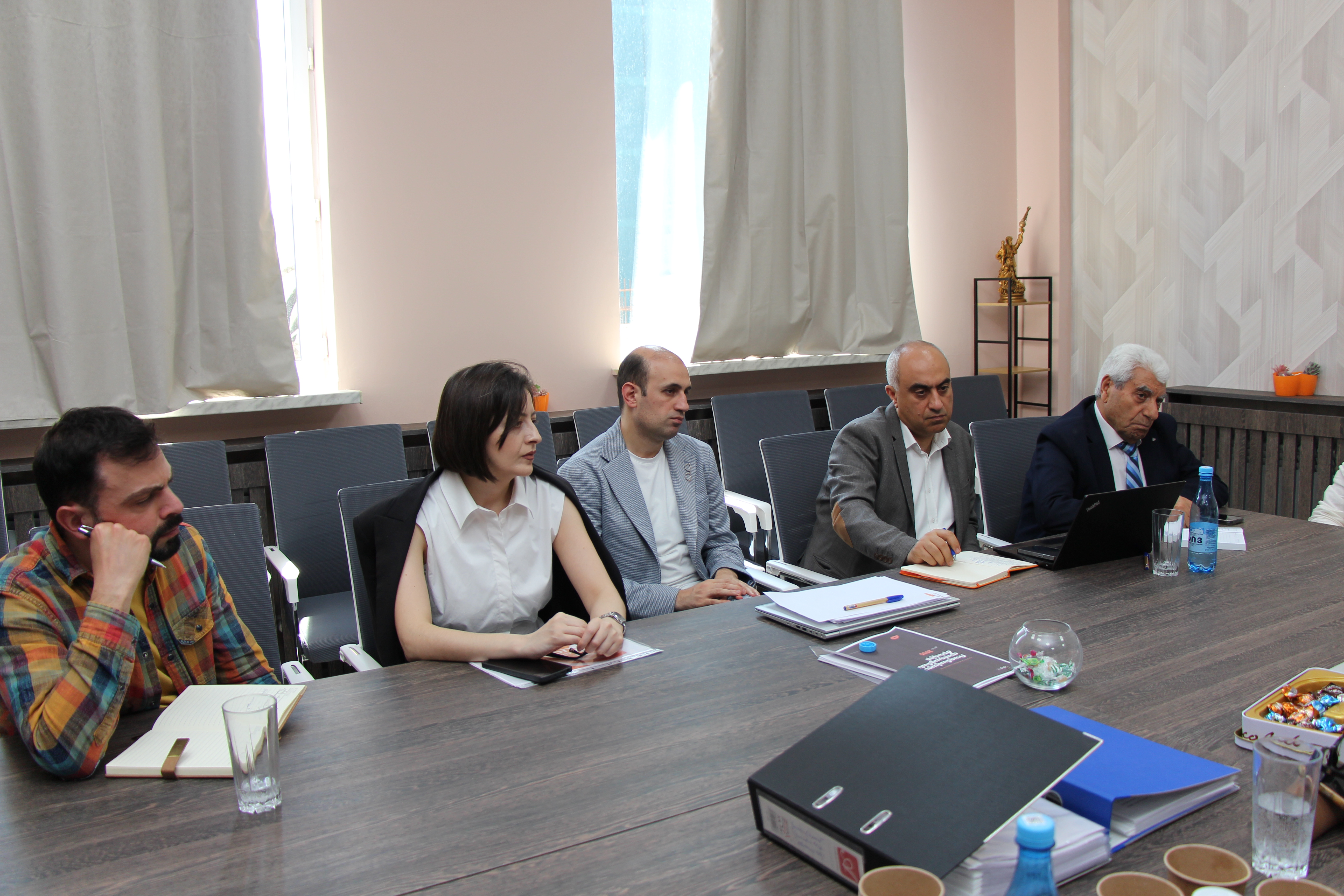
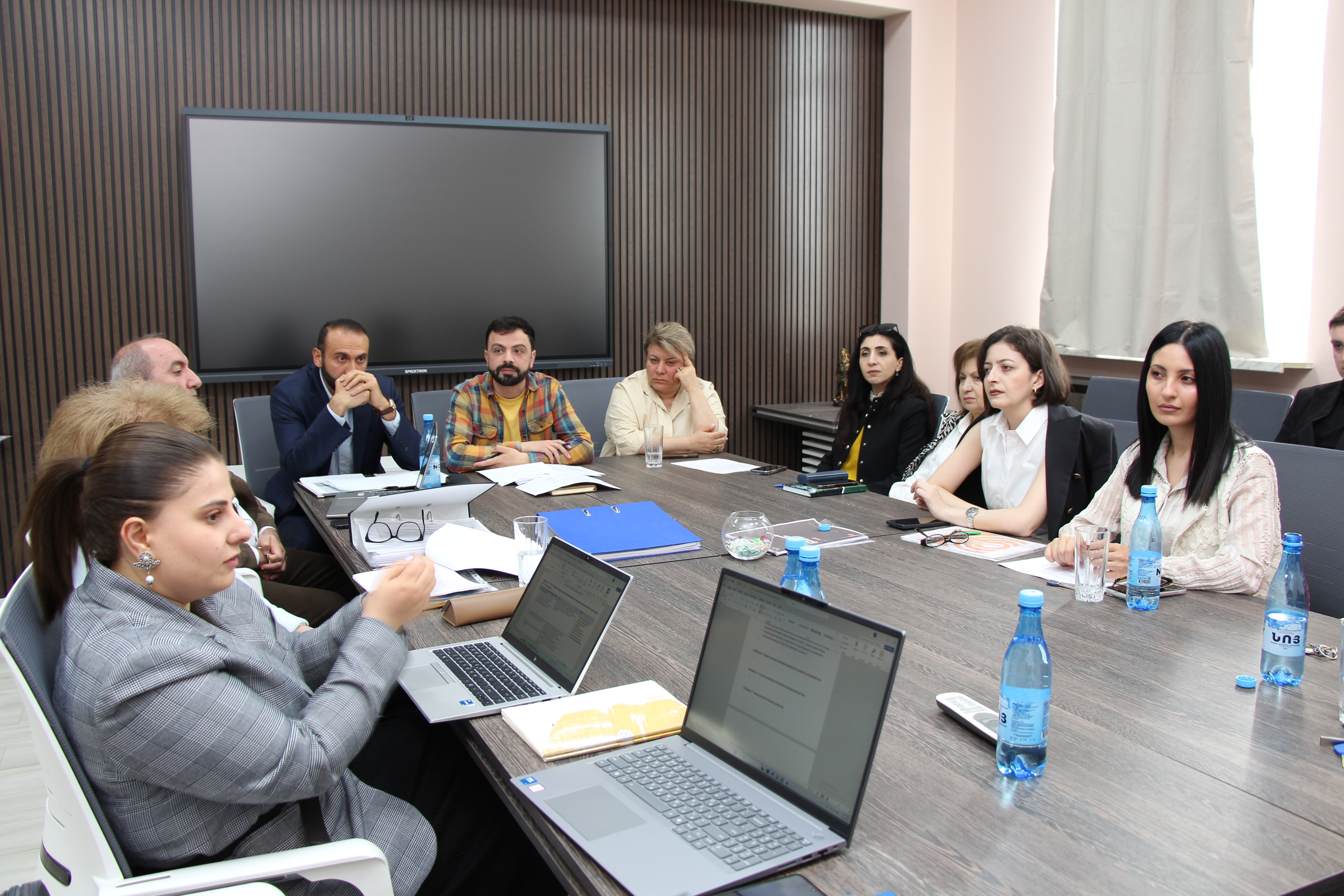
On May 25, ANQA conducted a monitoring at the Eurasia International University.
The aim was to observe the post-accreditation continuous enhancement processes. The monitoring addressed how the institution's changes are reflected in the academic programme (AP) implementation, teaching, assessment and the student learning experience.
The discussions mainly focused on the AP effectiveness from the perspective of students' achievement of the programme outcomes and professional competencies. It was highlighted that the AP should be viewed as a coherent pathway for the development of students' competencies, clearly demonstrating the formation of programme outcomes, the assignments that support their achievement and relevant assessment criteria.
Particular attention was placed on the role of AP mapping in the evaluation of the programme effectiveness. Mapping was addressed as an analytical tool that demonstrates how each course contributes to the development of students' professional competencies, ensures the interconnection between courses and supports the transition from individual courses to the achievement of the AP outcomes.
In this context, it was emphasised that mapping should become a shared working tool for teachers. It helps each teacher understand the place of their course in the AP, its connection with other courses and contribution to the formation of the student's final professional competencies. Through this approach, the AP becomes a unified system that supports the progressive development of student competencies.
The discussions clarified the AP managers’ responsibilities. The AP manager’s role was emphasised in terms of the demonstration of the overall AP outcomes, monitoring of the interconnection between courses, the oversight of the application of assessment criteria and the translation of feedback into decisions for programme enhacement.
Reference was also made to the AP self-audit mechanisms. The discussions highlighted the integration of data from various sources through the audit, including feedback from students and teachers, external expert observations, student work, assessment criteria, internship results, graduation papers and theses. This approach makes it possible to observe the AP implementation based on the actual learning process and students' learning outcomes.
Special emphasis was placed on data collection and targeted use of data. It was noted that the data generated through the institution's LMS system can serve as a basis for the AP enhancement, provided that the goals of data collection, directions of analysis and mechanisms for the integration of findings into the decision-making process are clearly defined.
The use of data to observe student learning outcomes and inform the AP enhancements was highlighted.
Importance was attached to the alignment of modern digital tools, including AI, with the AP outcomes. The need to link the digital tools with students' professional thinking, independent work, academic integrity and clear assessment criteria was emphasised.
The monitoring results demonstrate that the analytical use of the AP mapping, clarification of the AP manager's responsibilities, further enhancement of the self-audit process, data-driven governance and development of students' competency assessment mechanisms are key to the continuous AP enhancements. These areas contribute to the strengthening of the internal quality culture and continuous education quality assurance.