
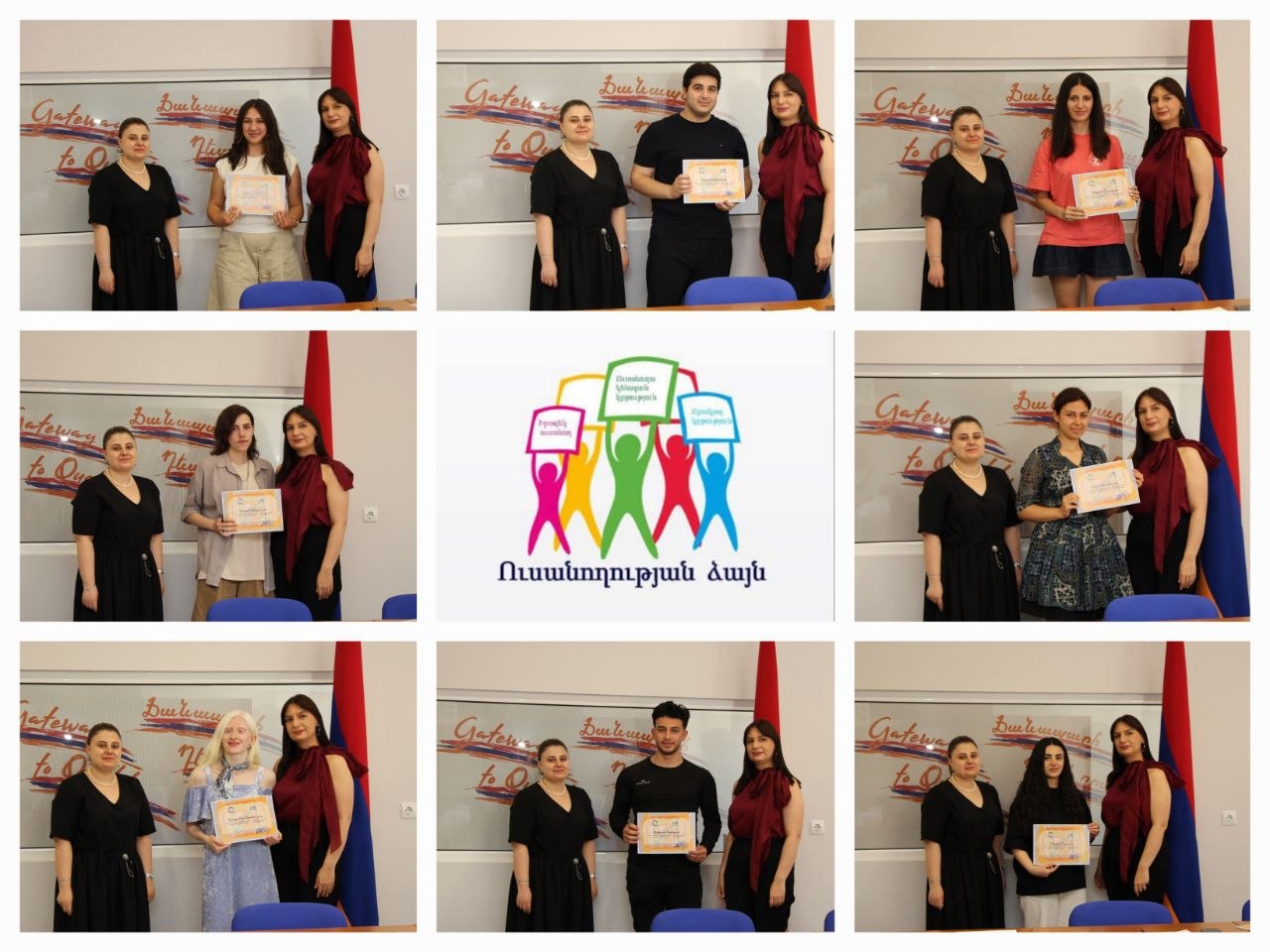
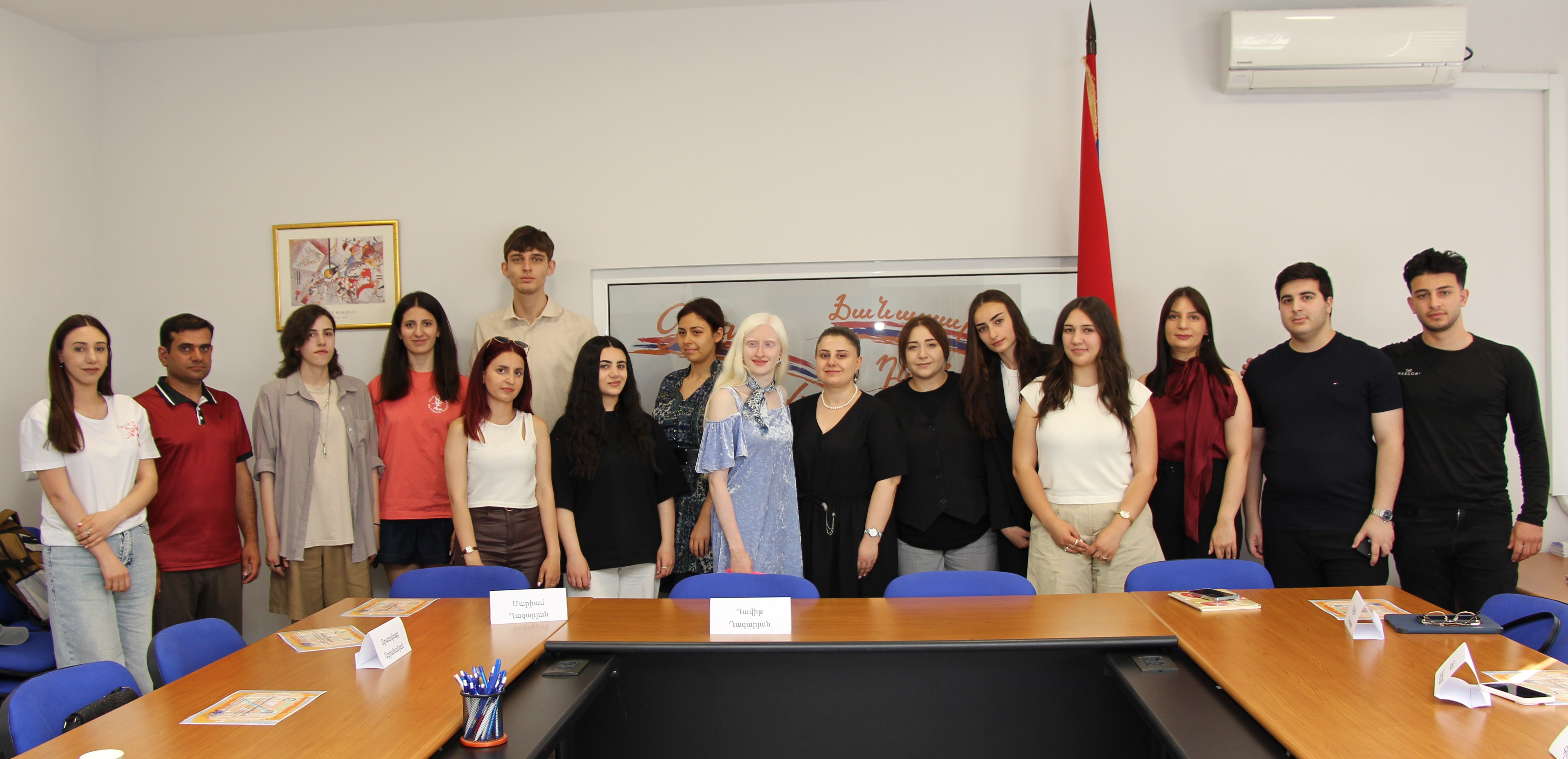
On July 10, ANQA held the final meeting of another student-expert training course as part of the "Students' Voice" project. Students who successfully completed the course received certificates and joined ANQA's student expert pool.
As part of the concluding discussion, the students met with Varduhi Gyulazyan, head of ANQA's Institutional and Programme Accreditation Division. The discussion explored the student-centred education, the importance of nurturing professional curiosity, the role of questioning, the involvement of teachers with practical experience and the development of students as independent professionals. Student-centred education extends beyond meeting students' expectations. It entails an educational environment that enables students to become active participants in their own learning through questioning, exploration, experimentation, analysis and independent problem-solving.
The discussion highlighted that professional curiosity is one of the key drivers of learning. When students are genuinely interested in their future profession, they strive to understand not only what they should do, but also why and how it should be done. This curiosity motivates them to deepen their knowledge, embrace new challenges and continuously develop their professional competencies.
Questioning skills were considered fundamental to effective learning and expert practice. Through questioning, students move beyond pre-packaged answers, uncover connections between ideas, understand the root causes of issues and develop their own well-founded judgements. Similarly, the goal of a student expert is not just to identify an issue, but to gain a deeper understanding of it through relevant questions and contribute to possible solutions and enhancements.
Another key focus of the discussion was the role of teachers in students' professional development. It was highlighted that teachers with practical experience help students bridge the gap between theoretical knowledge and real-world professional situations and understand its practical application in decision-making and problem-solving. Meanwhile, teachers were also recognised as professional role models for students. Their example helps students envision their professional identity, the responsibilities they will assume, develop effective communication skills and embrace the values that should guide their professional practice.
The discussion also addressed the balance between theoretical and practical learning. It was noted that the goal of education extends beyond the transfer of knowledge. Its outcome should be a specialist who is able to carry out professional activities independently, apply acquired knowledge, solve unfamiliar issues, make informed decisions, and assume responsibility for the outcomes of their professional activities.
Assignments based on real-world professional situations, practical learning, mentoring, and developmental feedback were emphasised as key elements in the development of these competencies. Learning from experienced professionals enables students to grasp not only the sequence of professional actions, but also the reasoning and logic behind professional decisions.
The meeting concluded with the observation that student experts play an important role in the QA processes not only from the perspective of representing the students' views, but also contributing to the continuous education enhancement.
The new student experts join a professional community that contributes to the development of more student-centred, practice-oriented and outcome-based education through constructive questioning, evidence analysis and collaboration with stakeholders.
The meeting ended with the presentation of certificates to the course participants.