

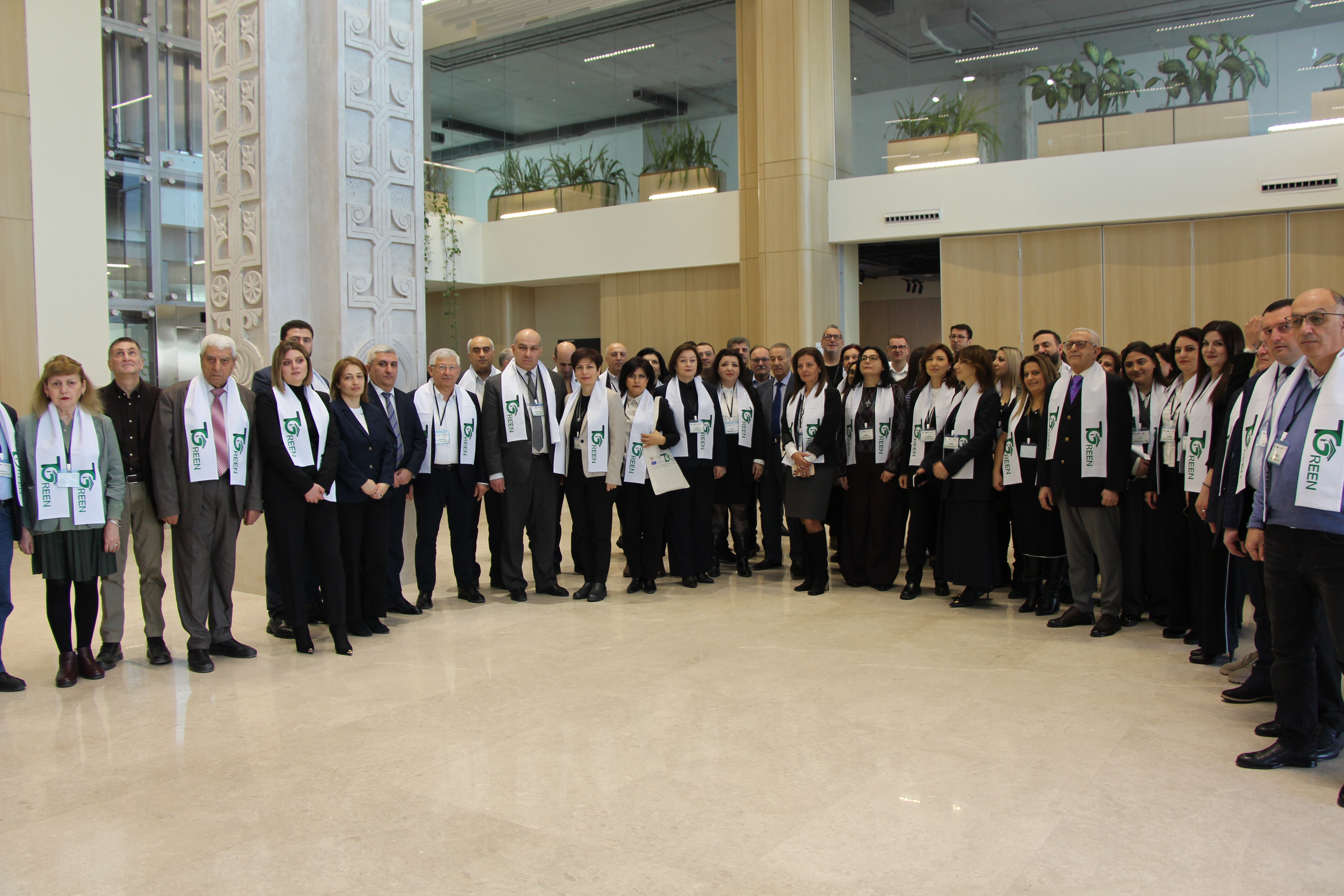
On February 18-20, the final conference of the three-year international Erasmus+ Transforming Graduate Education for Green and Sustainable Future (T-GREEN) project took place.
The EU-co-funded three-year project focuses on necessary reforms in graduate education, enabling the shift from traditional to future-oriented, green and interdisciplinary curricula and promoting student mobility.
Varazdat Hovhannisyan, project coordinator and head of the Education Quality Assurance and Development Center at the National University of Architecture and Construction of Armenia, particularly highlighted the importance of changing mindsets in education. He noted that the project also aims to promote the integration of green technologies into academic programmes (APs), which is significant not only for education but also for economic and technological progress. The project has also contributed to strengthening cooperation among Armenian HEIs through joint degree programmes and exchange of students and teachers.
Representatives of partner HEIs from Greece, Lithuania, Portugal and Poland shared their practice in the application of green technologies across different fields. ANQA is also one of the project’s key partners.
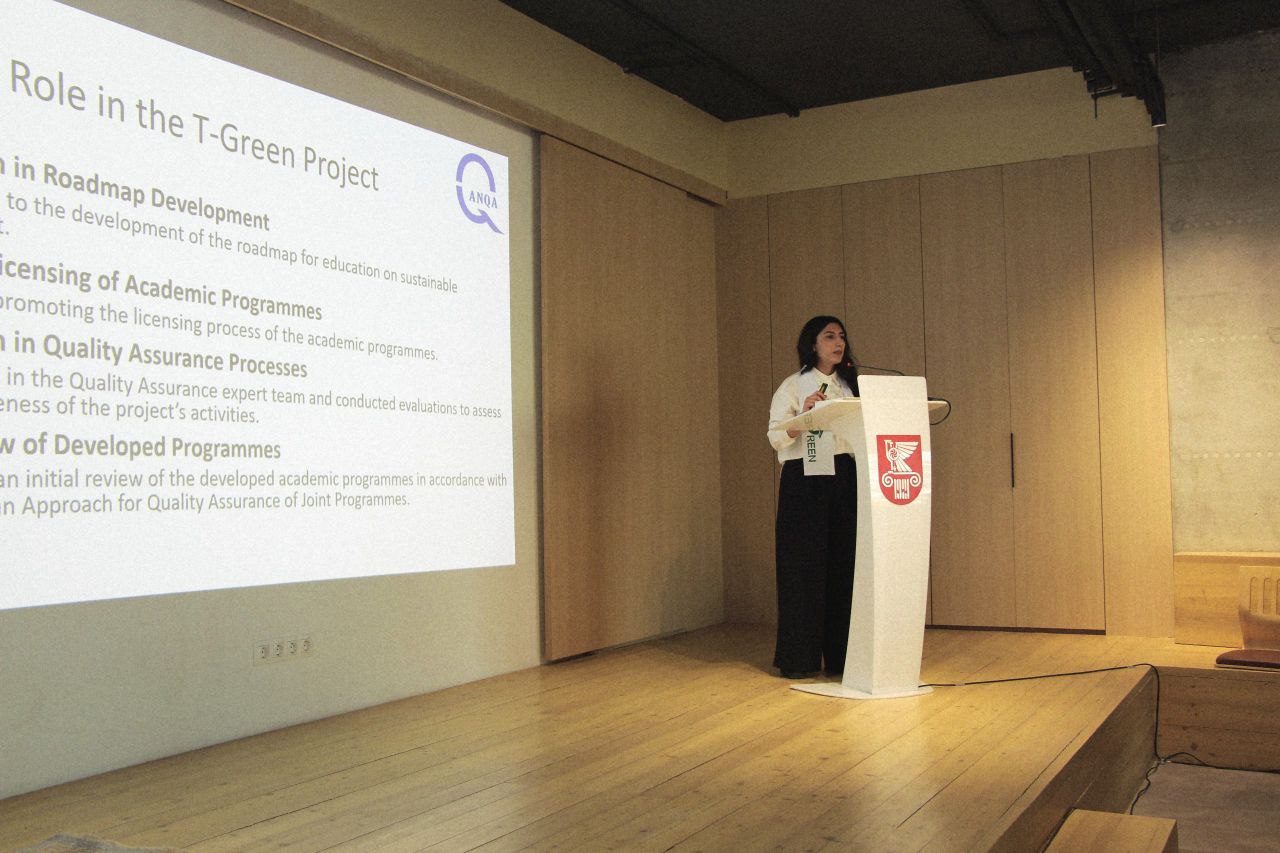
ANQA’s contribution and project outcomes were presented by Anahit Terteryan, specialist at the Institutional and Programme Accreditation Division. ANQA conducted external review of the APs developed as part of the project, drawing on European approaches to quality assurance for joint programmes. The review focused on the following areas:
- compliance with the legal framework;
- learning outcomes;
- academic programme;
- admission and recognition;
- teaching, learning and assessment;
- student support;
- resources;
- transparency and documentation;
- quality assurance.
The review aimed to ensure the full alignment of the APs with European QA standards and support their continuous enhancement.
It was also noted that this was an important experience for ANQA, as it was the first time that the review has been conducted solely on the basis of documentary evidence.
This experience is also significant for the implementation of mock accreditation envisaged under the new Law on Higher Education and Science.