
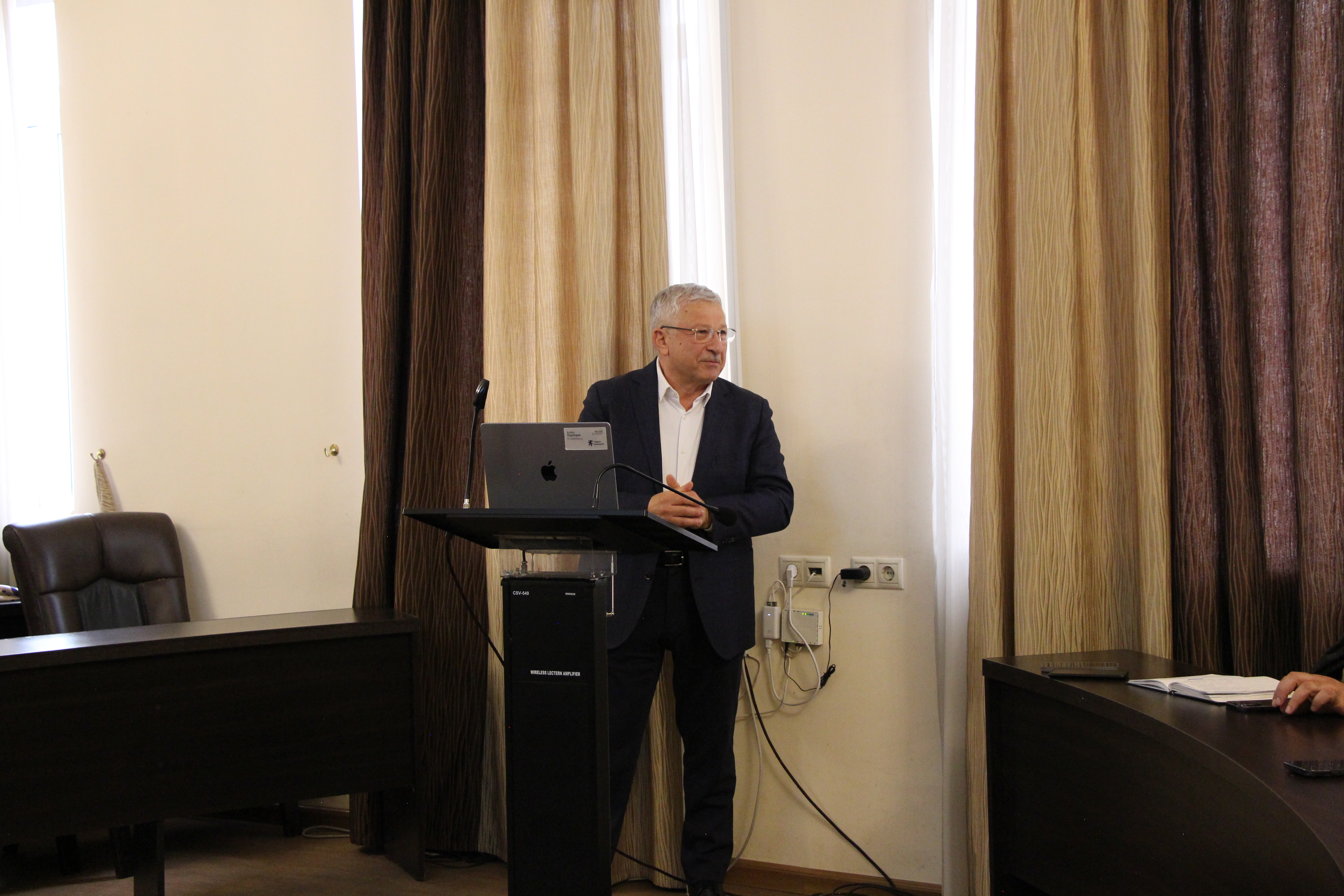
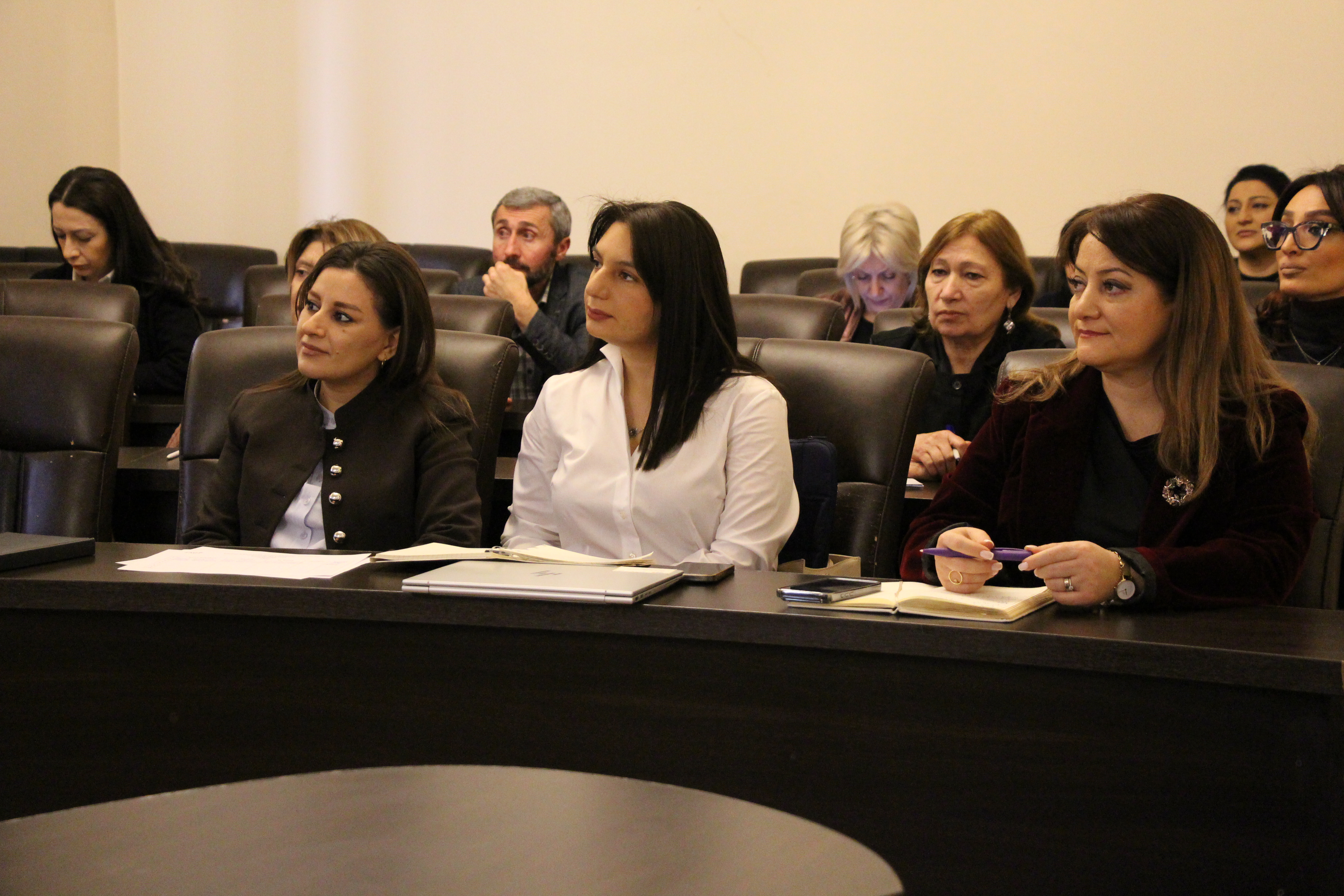
On February 24, the Khachatur Abovian Armenian State Pedagogical University hosted a discussion with the participation of the management staff, academic programme (AP) managers and teaching staff, focusing on the AP self-audit. The discussion addressed key issues related to the AP effectiveness, the achievement of learning outcomes, assessment and quality assurance. Particular emphasis was placed on the practical relevance of academic programmes and students’ actual professional preparedness.
The need to revise HEI academic programmes is driven by the Accreditation Committee's requirements for a comprehensive AP revision to support their effectiveness and quality assurance. This process includes the collection of student feedback, the examination of credit allocation and the evaluation of the actual workload of students’ independent study.
As part of the AP self-audit, the key issue is the HEIs' capacity to guarantee that every graduate is able to:
- independently manage a classroom;
- design assessment aligned with learning outcomes;
- work effectively with diverse learners;
- apply digital tools in teaching practice;
- analyse and improve their own teaching practice.
However, these fundamental competences are often overlooked in APs, with greater emphasis on theoretical knowledge. The discussion highlighted that APs often lack a systematic approach to the formation of independent classroom management skills, while student assessment should be grounded in clearly defined criteria. The targeted use of digital tools and the revision of the content and volume of students’ independent study were identified as key factors in the enhancement of educational effectiveness. These approaches are essential for the AP revision, quality enhancement and ensurance of practically applicable learning outcomes.
It was noted that AP outcomes are often formulated too broadly, which may result in the following:
- students do not clearly understand the competences they are expected to achieve;
- teachers find it difficult to design relevant assignments;
- assessment criteria fail to reflect actual competences.
The audit aims to determine how long it takes for key skills to develop and under what learning conditions, how these skills are integrated across different subjects, what progress students demonstrate during internships and whether the AP provides sufficient prerequisites for their development. This process requires targeted research and a systematic approach, enabling HEIs to review and enhance their academic programmes.
Importance was also attached to the verification of the AP learning outcomes.
The verification and audit of AP learning outcomes can be conducted at two levels:
- course level — examination of the competences developed through a particular subject.
- programme level — mapping of the learning outcomes and evaluation of their overall achievement.
This process requires:
- clear, measurable and applicable assessment criteria;
- verification of the alignment of each assessment task;
- integrated assessment of students’ theoretical and practical performance;
- regular feedback and mapping of identified issues.
The key objective of education quality enhancement is to ensure not only effective teaching, but also the clear and systematic verification of student learning outcomes. Teaching should support the actual development of competences, while assessment criteria should reflect the measurable and applicable components of the intended learning outcomes. The discussion participants emphasised that quality enhancement requires:
- long-term, gradual and consistent reforms;
- teachers’ capacity building;
- transformation of the assessment culture;
- strategic planning aligned with national standards.
Education quality enhancement requires more than programme-level changes. It also calls for the systematic development of teaching approaches, assessment culture and professional competences.