
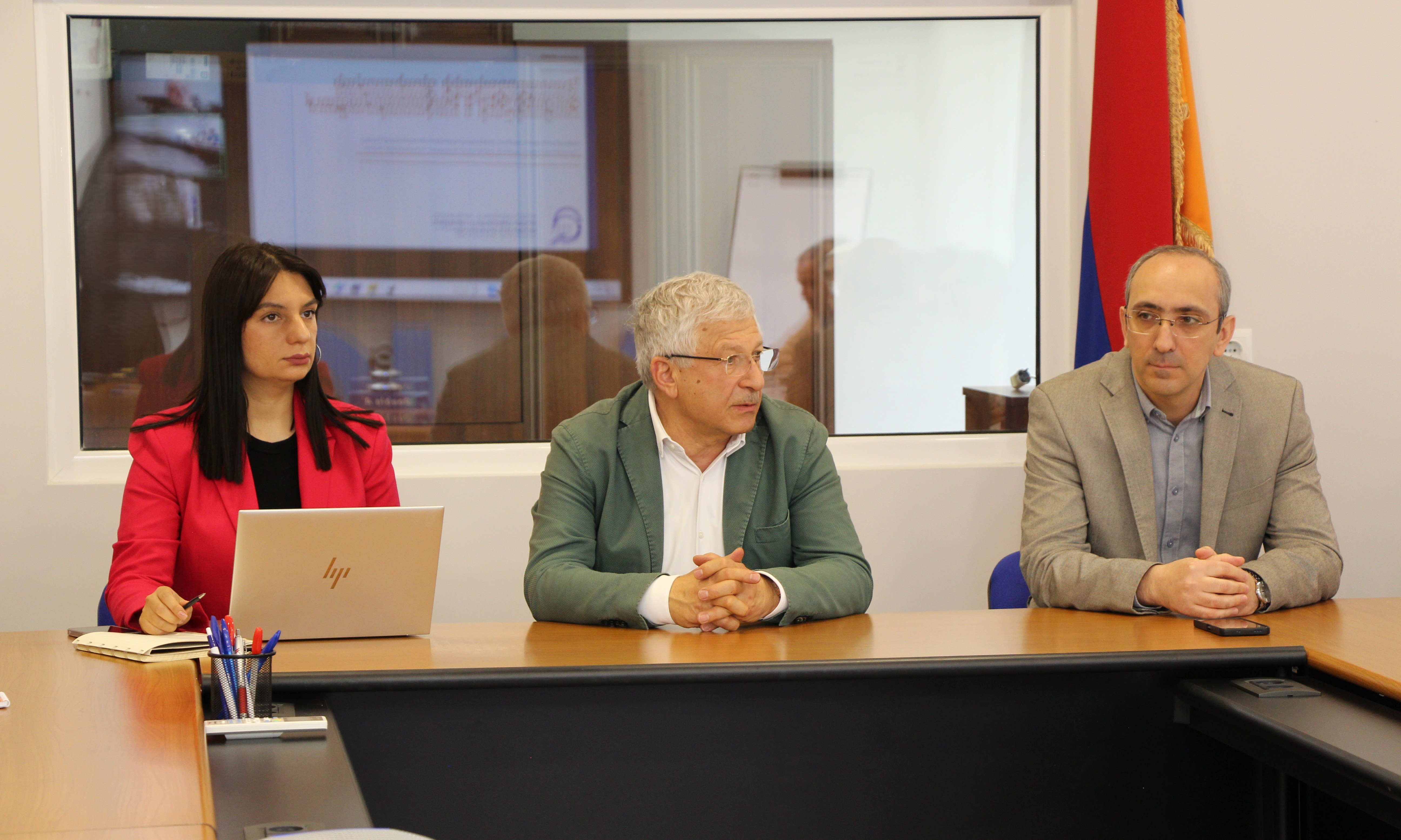
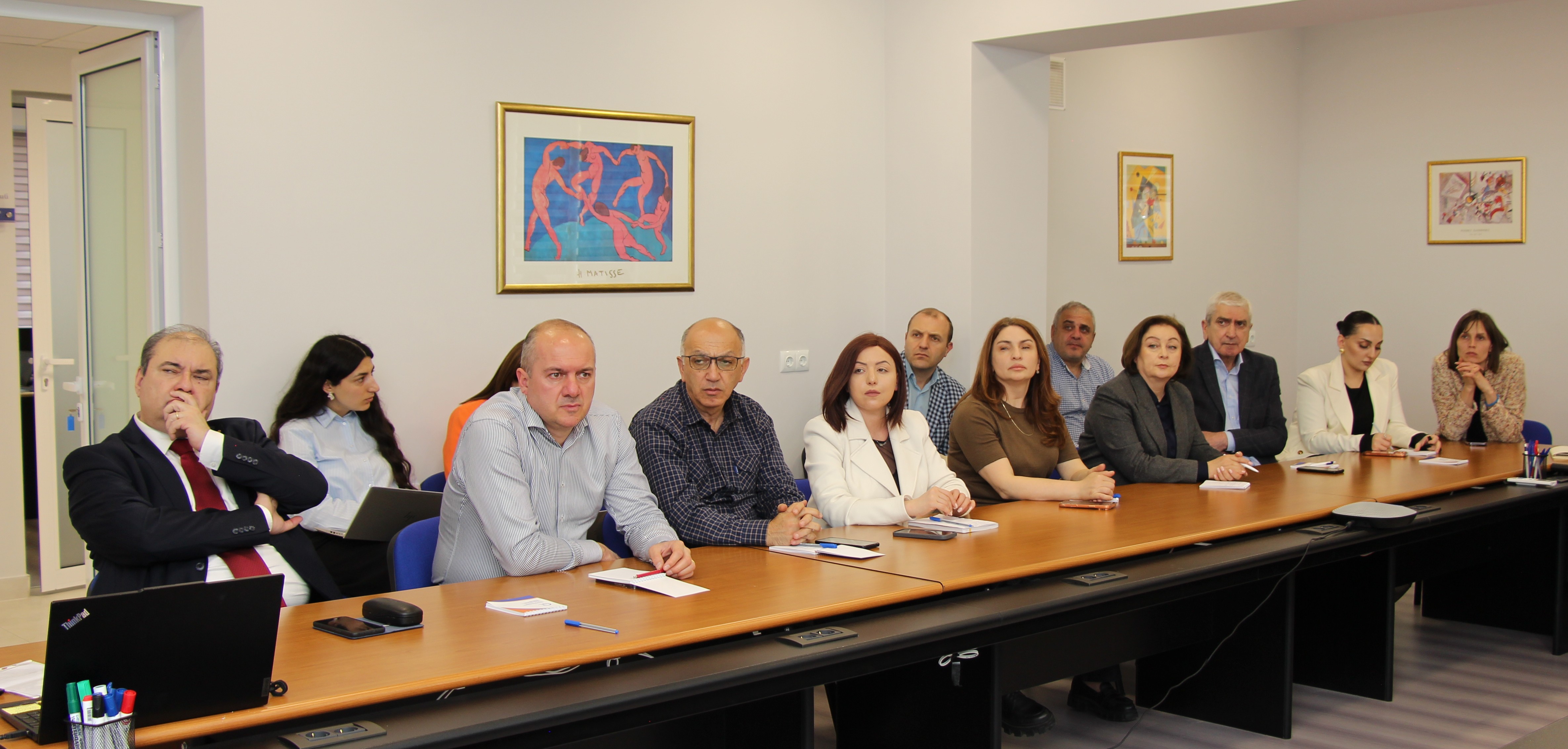
On May 22, ANQA held a meeting, bringing together representatives from the RA MoESCS Higher Education and Science Committee, HEIs' vice rectors for academic and scientific affairs and project coordinators. The meeting featured discussions on the possibilities of the integration of the KPIs developed as part of the Erasmus+ KPI4HEI project into the higher education system and their application in the institutional accreditation process.
The KPIs were developed in alignment with the six strategic directions established by the RA Government:
- Development of qualified human resources (green and digital education, competences, employment, lifelong learning);
- National and international engagement;
- Research, development and innovation;
- Equal access to opportunities;
- Quality of the learning environment;
- Governance, leadership and operational efficiency.
The project led to the development of a significant number of KPIs, with approximately 50 planned for inclusion in the self-evaluation stage of the institutional accreditation process. During the meeting, it was noted that the introduction of the KPIs will enable a more systematic evaluation of HEIs' development, maturity level and enhancement progress. It was highlighted that the KPIs are intended not only for data collection, but also for the evaluation of the effectiveness of HEIs' strategic development. Some KPIs are designed to measure the maturity of the HEIs' systems and processes, while others evaluate the results of institutional development and enhancement.
The connection between KPI implementation and funding mechanisms was also addressed. It was noted that HEIs will independently define the relevant target indicators and expected development progress based on their characteristics. This approach will enable the evaluation of HEIs’ progress, taking into consideration their initial circumstances and development strategies.
Participants also attached importance to data-driven governance culture within HEIs. It was highlighted that the systematic use of KPIs will foster a culture of data collection, analysis and utilisation, contributing to more objective evaluation in the accreditation process.
Discussions also covered international practices, highlighting that some countries use KPI monitoring for impact evaluations and, where necessary, conduct external studies to understand the causes of identified issues.
Participants noted that individual KPIs alone may not always provide a comprehensive picture, making an integrated analysis of different indicators essential. It was also stressed that data collection should be considered an important tool for HEI governance and development.
It is also important to note that the KPI4HEI project included the pilot implementation of some KPIs at partner HEIs, accompanied by the development of relevant tools and Excel templates to evaluate the methodology’s applicability and identify necessary areas for enhancement.