

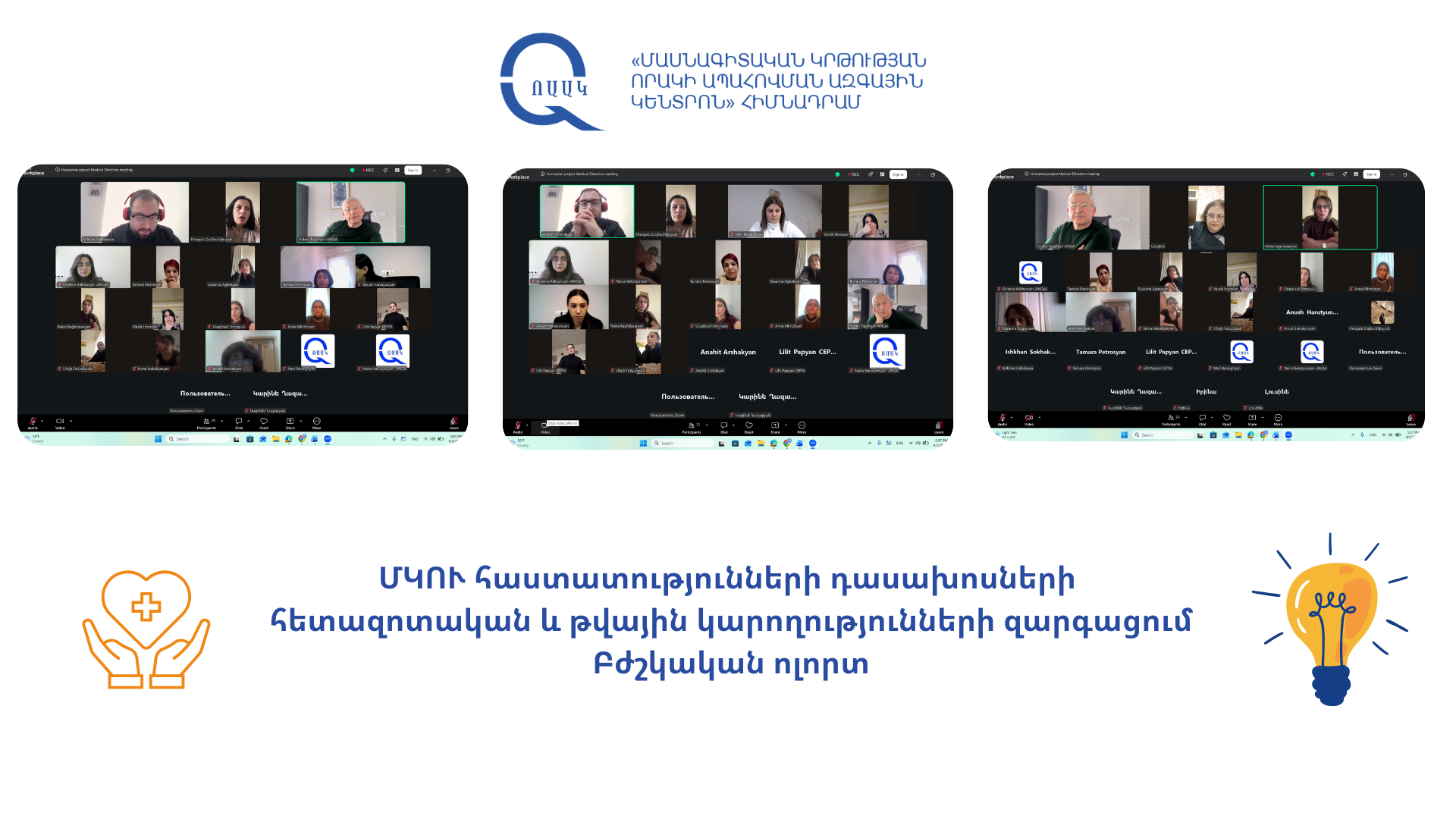
The training stage of the “Building Innovative Teaching Capacities in VET (Development of Research and Digital Skills)” project, implemented with the support of the H. Hovnanian Family Foundation, is summarised. On April 2, an online workshop was conducted as part of the project with the participation of teachers from the medical VET institutions.
The aim was to evaluate the effectiveness of integrating a research-based approach into the teaching process, identify issues and challenges, as well as discuss best practices along with directions for further development.
The workshop highlighted that teachers are already applying research-based approaches in the educational process, accompanied by specific practical examples.
As a result, students show a high level of engagement and interest. They not only complete the assignments, but also acquire skills in data collection, analysis and pattern identification. Meanwhile, it was emphasised that the research-based approach fosters the development of students' critical and practical thinking.
The teacher practice indicates the application of specific mechanisms, particularly:
- use of observation cards and data recording templates;
- data collection through practical assignments;
- outcome evaluation;
- formulation of conclusions by students.
It was highlighted that research skills develop gradually, progressing from basic observations to the analysis of professional issues. Even in non-specialised courses, students can acquire data-handling skills that may later be applied effectively in professional activities.
Meanwhile, an importance was attached to the exchange of practice and cooperation, as well as the development of interprofessional collaboration, which fosters more effective application of the approach.
To analyse this stage of the project and its outcomes, ANQA applies a multi-method KPI evaluation approach. This includes participant surveys, focus group discussions with trainers, and feedback from VET institutions.
In the upcoming months, continuous workshops are planned to track the participants' progress and provide targeted feedback. At the end of the academic year, a final conference will be held to share the project outcomes and disseminate best practices among VET specialists.
The participants agreed that the introduction of a research component contributes to the development of healthcare professionals with stronger analytical, reflective, and practical skills. Despite the existing challenges, positive progress has been achieved, and the continued project development can significantly increase the VET effectiveness.