
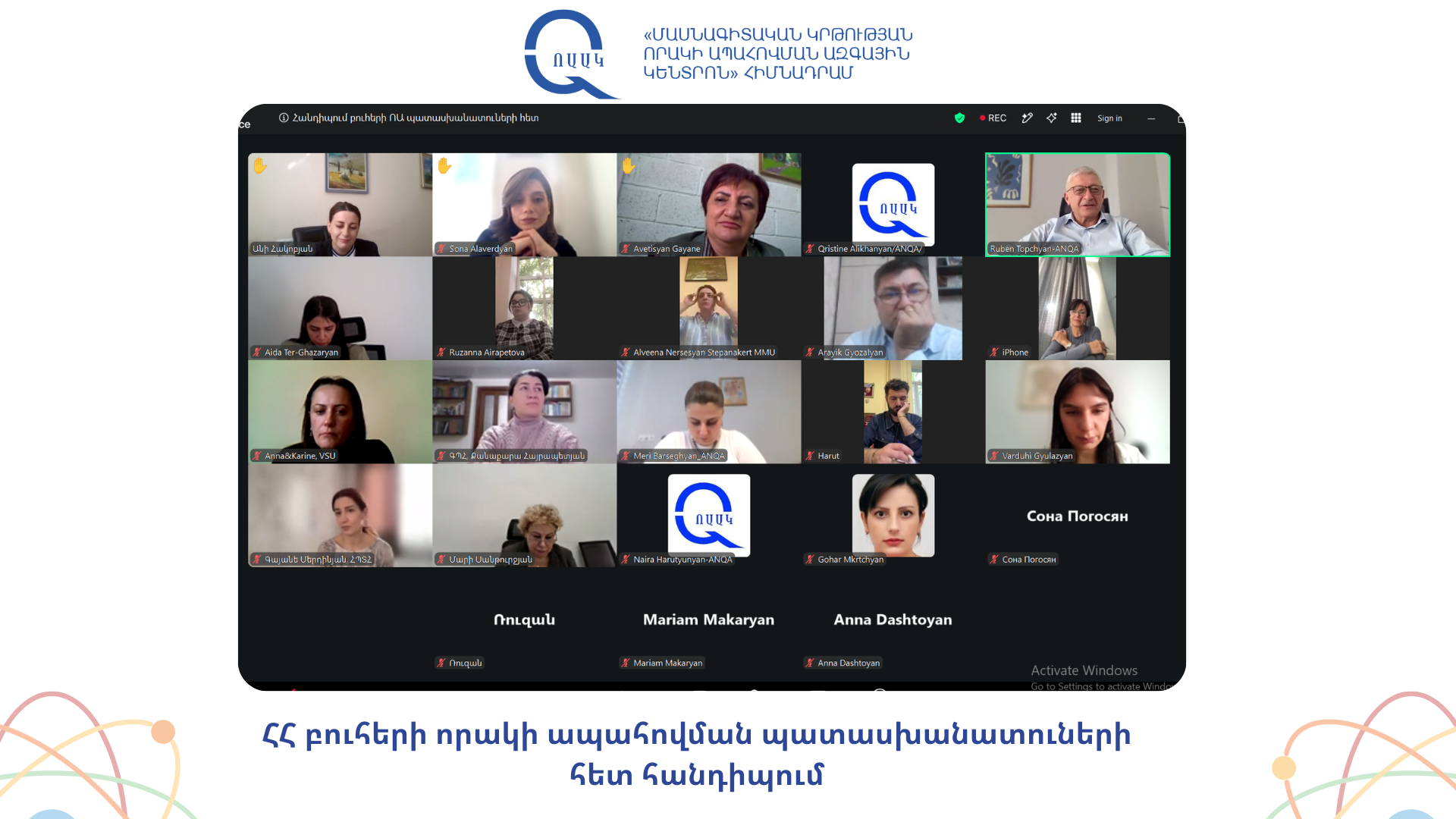
Academic programme (AP) revision, new approaches to the assessment of student competences and data-driven decision-making were among the post-accreditation changes discussed at a meeting with HEIs’ QA managers on October 19.
From expert recommendations to concrete actions
Recommendations from the accreditation process are incorporated into HEIs’ follow-up and strategic plans, with employers and alumni also engaged in monitoring their implementation.
HEI representatives highlighted the increasing use of analysis and evidence-based data in governance decision-making. They also shared their practice in the digitalisation of data collection and aggregation processes, enabling faster access to evaluation results and more timely responses to identified issues.
AP revision: clearly defined learning outcomes and new assessment approaches Accreditation has led the HEIs to clarify the knowledge and competences graduates are expected to acquire, the course contribution to their development and assessment methods that can effectively measure their achievement.
Participants shared their practice in learning outcome mapping and the use of assessment rubrics. To identify issues in AP, the HEIs have launched or expanded self-audits, involving independent national and international experts. Meanwhile, some assessment mechanisms are still under development or being piloted.
Broad stakeholder engagement: from student feedback to tangible enhancements
The participation of teachers, various institutional units, students and external stakeholders in QA activities has increased. According to the HEI representatives, QA is gradually becoming a shared responsibility among stakeholders.
Participants also shared their practice in the development of data-driven follow-up plans and the updates provided to students on their implementation. This approach enables students to see the actions in response to their feedback and the issues addressed.
The next step: verification of the achievement of professional competences
The discussion highlighted the continuing challenges in the verification of the achievement of intended learning outcomes. Some issues identified during previous evaluations also persist and require targeted actions.
Ruben Topchyan attached importance to the assessment of students’ progress throughout their studies, from the beginning of the course to graduation. Assignments should become progressively more complex, while final assessments should demonstrate graduates’ ability to solve professional issues. Assessment results, in turn, should inform the AP enhancement.
To address these challenges, participants proposed continuing practical meetings between ANQA and HEIs, with a focus on learning outcome assessment, AP audits and tools for the solution of specific issues. Emphasis was placed on the direct engagement of AP managers, teachers and experts in these discussions.