
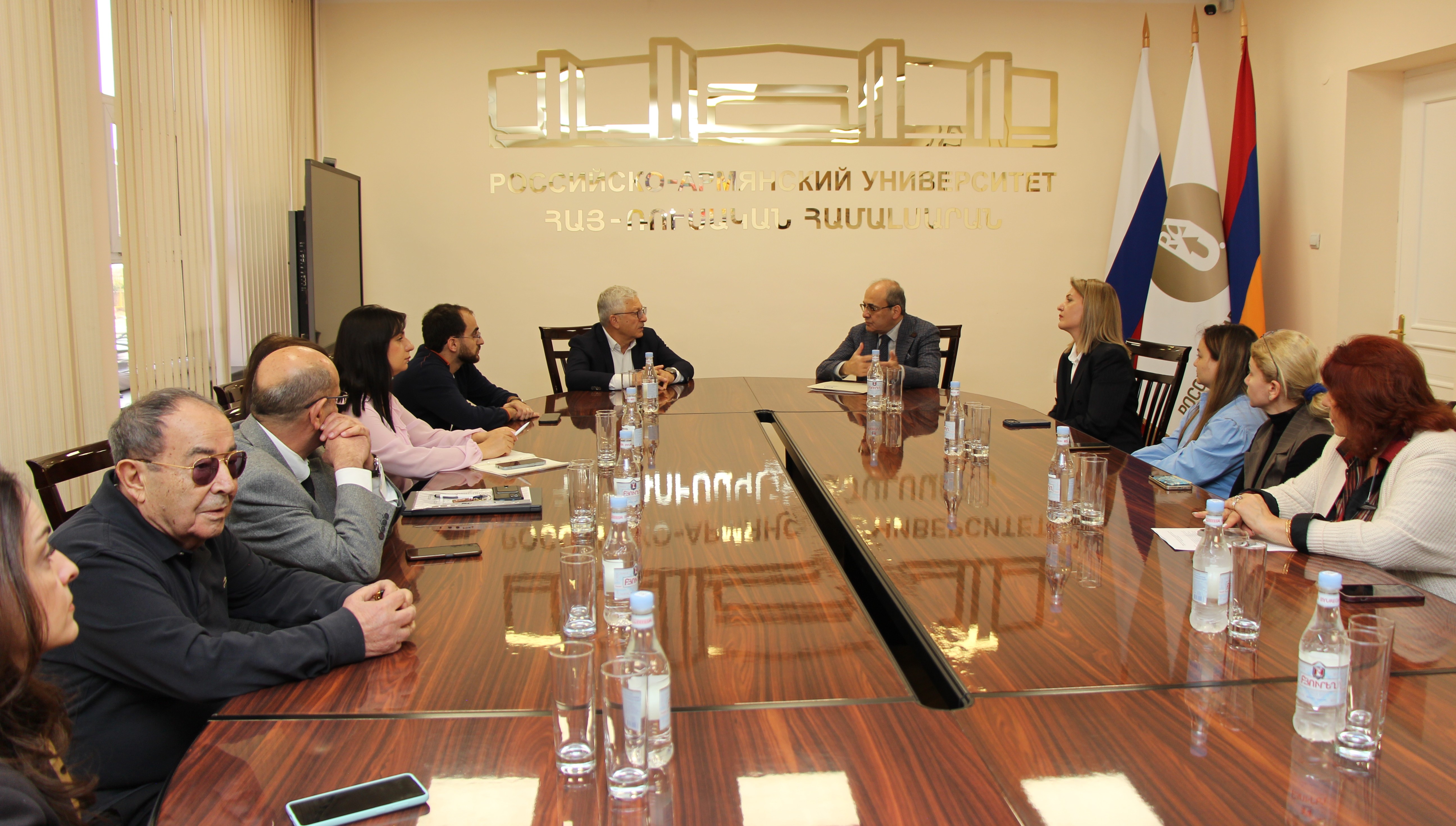
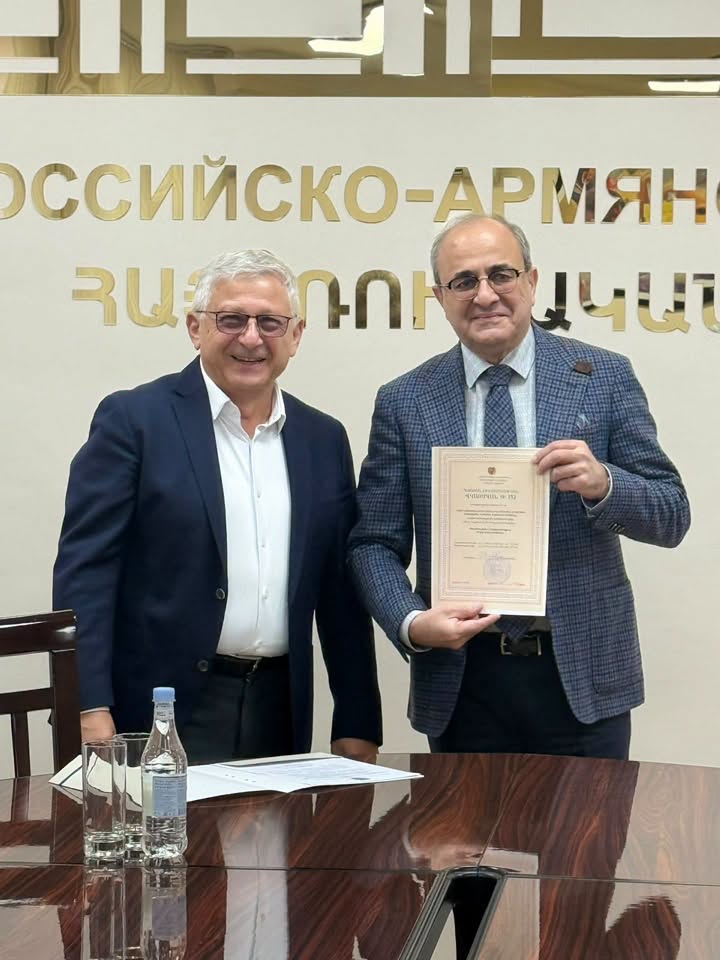
On November 3, a ceremony for the presentation of the institutional accreditation certificate was held at the Russian-Armenian University (RAU). The RAU was granted institutional accreditation for a six- year period. This marks the RAU's first institutional accreditation conducted by ANQA.
Established under an intergovernmental agreement between Armenia and Russia, the Russian-Armenian University is an interstate HEI jointly governed by the two countries. The RAU’s accreditation underscores the importance of external quality evaluation for institutions with distinctive governance structures and educational practices. It provides an opportunity to evaluate the institution’s performance against a common set of QA criteria, taking into consideration its mission and distinctive characteristics and use the evaluation findings to inform its further development.
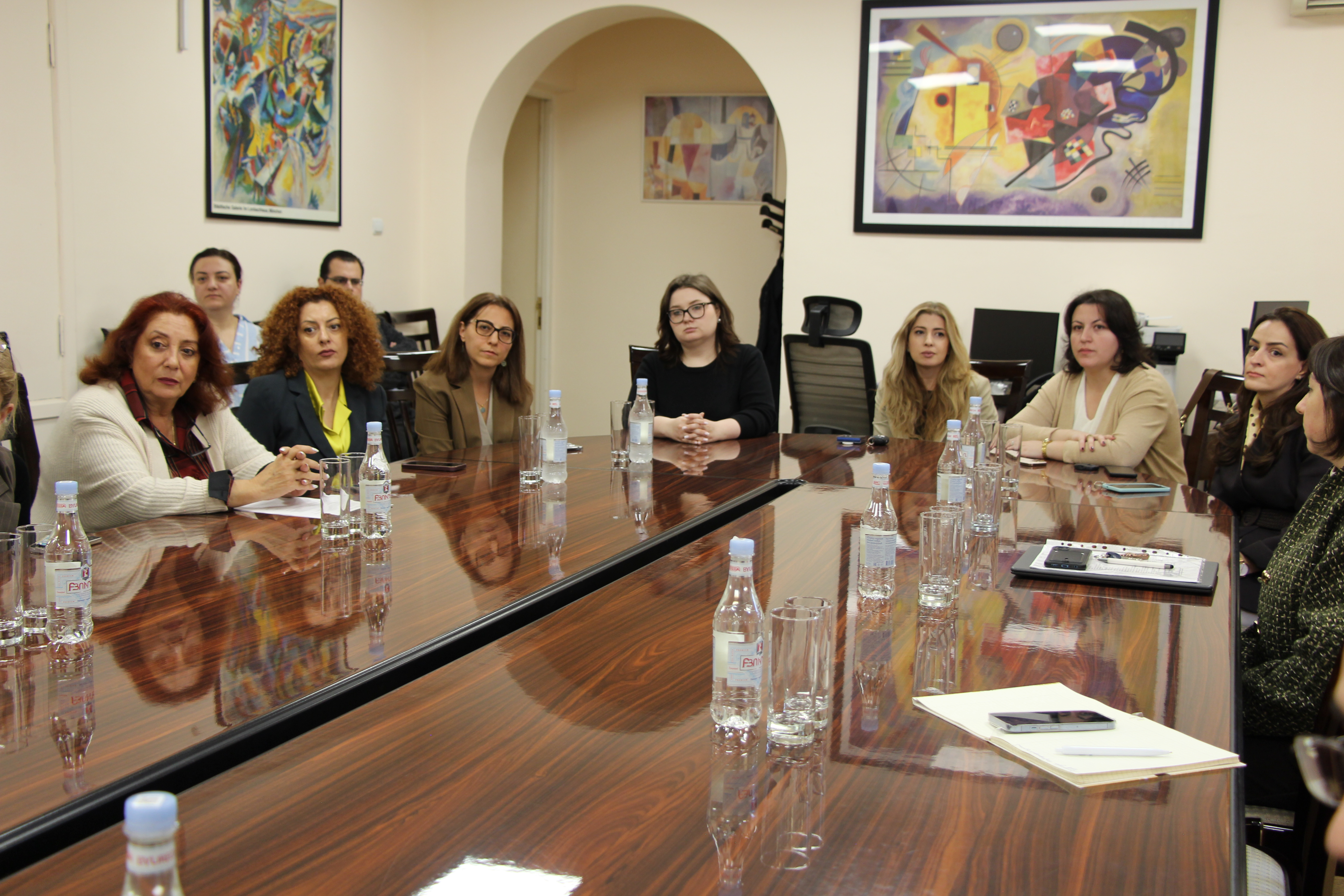
The presentation of the accreditation certificate was followed by a meeting with the RAU's stakeholders. The discussion focused on the enhancement of the education quality and approaches to the evaluation of the outcomes of these efforts. In particular, the following issues were addressed:
- the role of programme accreditation in the academic programme (AP) enhancement and the ensurance of the attainment of intended learning outcomes;
- the development of evidence-based and data-driven evaluation and governance to support data-informed governance decisions and develop targeted solutions to identified issues;
- the refinement of methodologies for data collection, measurement, analysis and interpretation, considering the specific characteristics of the institution and its APs;
- the evaluation of the effectiveness of implemented changes to ensure that the outcomes of the education quality enhancement are visible and measurable.
During the meeting, the institution's representatives attached importance to the continued cooperation between ANQA and RAU through regular meetings, professional discussions and capacity-building workshops. This cooperation aims to promote the use of external evaluation findings and further develop the institution’s internal quality assurance mechanisms.
The significance of the accreditation process lies in the enhancements implemented on the basis of its findings. External review enables the institutions to identify development priorities, plan follow-up actions informed by data analysis and systematically evaluate its progress, with the ultimate goal of preparing graduates equipped with the competences required to enter the labour market.