
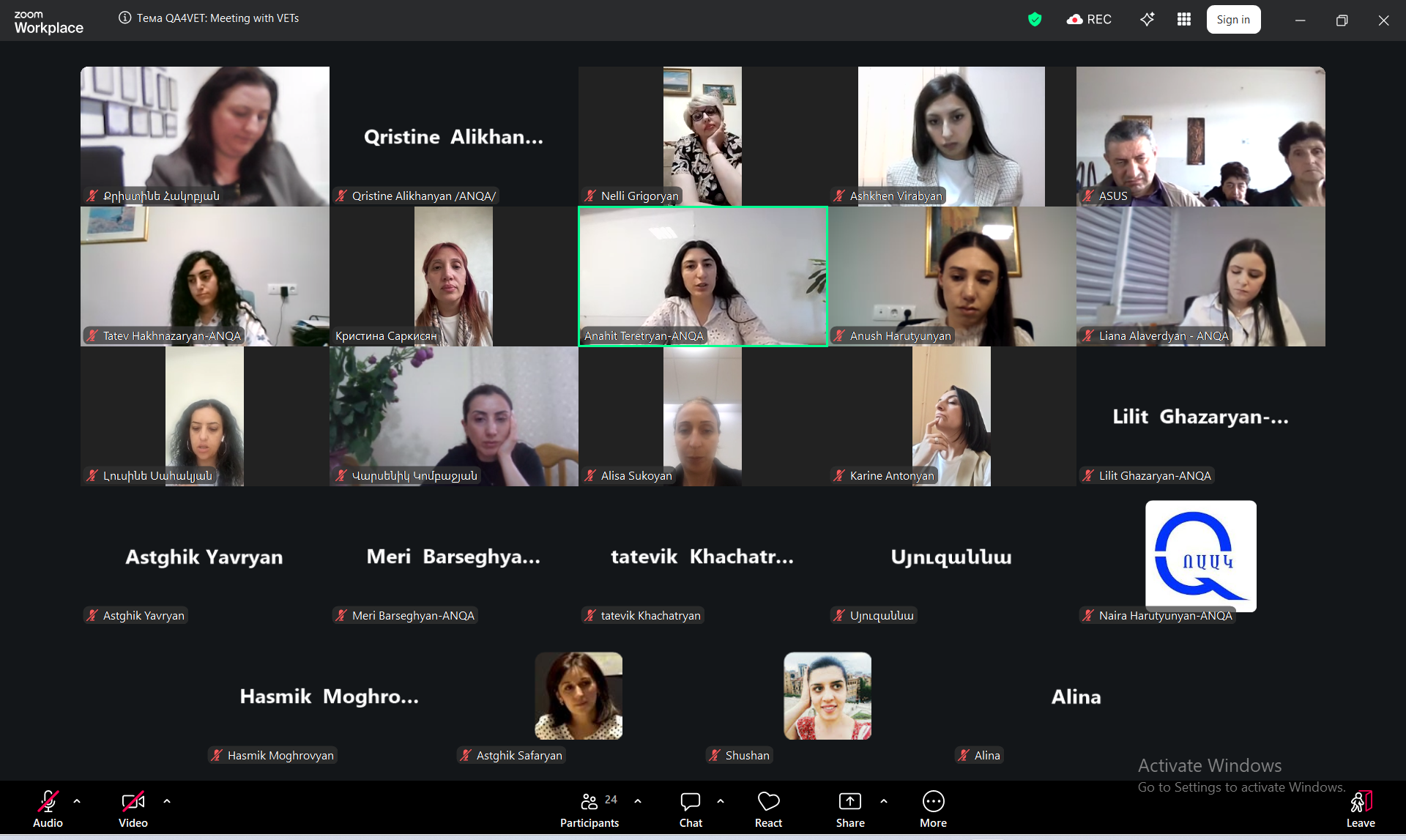
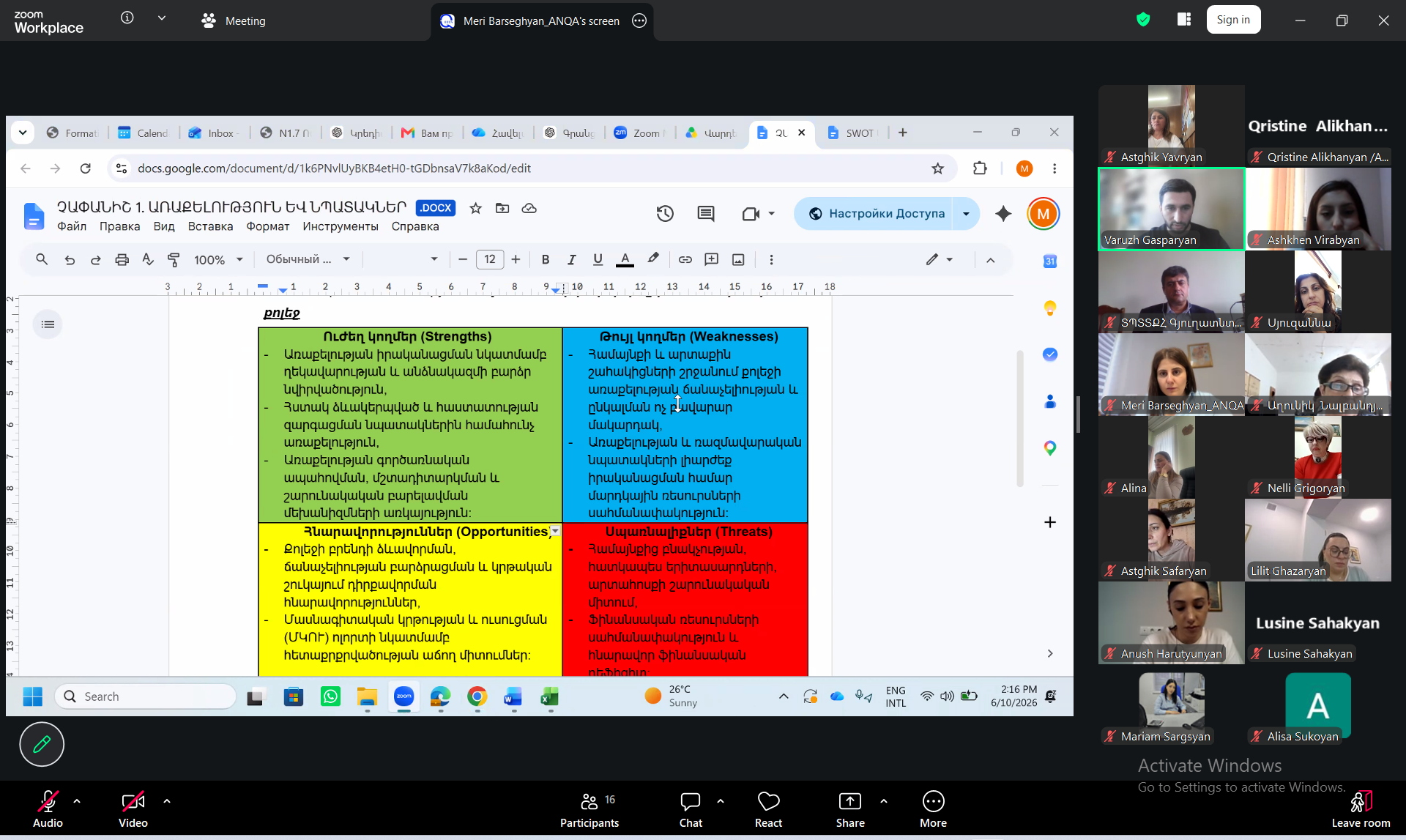
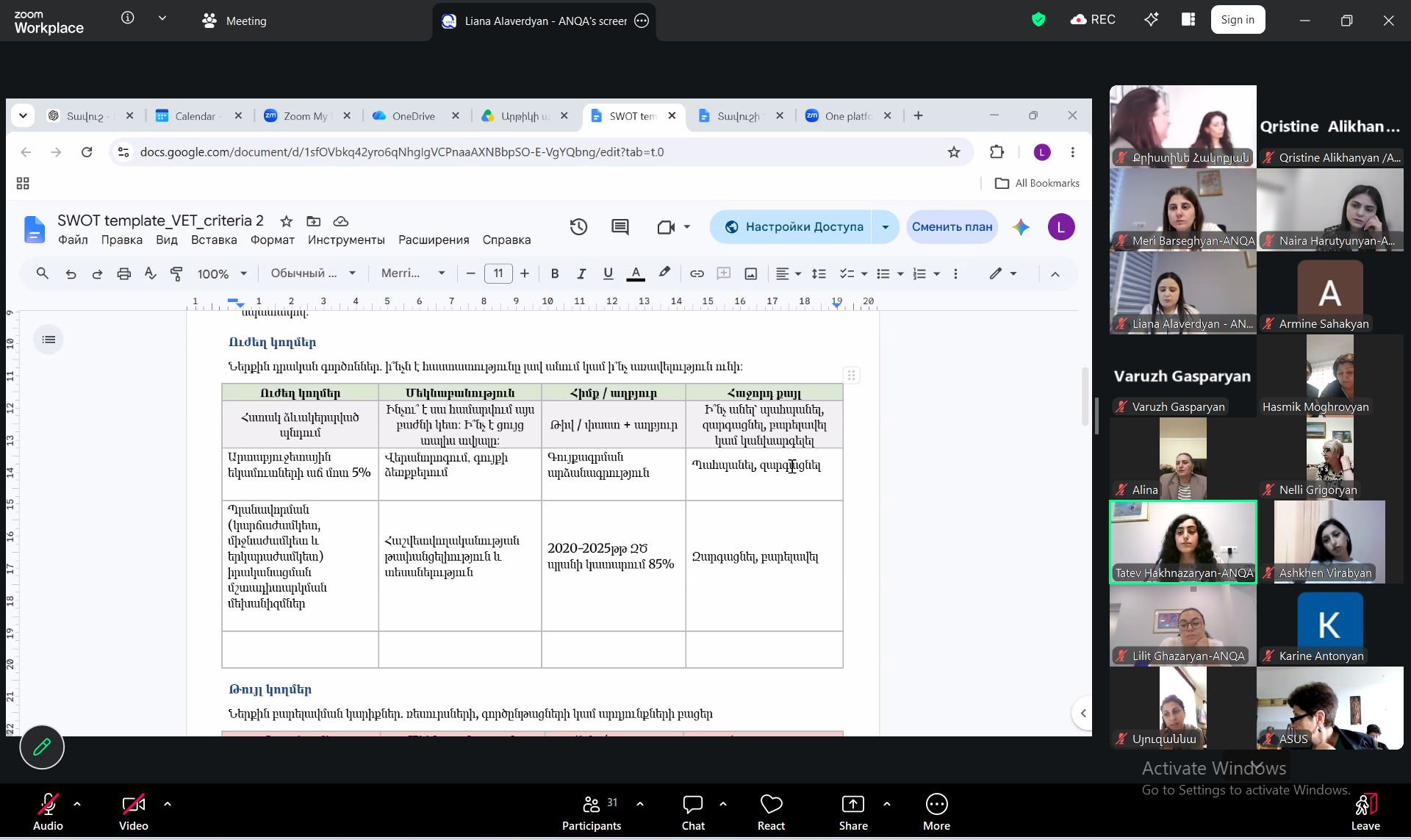
On June 10-12, ANQA held online workshops as part of the Erasmus+ QA4VET project, bringing together representatives of VET institutions to present SWOT analyses in relation to the criteria "Mission and Purpose" and "Governance and Administration".
The discussions highlighted that the SWOT analysis should reflect not only the institution's current state but also the value it creates for learners, employers and society. ANQA’s specialists emphasised that the evaluation should focus not only on the actions taken but also on their impact and demonstrated changes.
Mission and Purpose: key takeaways from ANQA's feedback
During the discussions on the criterion Mission and Purpose, ANQA's specialists mainly focused on the interconnection between the institution's mission, strategic goals and SWOT analysis. It was highlighted that the mission represents the institution's promise to society and the state, while the SWOT analysis should demonstrate the fulfillment of that promise and the strategic goals.
Particular attention was drawn to the following issues:
- SWOT analysis should be grounded in facts, data and evidence rather than general descriptions.
- Self-evaluation should present not only the actions taken, but also their impact and changes changes that contributed to institutional development.
- Stated stated goals should be supported by evidence. If the institutions aim to prepare competitive specialists, the SWOT analysis should demonstrate the actions towards this goal and the progress made.
- Strategic planning should be supported by clear KPIs that enable the evaluation of achievements and development progress.
Governance and Administration: focus on data-driven governance
On the second day of the workshop, ANQA addressed SWOT analyses in relation to the criterion “Governance and Administration”. It was highlighted that the main goal of the governance system is the implementation of the institution's mission and strategic goals.
The discussions highlighted the following key issues:
- data-driven decision-making;
- stakeholder engagement in governance processes;
- collaboration between units;
- monitoring of the development processes;
- evaluation of the impact of governance decisions.
It was stated that effective governance should be evaluated not only through the governance structure, but also by its impact on the institutional development and the academic programme enhancement.
Summing up the workshops, it was highlighted that data-informed SWOT analysis serves as an important tool for institutional self-evaluation, setting development priorities, and strengthening a quality culture. It enables institutions not only to identify their strengths and weaknesses, but also to provide evidence of how they fulfil their mission and the value they create for stakeholders and society.