

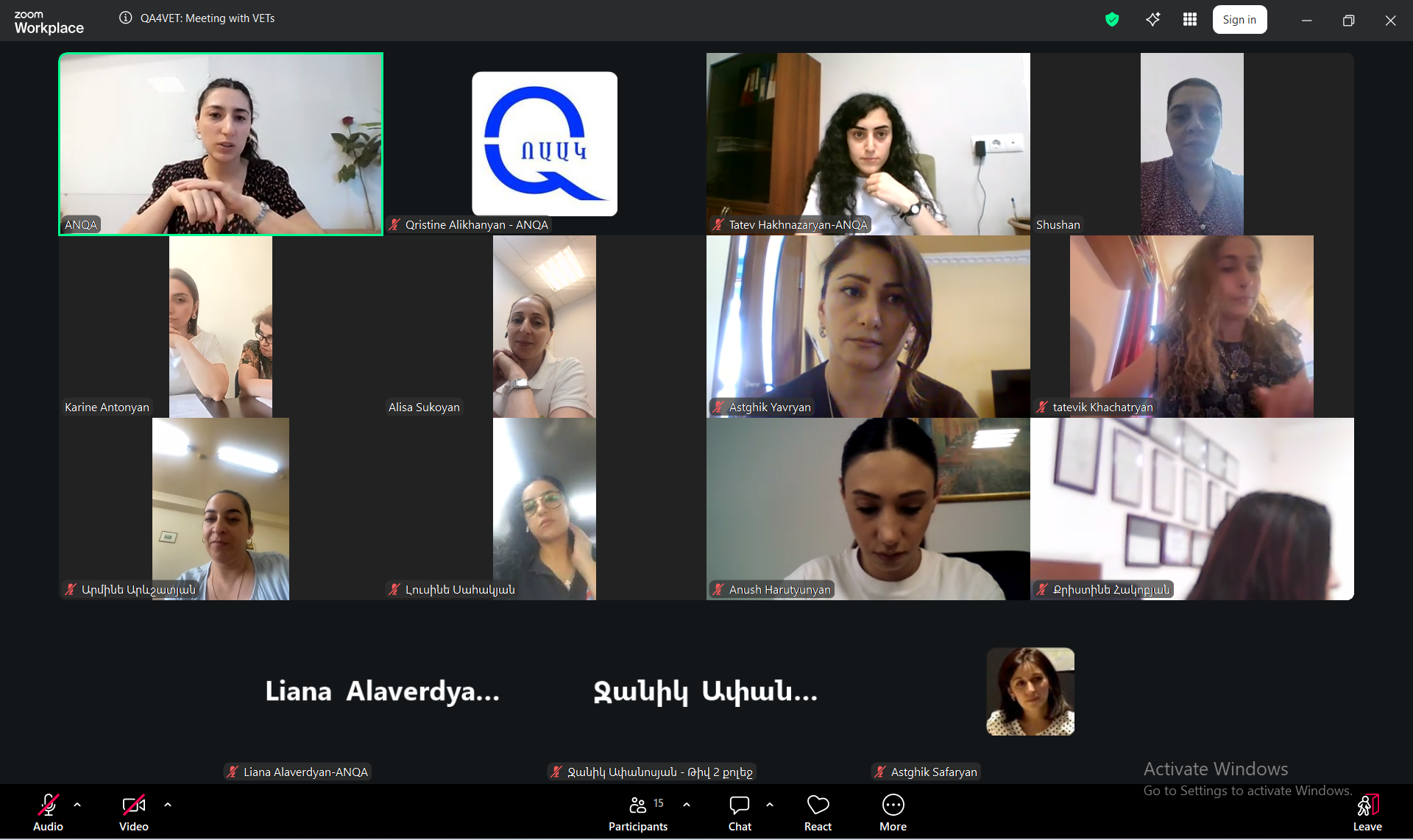
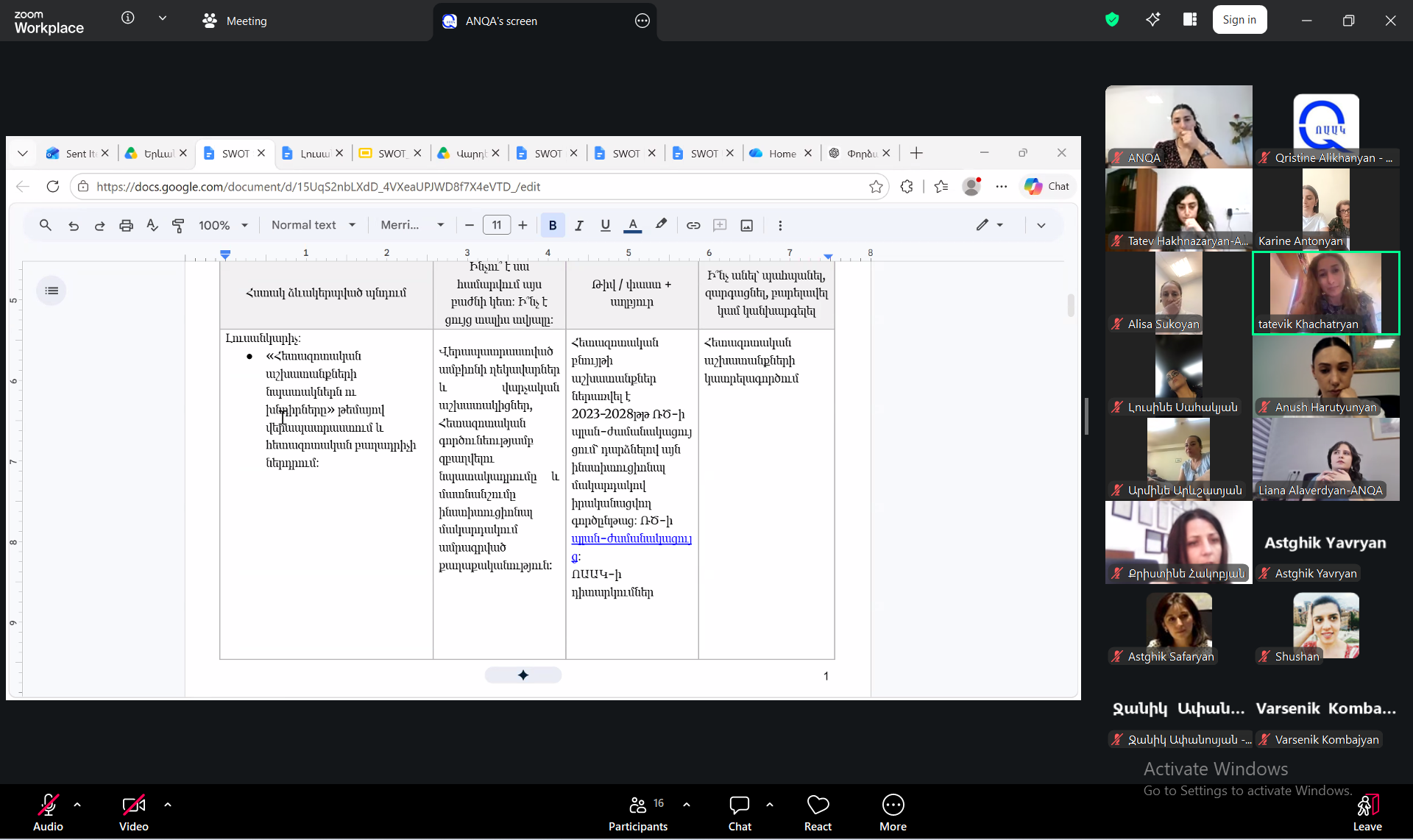
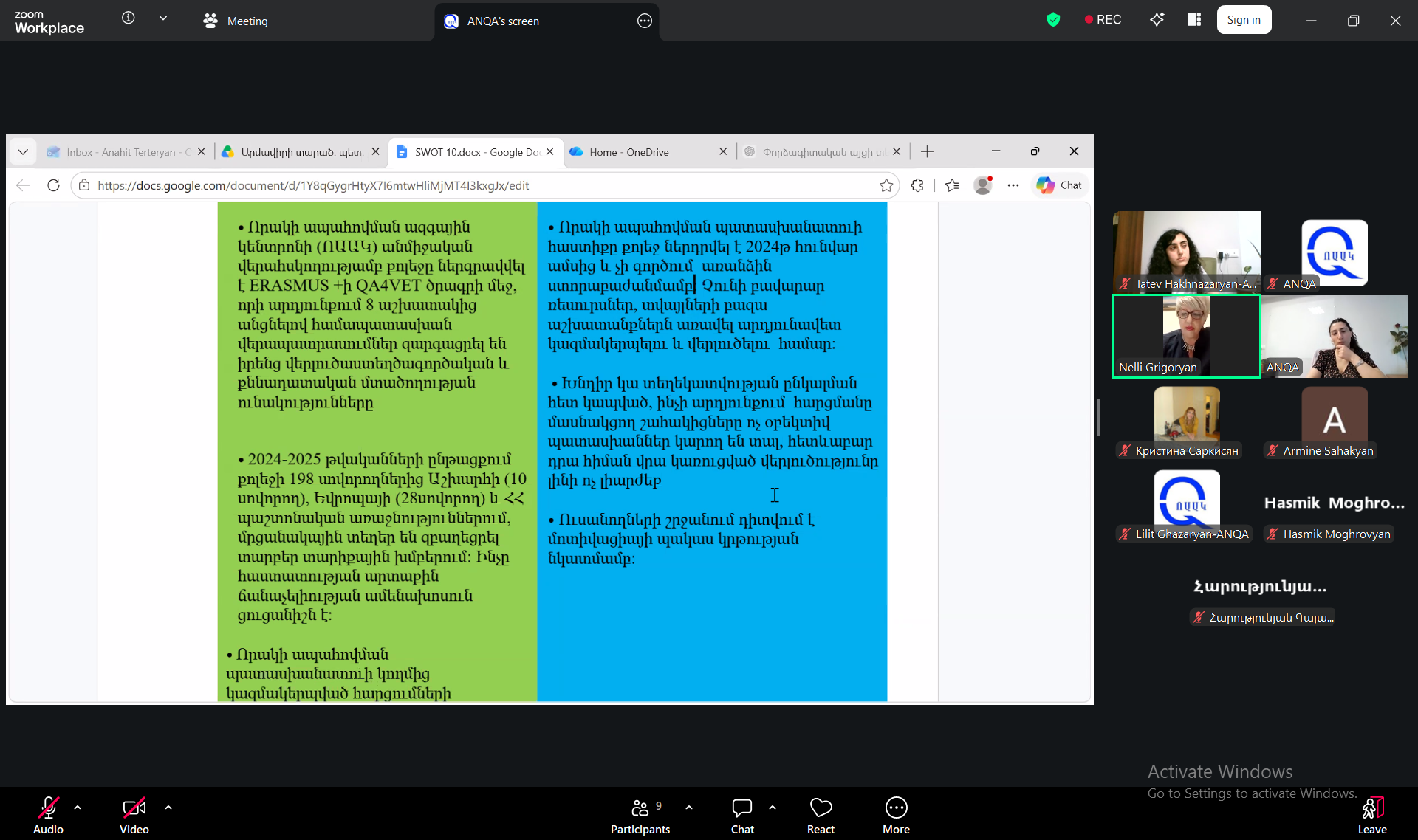
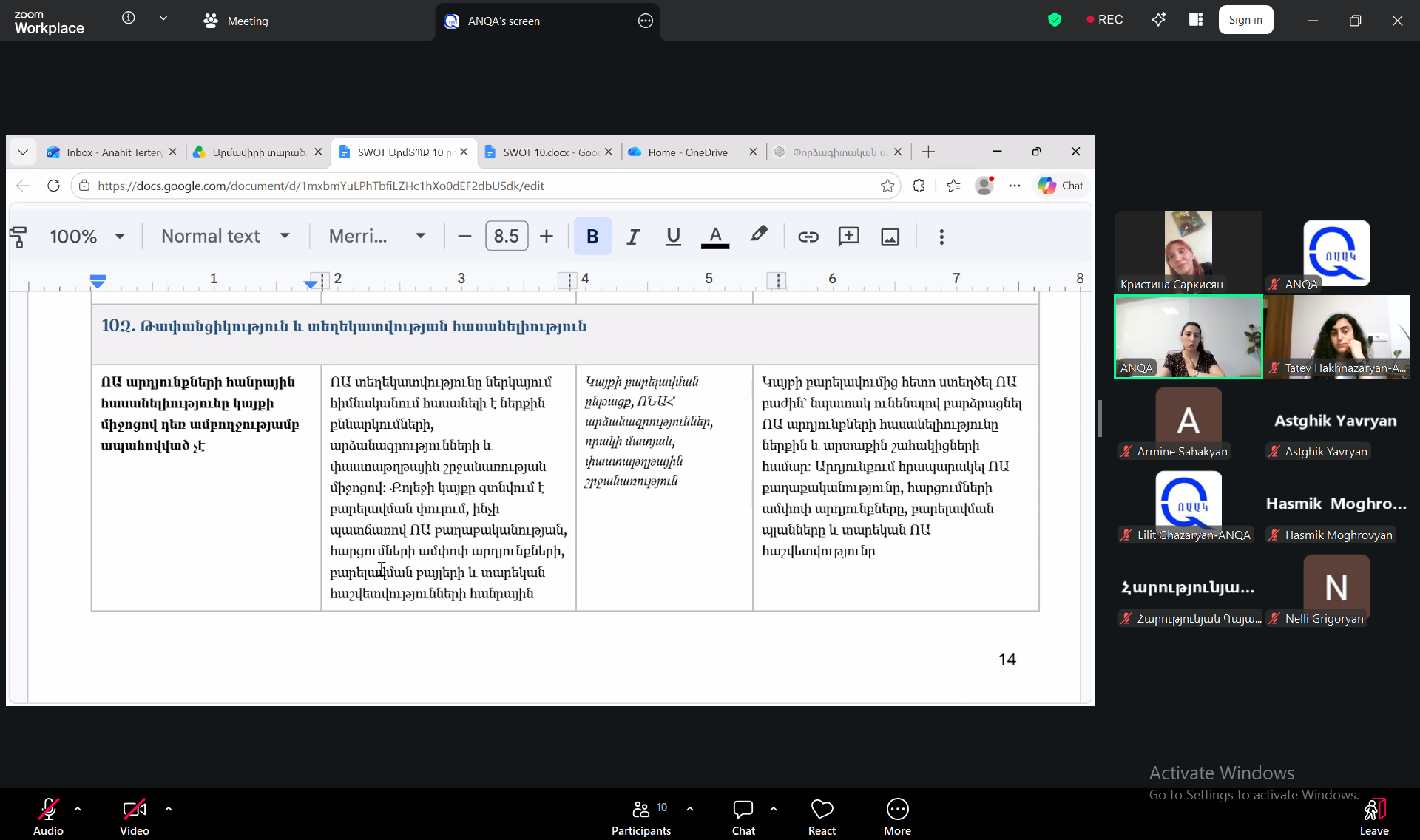
On June 16, another online workshop was conducted as part of the Erasmus+ QA4VET project with the participation of main and associated project partners. During the workshop, the VET institutions' representatives presented the SWOT analyses in relation to the criterion "Internal Quality Assurance System" and received feedback from ANQA’s specialists.
The workshop focused on the structure and functions of the internal quality assurance system. It was highlighted that an effective QA system should support the continuous enhancement of all institutional processes and foster the formation of a quality culture. In this regard, the workshop addressed the mechanisms for the implementation of QA policies, manuals, procedures, and other regulatory documents, along with the full process of data collection, analysis, decision-making and enhancement. Particular emphasis was placed on the role of QA managers. It was stated that they should have a clear set of tools and mechanisms for the provision of professional support and feedback to different institutional units, as well as the coordination of enhancement processes. The importance of data collection and analysis was also highlighted. The results of surveys, evaluations and other feedback tools should be reflected in SWOT analyses not only as factual data, but also as supporting evidence linking them to the identified strengths and weaknesses, development opportunities, or threats. It was emphasised that the VET institutions should conduct well-supported evaluations and data-informed, evidence-based SWOT analyses. Summing up the workshop, it was highlighted that the effectiveness of an IQA system is evaluated not by the availability of individual tools or documents, but the extent to which the collected data is translated into well-founded decisions, enhancement actions and evidence of the institutions’continuous development.
A data-informed SWOT analysis serves as an important tool for institutional self-evaluation, setting development priorities and strengthening a quality culture.